In 2023, our sales team brought PURESEAL HS 70 to a German tea packer — one of the larger ones in Europe. Heat-sealable barrier paper, fresh recyclability certificate from PTS Heidenau, score: 68 out of 100.
Their answer was direct: "We expect better."
They were right. 68 wasn't enough.
What followed wasn't a marketing pivot or a press release. It was three years of engineering work, documented in six PTS certificates issued between 2023 and 2026.
The PTS recyclability score, evaluated under the 4evergreen Fibre-based packaging recyclability protocol, isn't a single number. It's a composite of yield (how much fibre is recovered), visual impurities (how clean the recycled sheet looks), and sheet adhesion (whether the recycled material sticks to itself during processing).
A score of 68 falls in the 50–69 range that the protocol describes as having "some repulpability issues that affect the process." Recyclable in non-standard mills, but with visible compromises: too much barrier coating, too many polymer fragments, visible contamination on the recycled handsheets.
That's what the German packer saw without needing to read the certificate. Their lines run high volumes, their customers ask hard questions about EPR fees and PPWR compliance, and a 68 simply didn't justify replacing their existing material.
We had two choices: either accept that 68 was the ceiling for heat-sealable barrier paper, or treat the German feedback as a starting point. We chose the second.
The work happened on three parallel fronts:
Paper formulation. The base paper itself — 70 g/m² bleached chemical pulp — needed refinement. Smoother surface, more uniform fibre distribution, better receptivity to coating.
Barrier coating. The original PURESEAL HS 70 from 2023 used a single-side dispersion coating at roughly 5.5 g/m². Too much, fragmenting during recycling. We worked with our coating partners (Michelman among them) to reformulate, and in parallel developed our own coating application systems in-house. The current generation runs at approximately 2.5 g/m² barrier coating — well below the 5% non-fibre threshold that classifies packaging as PAP 22 monomaterial under EU rules, and the level at which most national EPR schemes apply preferential fee tiers.
Application technology. A coating is only as good as how it's applied. We rebuilt our application stations to deliver more uniform coverage at lower coat weights. Less material, better distribution, fewer fragments at end of life — and fewer issues with curling and roll precision on high-speed converting lines.
Each iteration went back to PTS Heidenau for testing. Each result, including the ones we didn't like, went into the internal record.
Six certificates over three years tell the story:
The February 2026 certificates were issued under the new 4evergreen Fibre-based packaging recyclability evaluation protocol Version 1 (January 2025) — the latest evaluation standard, which replaces the earlier Beta Release with stricter visual impurities and sheet adhesion criteria.
Both PURESEAL HS 70 (gloss finish) and MATTSEAL HS 70 (matt finish) are commercially active products on the same heat-seal barrier paper platform, with finish-specific surface treatments. Between them they cover the range of brand requirements across tea, dry food, and flow-pack applications.
The PURESEAL HS 70 score of 94/100 (printed) is the figure that applies to commercially supplied product — material that has gone through full water-based flexo printing and is what arrives on a customer's packaging line. The unprinted 99/100 — Standard Mill Compatible under the 4evergreen Version 1 protocol — represents the top of the platform's barrier system before printing, demonstrating how much recyclability headroom the substrate carries before any decoration is applied.
The MATTSEAL HS 70 results at 93/100 (printed and unprinted) reflect the same barrier system applied to the matt-finish substrate, which has become the more frequently specified option for premium tea and dry-goods packaging in recent quarters. Both materials run as drop-in replacements on existing high-speed packaging lines.
A PTS score of 99 sits at the top of the protocol's "Best in Class" band (90–100), which the evaluation describes as "the packaging is expected not to pose any repulpability issues in the standard mill." The "standard mill" qualification matters: it means the material processes through conventional paper recycling streams, not specialist facilities.
For a heat-sealable barrier paper, that's unusual. Most barrier-coated papers carry a meaningful penalty in recyclability scoring because the coating fragments interfere with the repulping process. PURESEAL HS 70 in its current generation crosses that threshold.
The numbers behind the 99/100 score for unprinted PURESEAL HS 70:
Even with full water-based flexo print, the printed version holds 94/100 — still firmly in Best in Class. That's the score that matters for our customers, because the printed version is what runs on their lines.

A high recyclability score alone doesn't sell to a tea packer or a flow-pack converter. The paper has to do its job on the line and on the shelf.
The barrier function for these papers today is grease and aroma resistance. PURESEAL HS 70 and MATTSEAL HS 70 both carry a KIT rating of 12 on the T 559 test scale — the highest band — meaning the heat-sealable dispersion coating prevents fat and oil migration from dry contents like tea, herbs, ground spices, and dry food into the surrounding packaging stream. Aroma retention follows from the same coating layer, which is why the materials run on existing tea envelope and dry-goods flow-pack lines.
Oxygen and moisture barriers — OTR and WVTR — are not yet at the level where paper-based dispersion coatings replace multilayer plastic films for products like vacuum coffee, fatty contents, or long-shelf-life moisture-sensitive goods. That's an honest limitation of the current material science, ours and our competitors'. The work to close that gap is happening on two fronts: chemical suppliers developing new dispersion chemistries, and our own coating application methods. We expect meaningful OTR and WVTR figures within the next two years. Until then, PURESEAL HS 70 and MATTSEAL HS 70 are engineered for dry-goods applications where grease, aroma, and heat-sealing are the critical parameters.
Runnability — the speed at which the paper passes through high-speed packaging machinery without jams, tears, or seal failures — has been the parallel project. Drop-in performance on existing HFFS and VFFS lines, no machine modifications, sealing temperature window of 100–130°C, broad enough that line operators don't need to recalibrate heating elements or slow down throughput.
The German tea packer's question in 2023 was implicit: "Will this work on our equipment without slowing us down?" Three years later, the answer is yes — and at 99/100 recyclability instead of 68.
Three observations from three years of iteration:
Honest customer feedback compounds. The German packer's "we expect better" was uncomfortable to hear. It was also the most valuable signal we received in the entire project. Customers who stay polite about a marginal product give you nothing to work with. Customers who tell you exactly why they won't buy give you a development roadmap.
In-house material development beats outsourcing for iteration speed. Each cycle of paper formulation and coating reformulation took weeks rather than months because the work happened in our facility, with direct access to our converting lines for trial runs. Working with coating partners (Michelman in particular) for chemistry, but keeping application development in-house, turned out to be the right balance.
Test honestly, including the results you don't like. The 68 from 2023 is in the same record as the 99 from 2026. Removing the inconvenient earlier result would have made the trajectory look like a marketing claim. Including it makes it documentation.
The PTS 99 certificate doesn't end the work. The 4evergreen protocol itself continues to evolve — Version 2 will likely include parameters that aren't yet active in scoring (macrostickies area, dissolved colloidal solids, reject quality). We're testing against those future parameters now, so the next protocol revision doesn't surprise us.
Beyond recyclability scoring, the next two years are about extending the barrier envelope. Oxygen and moisture barriers on paper substrates are a materials-science problem currently under active development across the industry — by chemical suppliers formulating new water-based dispersions, and by converters like us refining application techniques for those chemistries. The combination determines what range of products paper-based packaging can credibly replace plastic on. PTS 99 on the recyclability axis is one milestone. OTR and WVTR competitive with multilayer films are the next.
The German tea packer who told us "we expect better" in 2023 was, in retrospect, the most useful conversation we've had in three years. We're building the next generation of barrier paper assuming the customer who tells us 99 isn't enough is already out there.
Request the PURESEAL HS 70 technical data sheet and PTS certificates, or contact our team for sample material runs on your existing equipment.
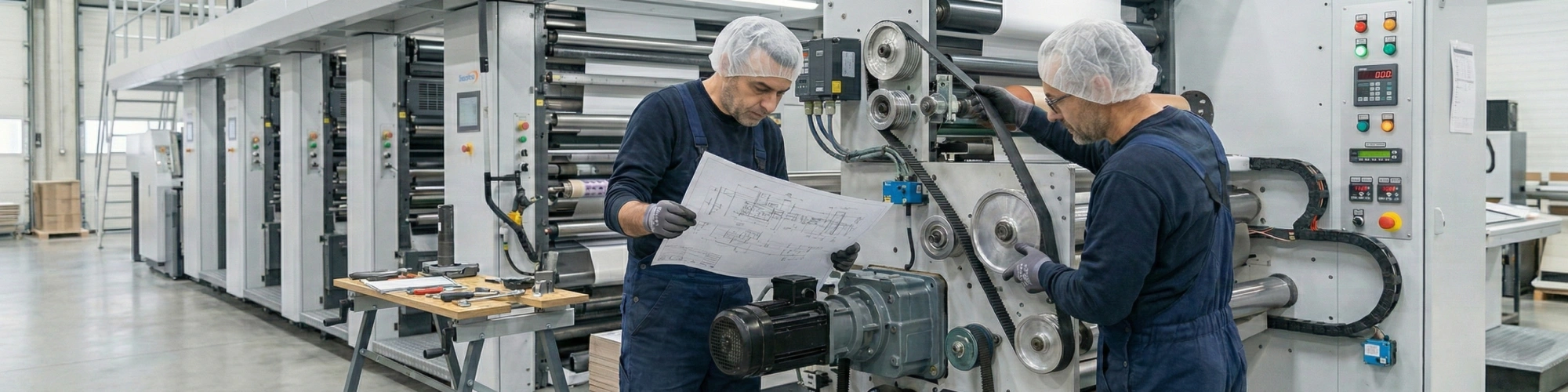
Od maszyn własnej konstrukcji po innowacje w druku fleksograficznym – jak inżynieria stała się naszym modelem biznesowym gwarantującym precyzyjne rozwiązania opakowaniowe.

Odkryj, jak Leoprint zbudował kulturę stawiającą ludzi na pierwszym miejscu, która napędza innowacje, jakość i doskonałość w zrównoważonych opakowaniach.

Zobacz, jak Leoprint szkoli i mentoruje następne pokolenie profesjonalistów w dziedzinie opakowań wewnątrz firmy.
.svg)
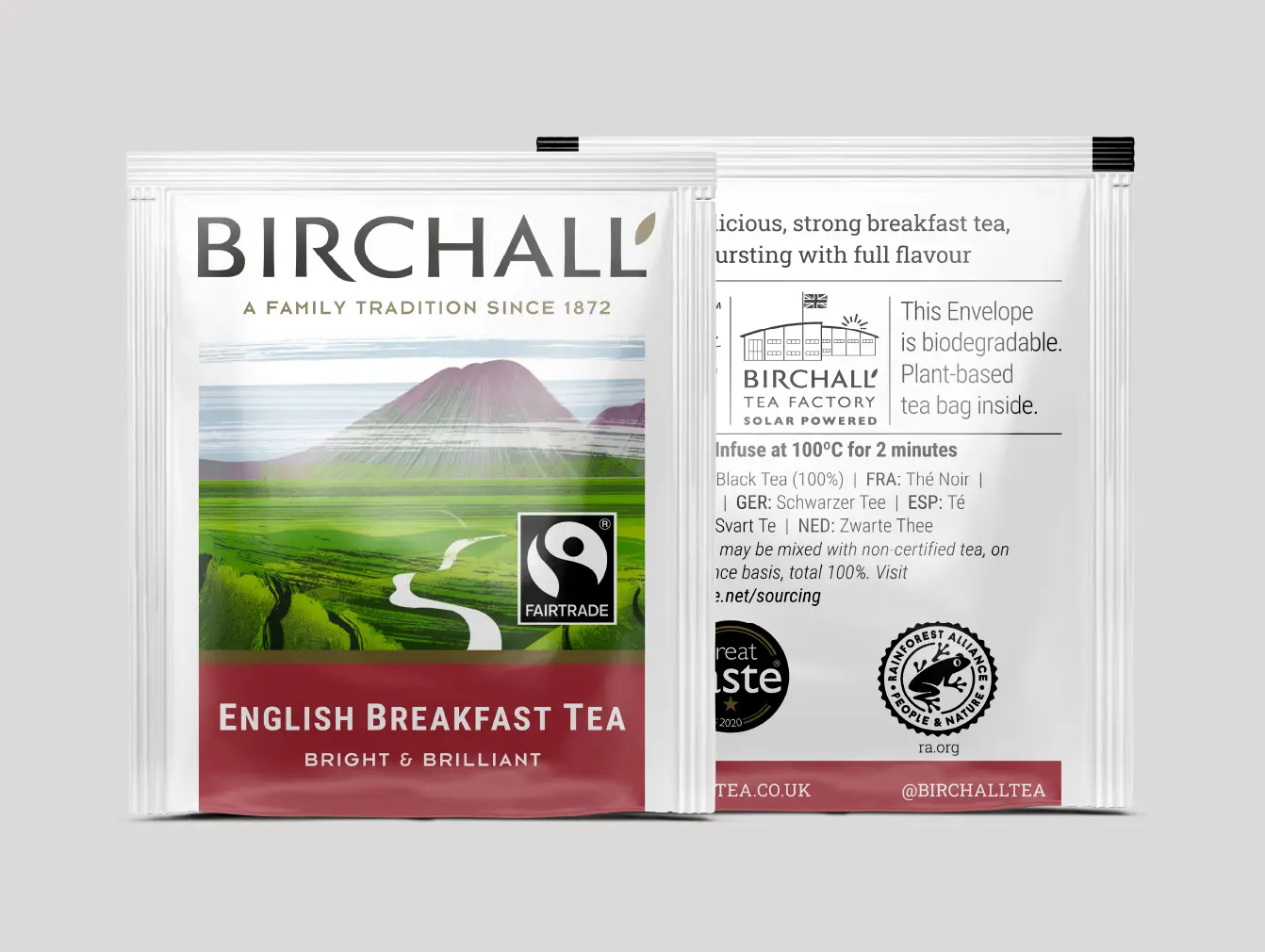
Zastąpiliśmy plastik recyklingowalnym papierem barierowym, zaprojektowanym do bezbłędnej pracy na szybkich maszynach pakujących przy zachowaniu odczucia premium.
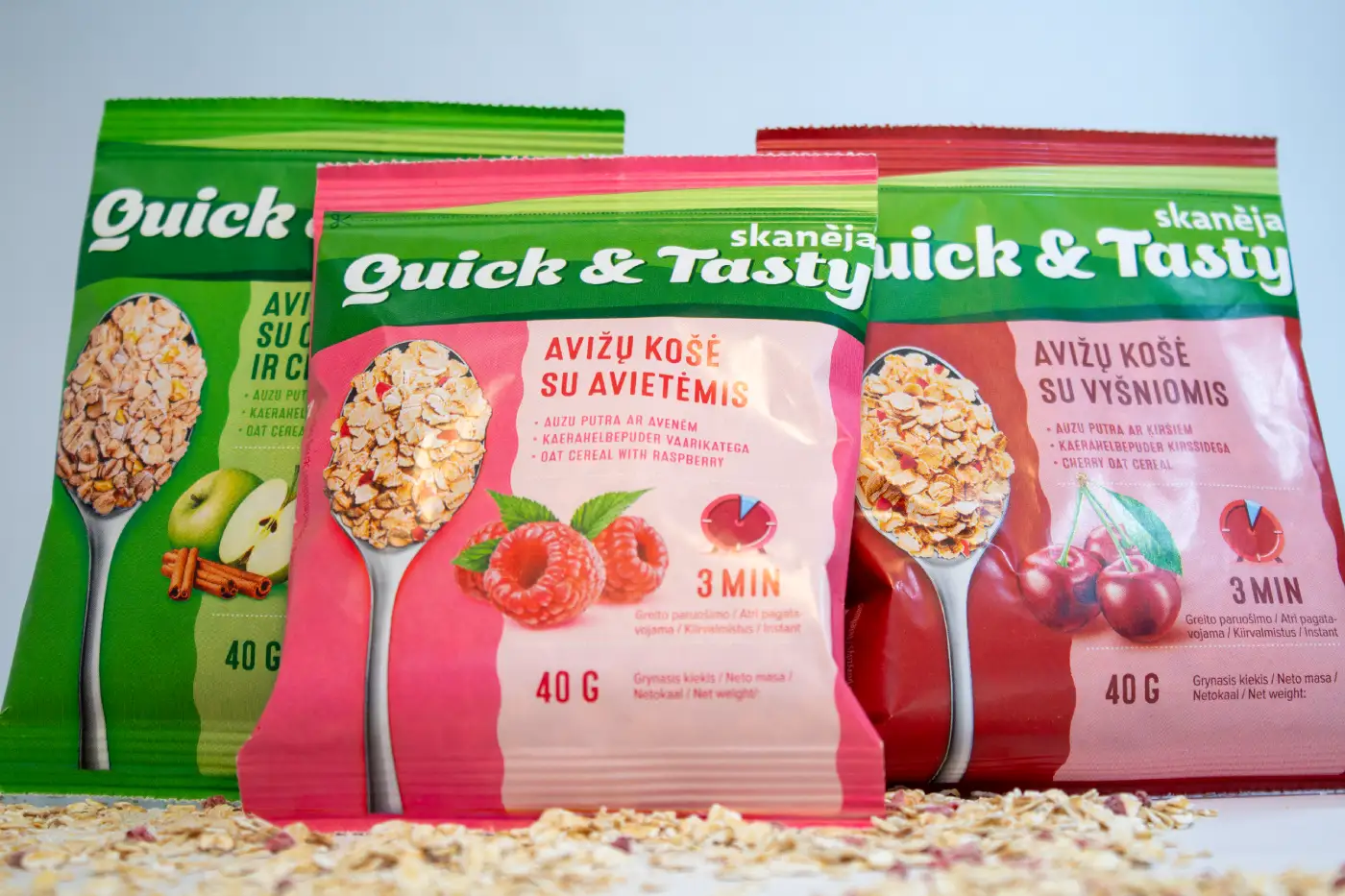
Alternatywa z papieru recyklingowalnego (PAP 22), pasująca do mechaniki folii plastikowych – zero utraty prędkości i kosztownych modyfikacji maszyn.
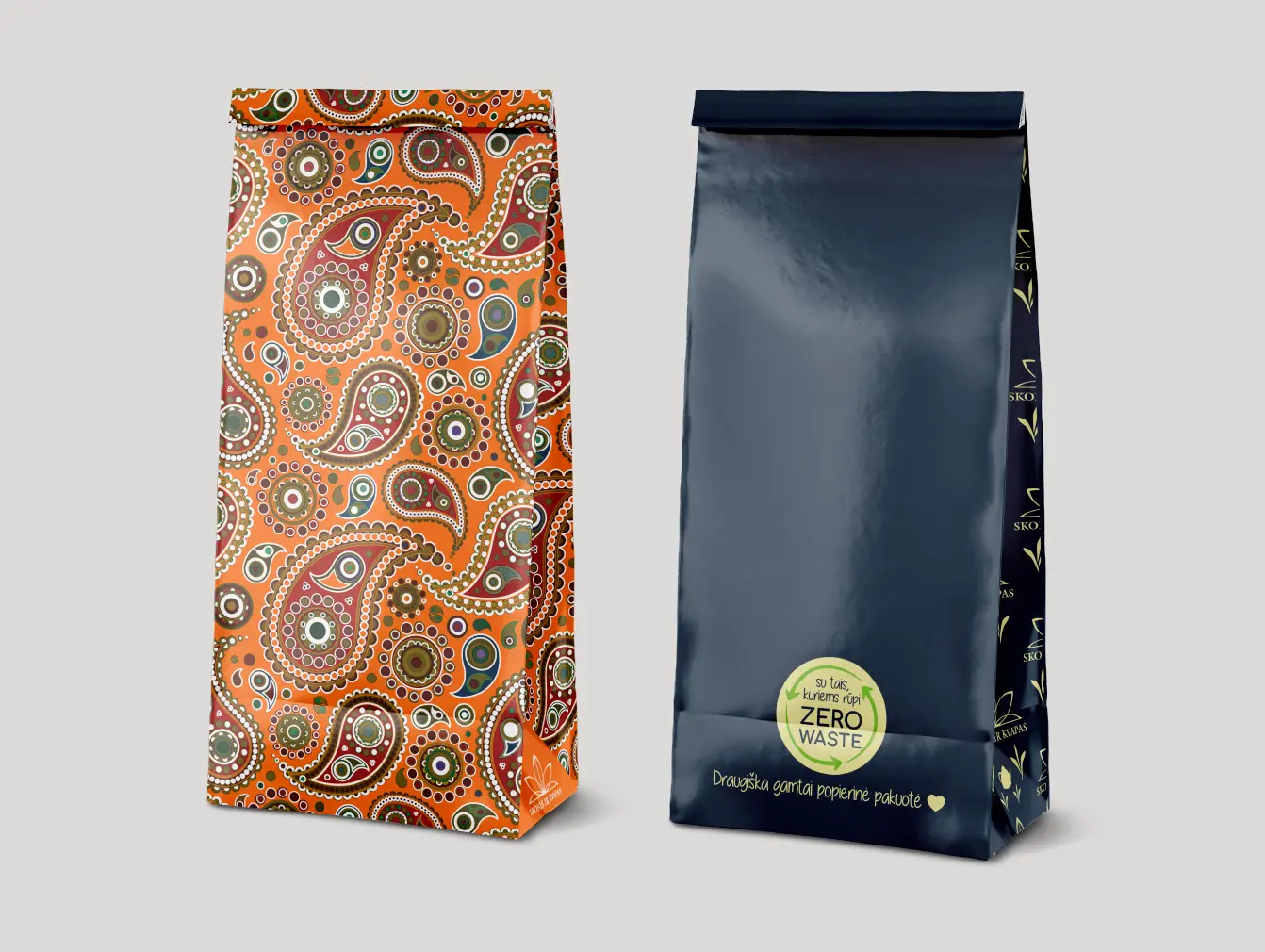
Dowód, że monomateriały mogą wyglądać premium. Opracowaliśmy powłokę barierową, która zachowuje okres przydatności i umożliwia skomplikowany druk fleksograficzny.
Zastąpiliśmy plastik recyklingowalnym papierem barierowym, zaprojektowanym do bezbłędnej pracy na szybkich maszynach pakujących przy zachowaniu odczucia premium.
Alternatywa z papieru recyklingowalnego (PAP 22), pasująca do mechaniki folii plastikowych – zero utraty prędkości i kosztownych modyfikacji maszyn.
Dowód, że monomateriały mogą wyglądać premium. Opracowaliśmy powłokę barierową, która zachowuje okres przydatności i umożliwia skomplikowany druk fleksograficzny.
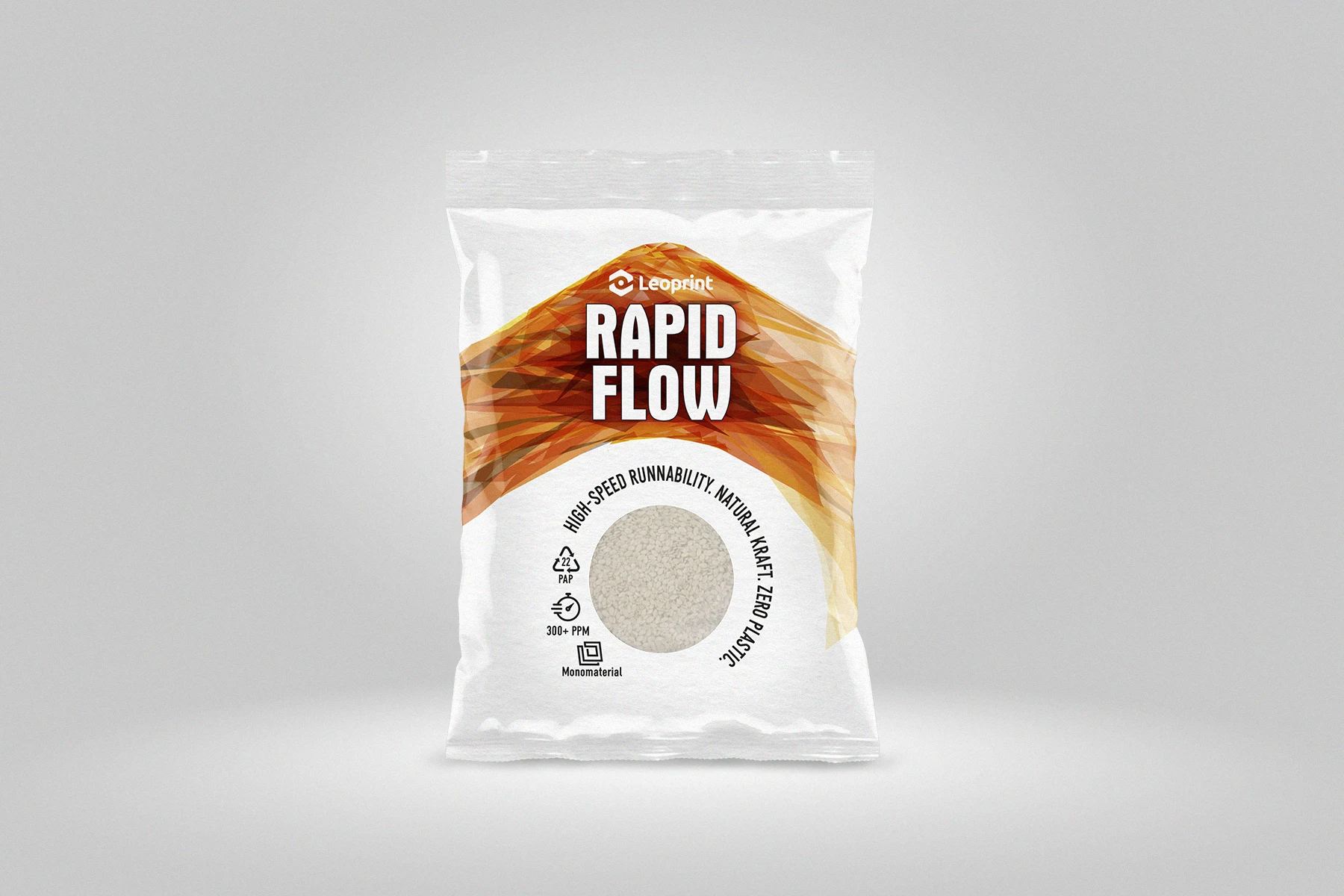
Zaprojektowaliśmy opakowanie flow-pack z papieru kraftowego PAP 22 z krystalicznym okienkiem — bezpośredni zamiennik (drop-in) dla folii BOPP/PE, zwalidowany przy prędkościach ponad 300 PPM przy zerowych modyfikacjach sprzętu.
.svg)
Druk to nie magia, to fizyka. Kontrolujemy zmienne, abyś Ty nie musiał.

.svg)
.svg)