The incoming EU Packaging and Packaging Waste Regulation (PPWR) sets a clear deadline: all packaging must be recyclable by 2030. But recyclable packaging is not the only path forward. Compostable packaging offers an alternative that is becoming crucial for specific sectors like tea, coffee, and fresh produce.
The challenge? Knowing when each option makes the most sense for your product, logistics, and brand story.
Compostable packaging is designed to break down into natural elements in industrial or home composting conditions, leaving no toxic residue.
Key advantages:
Limitations:
Recyclable packaging can be collected, processed, and turned into new products — keeping materials in circulation longer.
Key advantages:
Limitations:
| Feature | Compostable | Recyclable |
|---|---|---|
| Shelf Life | Shorter without advanced barriers | Long with barrier coatings |
| Consumer Appeal | High for eco-conscious niches | Broad recognition |
| Infrastructure | Industrial composting required | Existing recycling streams |
| Cost | Medium–High | Low–Medium |
| EPR Fee Impact | Often reduced | Lower fees (Eco-modulation bonuses) |
| 2030 EU Compliance | Not a replacement for recyclability | Fully aligned |
Ask yourself:
At Leoprint, we develop and supply sustainable packaging for both compostable and recyclable routes:
Whether you are switching to compostable to meet consumer demand or optimising recyclable structures for compliance, our team will match the right material to your performance, branding, and sustainability goals.
In 2026, the question isn’t just "compostable or recyclable?" It’s "which one runs effectively on my line?"
Both will play a role in the sustainable future. At Leoprint, we ensure both options are engineered for high-speed performance and regulatory certainty.
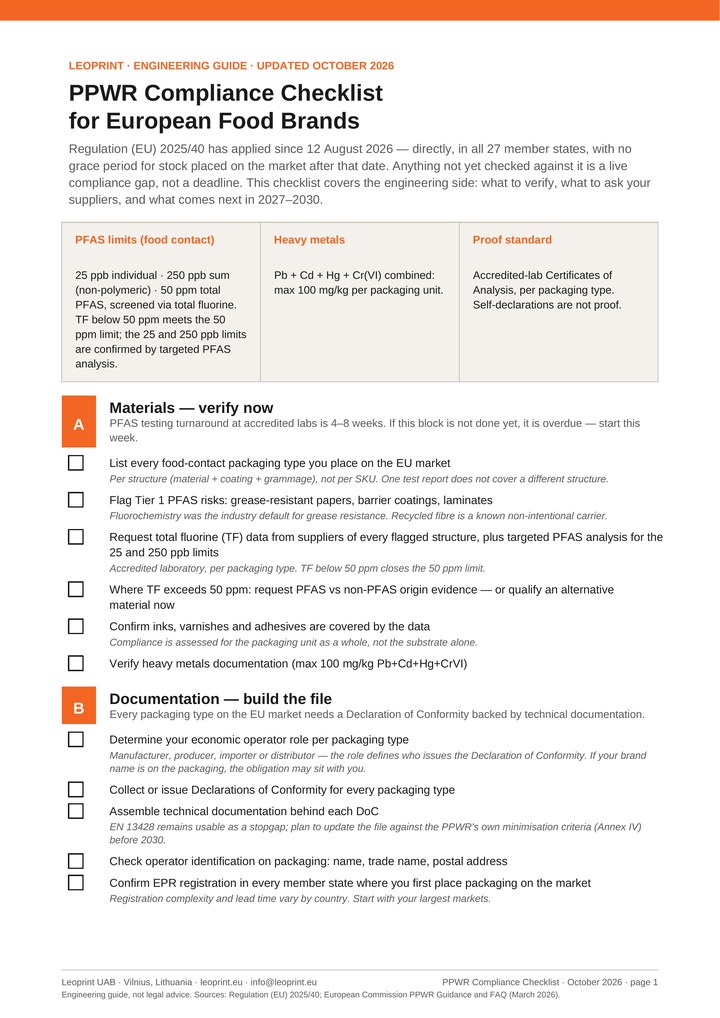
A two-page checklist for getting food packaging ready for the EU PPWR: PFAS limits, Declarations of Conformity, EPR, and what can wait until 2030.
There’s no one-size-fits-all answer. We help you navigate the technical and regulatory landscape to find the sustainable solution that actually works for your product and production lines.
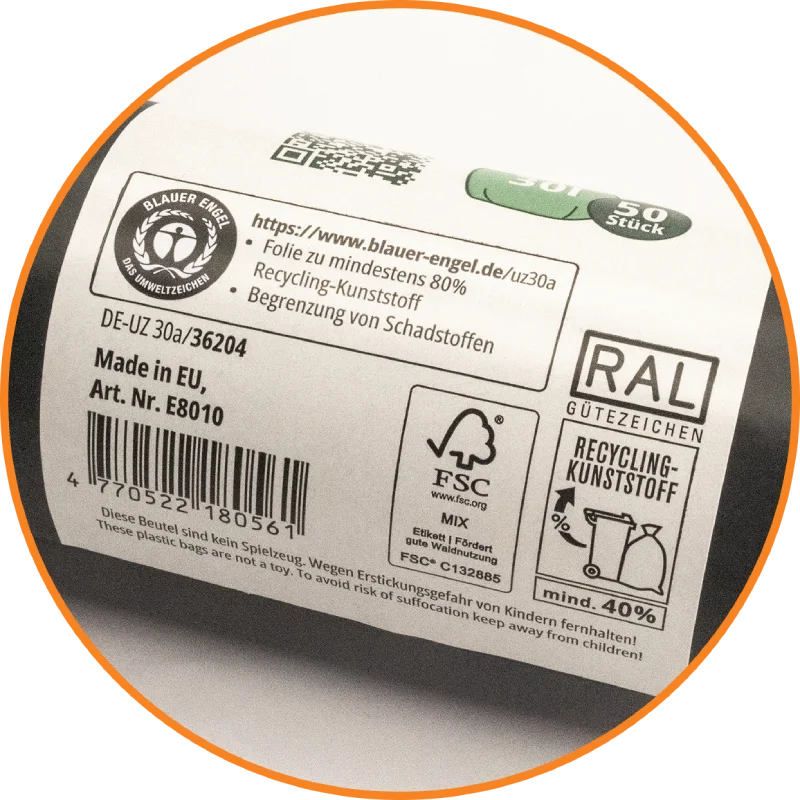
On a labelling line, a self-adhesive label is a small piece of engineering. How labels are made, how to choose materials and adhesives, and which roll details prevent first-delivery problems.
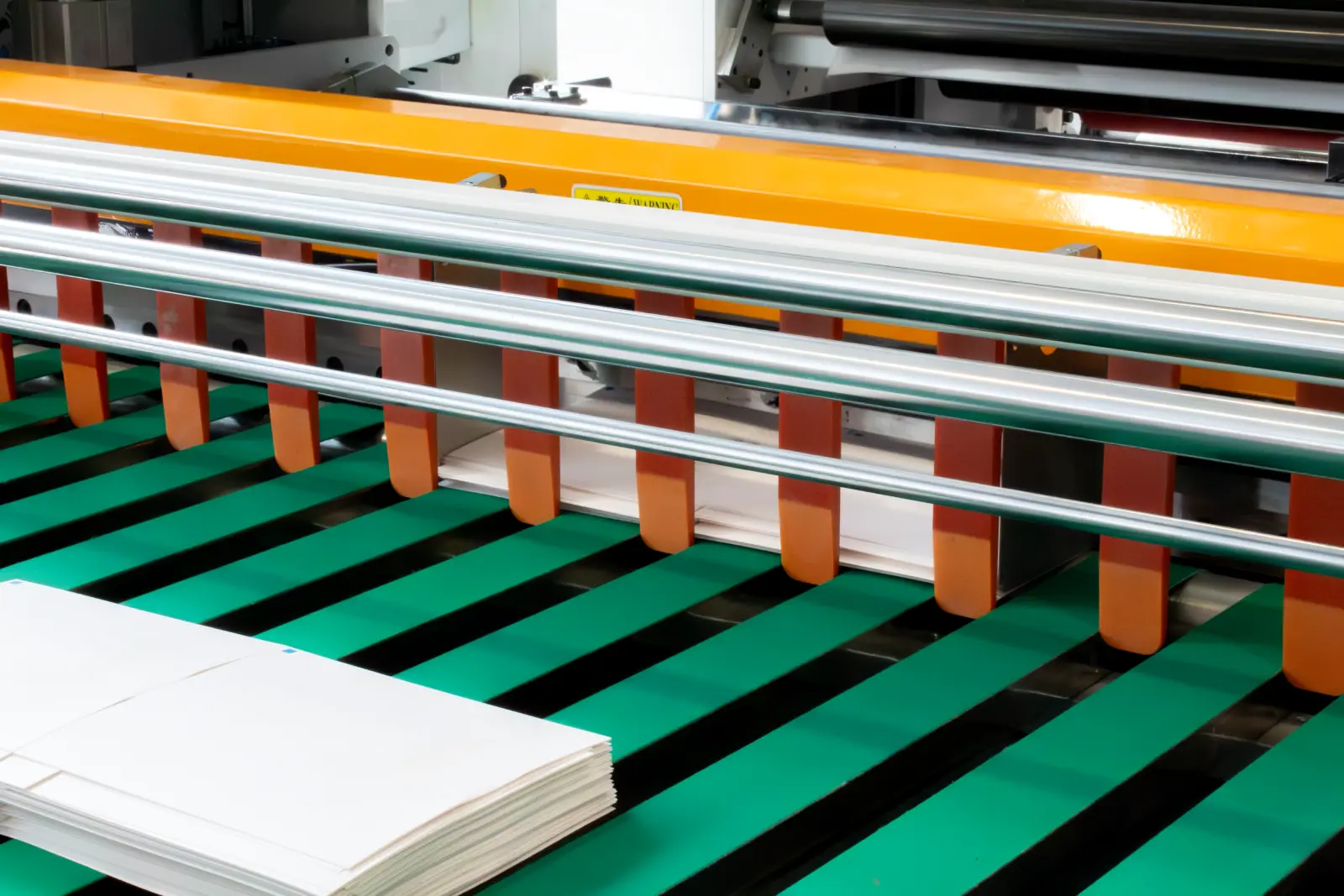
Most paper packaging and labels are printed flexo. How the press works, where it shines and where it needs care, and how to prepare artwork so your first run goes straight to plate-making.
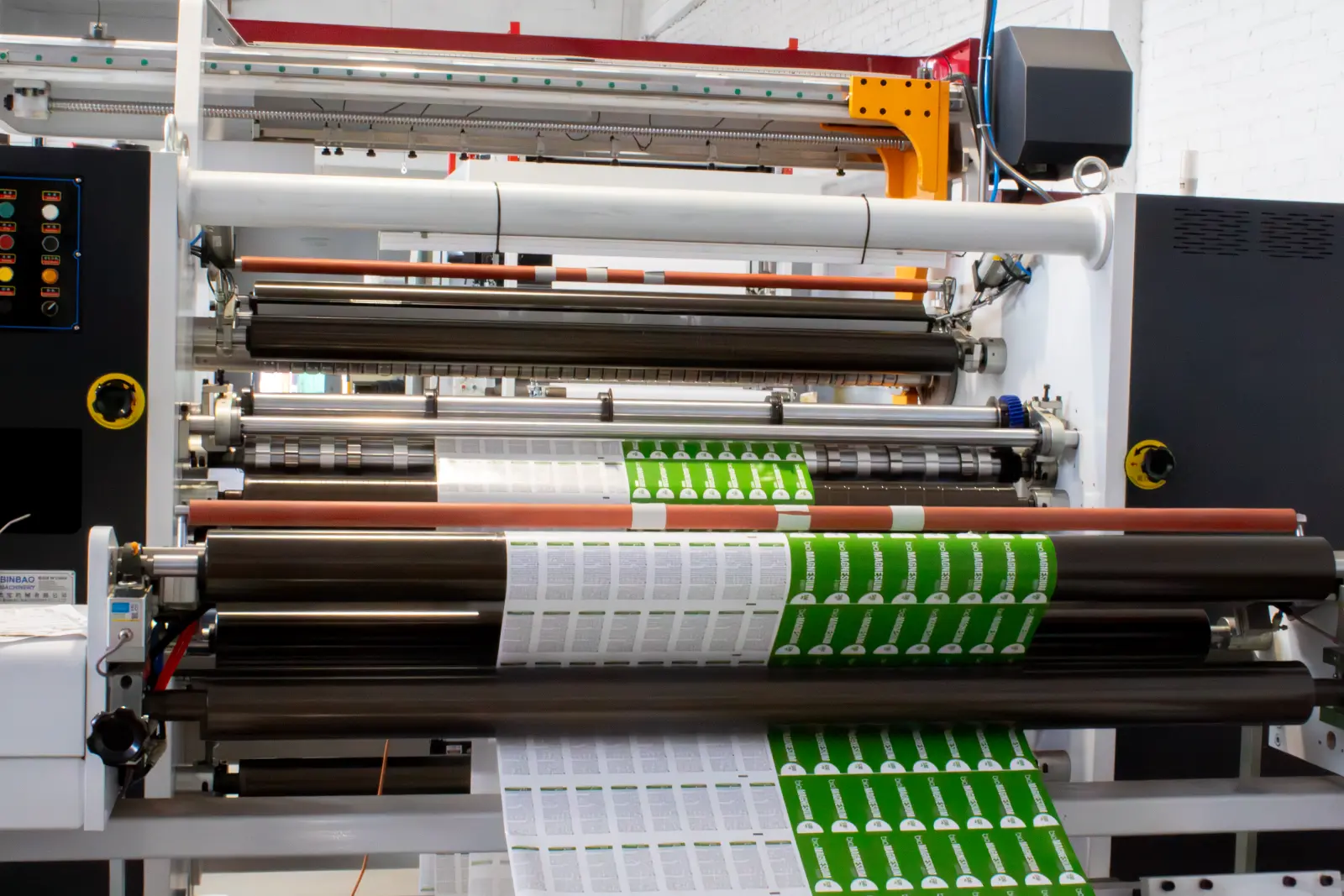
Barrier paper is how tea envelopes, sugar sticks and flow-packs are moving off plastic laminates. The properties that matter, how they are measured, the coating options and how to specify the right paper.
.svg)
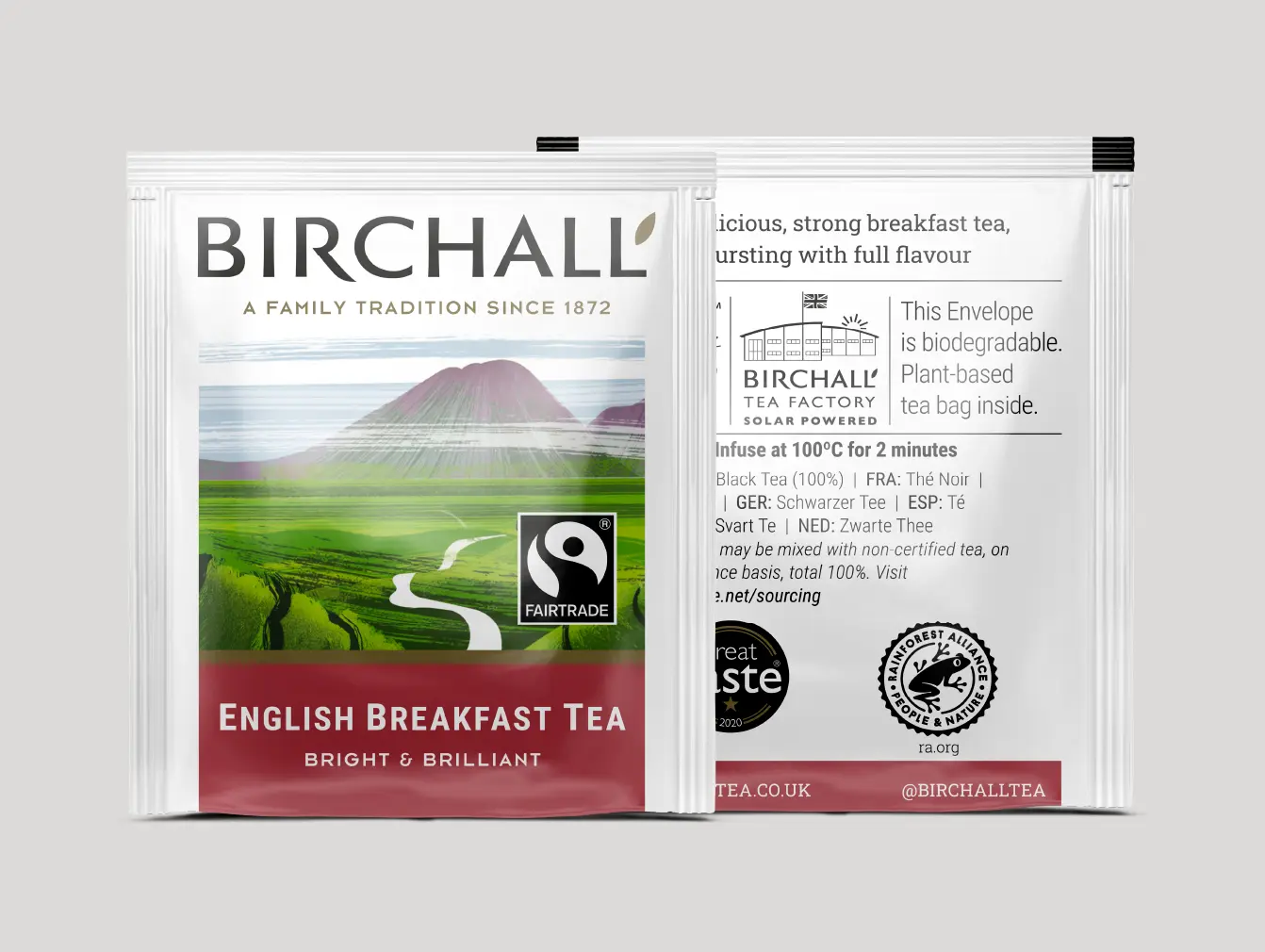
Replaced plastic with a recyclable barrier paper engineered to run flawlessly on fast packing machines without compromising the premium tactile feel.
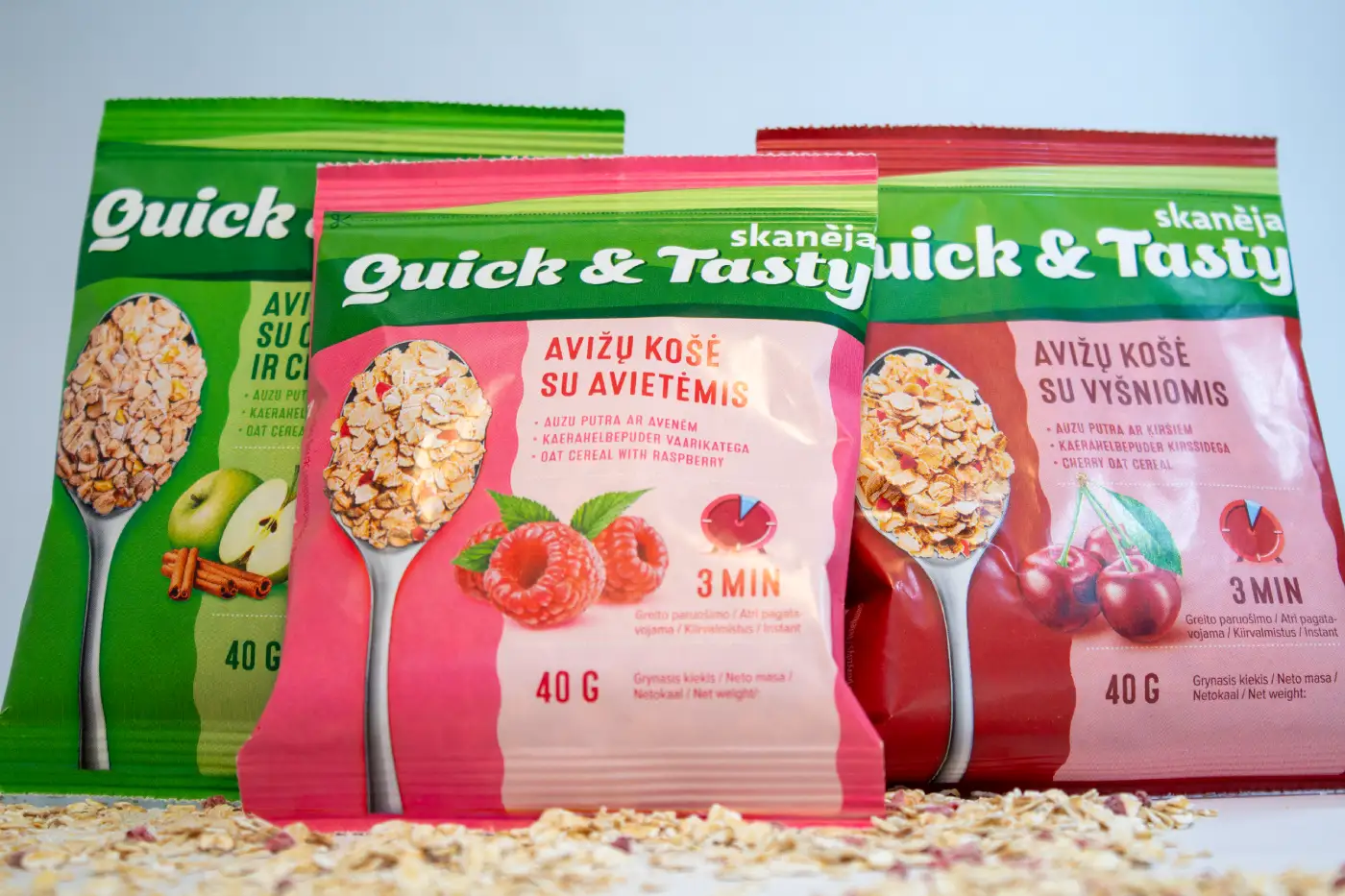
A recyclable paper alternative (PAP 22) that matched the mechanics of legacy plastic films, requiring zero speed loss or expensive machine modifications.
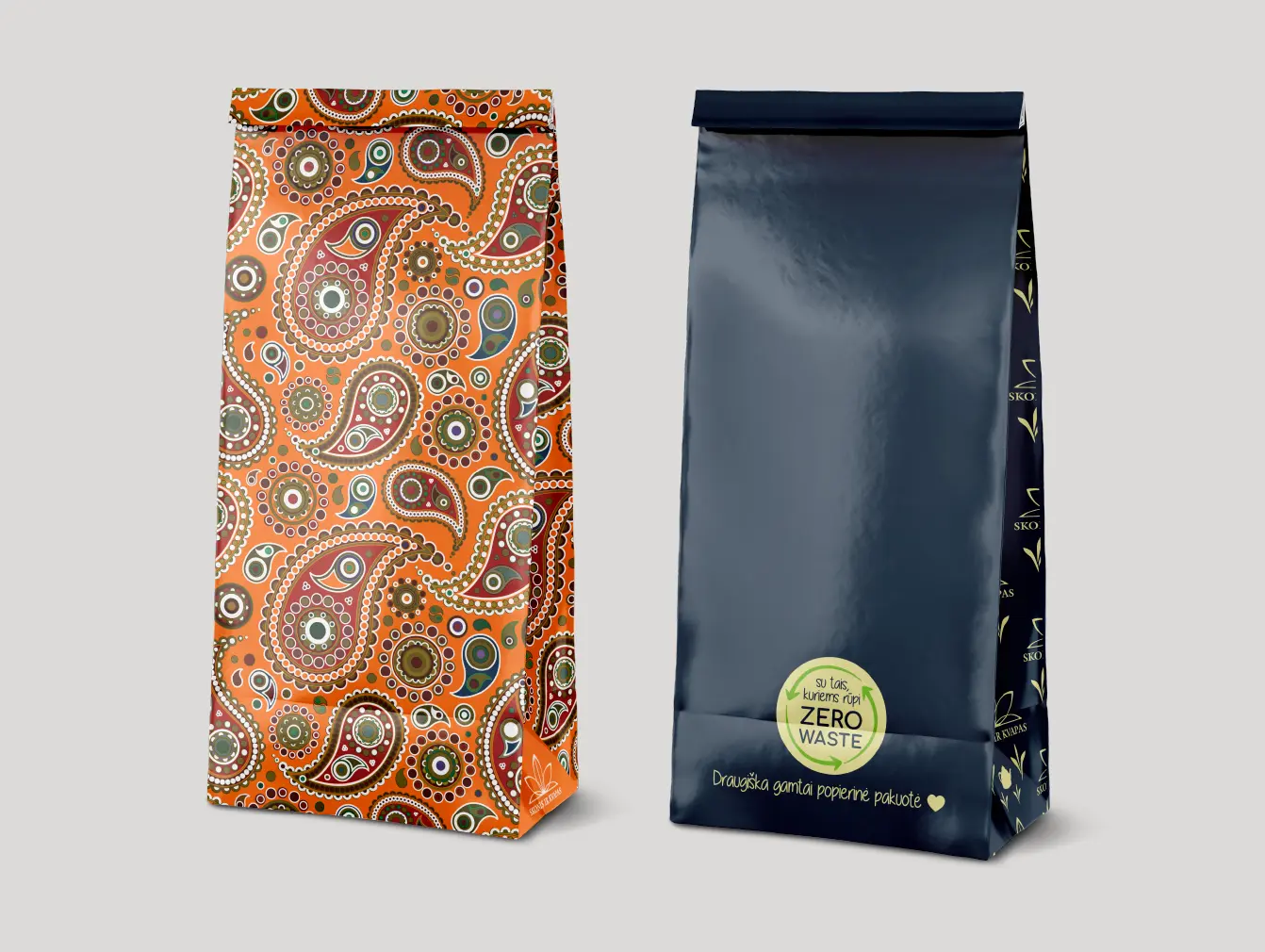
Proving that mono-materials can look premium. We engineered a protective barrier coating that maintains shelf-life while allowing for intricate, vibrant flexo printing.
Replaced plastic with a recyclable barrier paper engineered to run flawlessly on fast packing machines without compromising the premium tactile feel.
A recyclable paper alternative (PAP 22) that matched the mechanics of legacy plastic films, requiring zero speed loss or expensive machine modifications.
Proving that mono-materials can look premium. We engineered a protective barrier coating that maintains shelf-life while allowing for intricate, vibrant flexo printing.
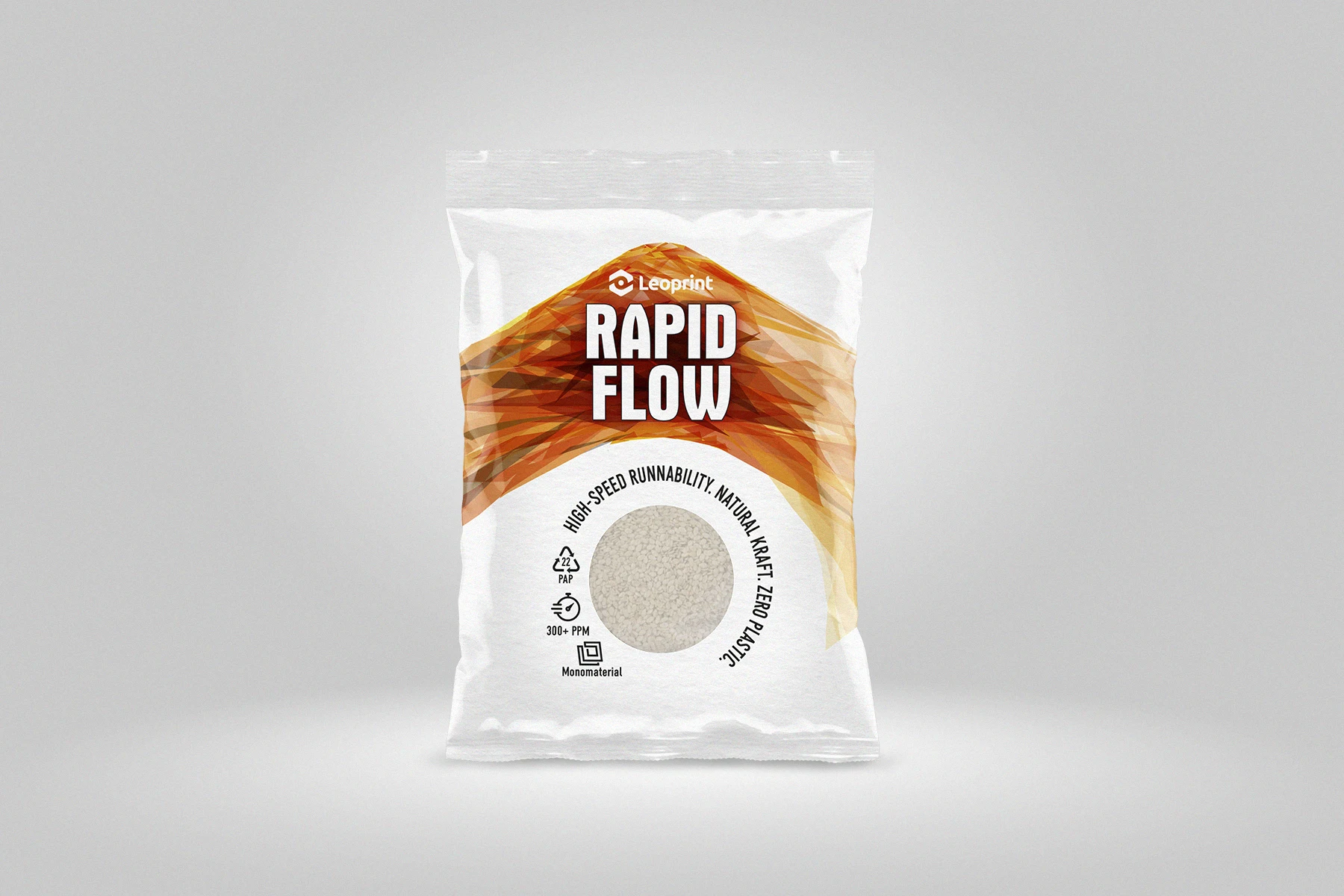
We engineered a PAP 22 kraft paper flow-pack with a crystal translucent window — a direct drop-in for BOPP/PE films, validated at 300+ PPM with zero machine modifications.
Printing isn't magic; it's physics. We control the variables so you don't have to.

.svg)
.svg)

.svg)