In packaging procurement, there is a "tipping point." For a startup brand, digital printing is the perfect solution—no plates, fast, simple. But as a business grows and order volumes increase, the unit cost of digital printing starts to drag down your margins.
This is exactly where flexography steps in. It’s not a step back into the past; it’s a step up to industrial efficiency.
As packaging engineers, we see flexo not just as a printing method, but as a tool for scaling optimization. Here is how it solves the buyer’s trilemma: cost, quality, and speed.
The math of flexography is simple: the initial investment in printing plates creates a return through speed and volume. Unlike digital printing, where the 10,000th metre costs the same as the first, in flexo, every additional metre lowers the total unit cost.
In short, the two methods spend money in different places:
| Digital | Flexo | |
|---|---|---|
| Plates and set-up | None | One plate per colour, plus make-ready on the press |
| Cost per unit | Stays almost flat with volume | Falls with every additional metre |
| Repeat orders | Same price every time | Plates are stored and reused, so repeats skip the plate cost |
| Design changes and versions | Cheap and fast | A changed colour means a new plate |
| Colour consistency across runs | Depends on calibration | Ink mixed to formula, identical run to run |
| Best fit | Short runs, tests, seasonal and personalised versions | Medium and long runs, stable designs, functional materials |
The tipping point is where the set-up cost of flexo is paid back by its lower unit price. Put in your own quotes to see where it sits for your pack. The starting values are illustrative only, for a four-colour label; real prices depend on size, material and finish.
Flexo becomes cheaper from
–Your order: – digital, – flexo.
Flexo is cheaper at this quantity. On repeat orders the gap grows, because the plates are already paid for.
Digital is cheaper at this quantity. If you reorder the same design regularly, add up a year of orders: the yearly volume often crosses the line.
With these prices flexo never catches up. Check the unit prices: at volume, flexo is normally the lower of the two.
There is a myth that only gravure or digital can guarantee top-tier quality. Modern HD Flexo debunks this. By using laser-engraved plates and precise anilox ink delivery systems, we achieve:
This is where flexo opens doors that remain closed to other methods. Because it is a direct-contact process, it allows us to work with complex surfaces.
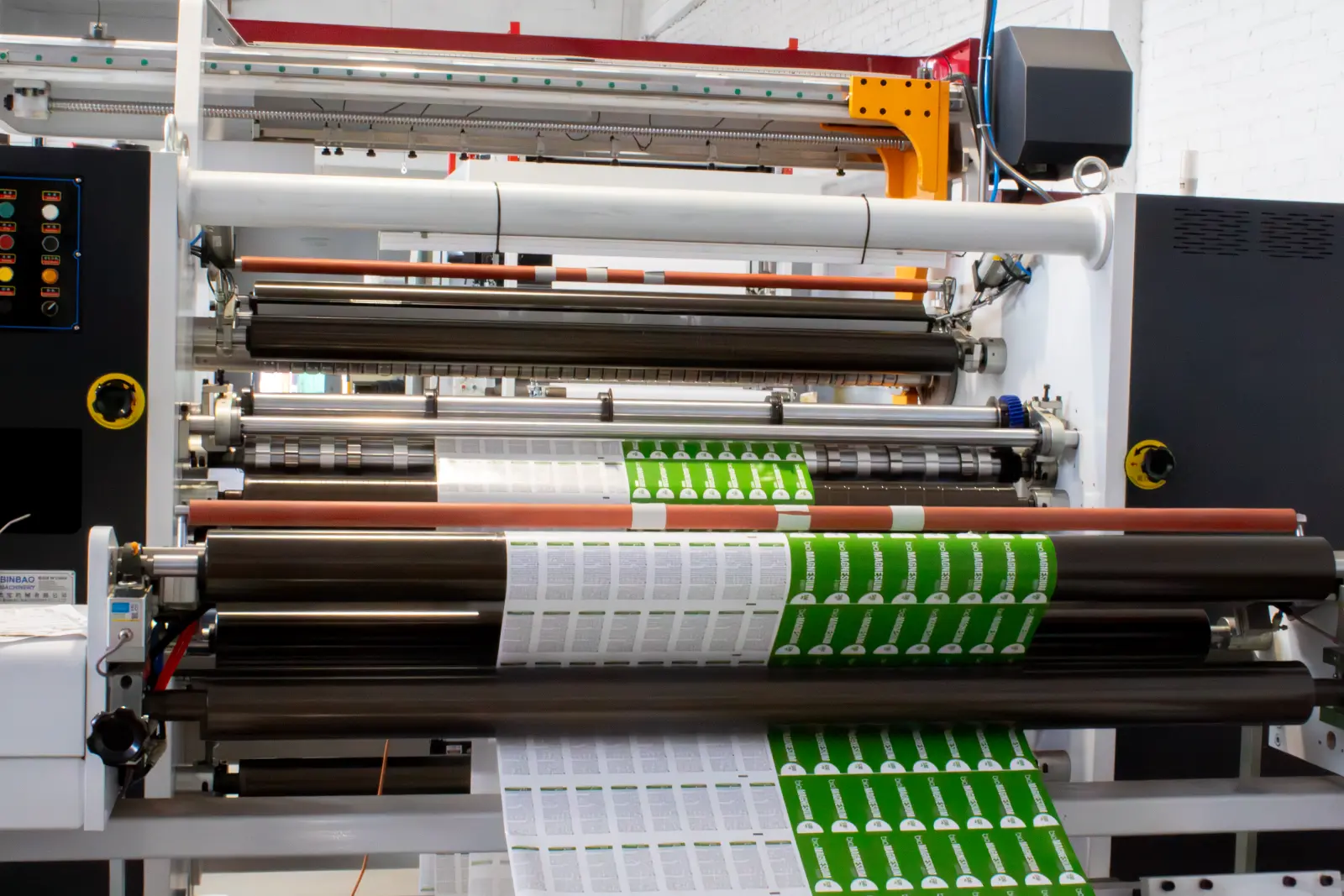
For self-adhesive labels, the numbers are smaller but the decision is identical. Digital suits many short versions, such as test launches or seasonal flavours. Once a label design is stable and reordered, flexo usually wins, and it adds inline finishes like cold foil, embossing and silk screen in the same pass. Many brands combine both: digital for launches, flexo once a product proves itself.
Before approving your next order, evaluate these engineering parameters:
If you are new to flexo, our guide to flexo printing for packaging explains how the process works and how to prepare artwork for it.
Good packaging is packaging that works—both on the shelf and on your balance sheet. Flexography is the industry standard for a reason: it is the most reliable way to align high volume with engineering precision.
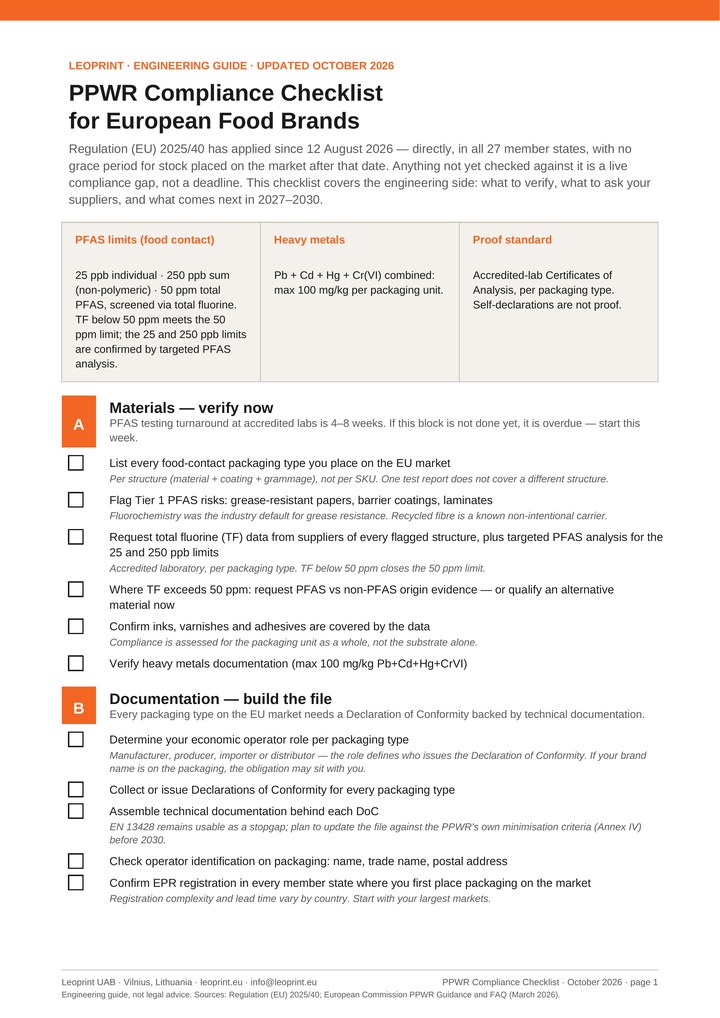
A two-page checklist for getting food packaging ready for the EU PPWR: PFAS limits, Declarations of Conformity, EPR, and what can wait until 2030.
Flexography is the industry standard for scale, but the numbers have to make sense. We analyse your run numbers and design complexity to confirm if Flexo is your most profitable path.
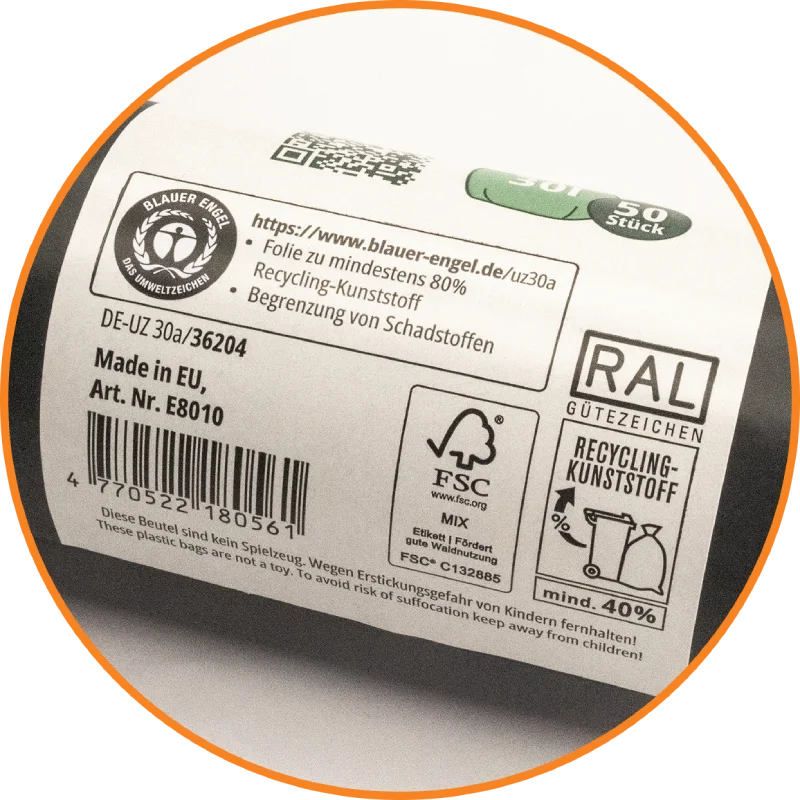
On a labelling line, a self-adhesive label is a small piece of engineering. How labels are made, how to choose materials and adhesives, and which roll details prevent first-delivery problems.
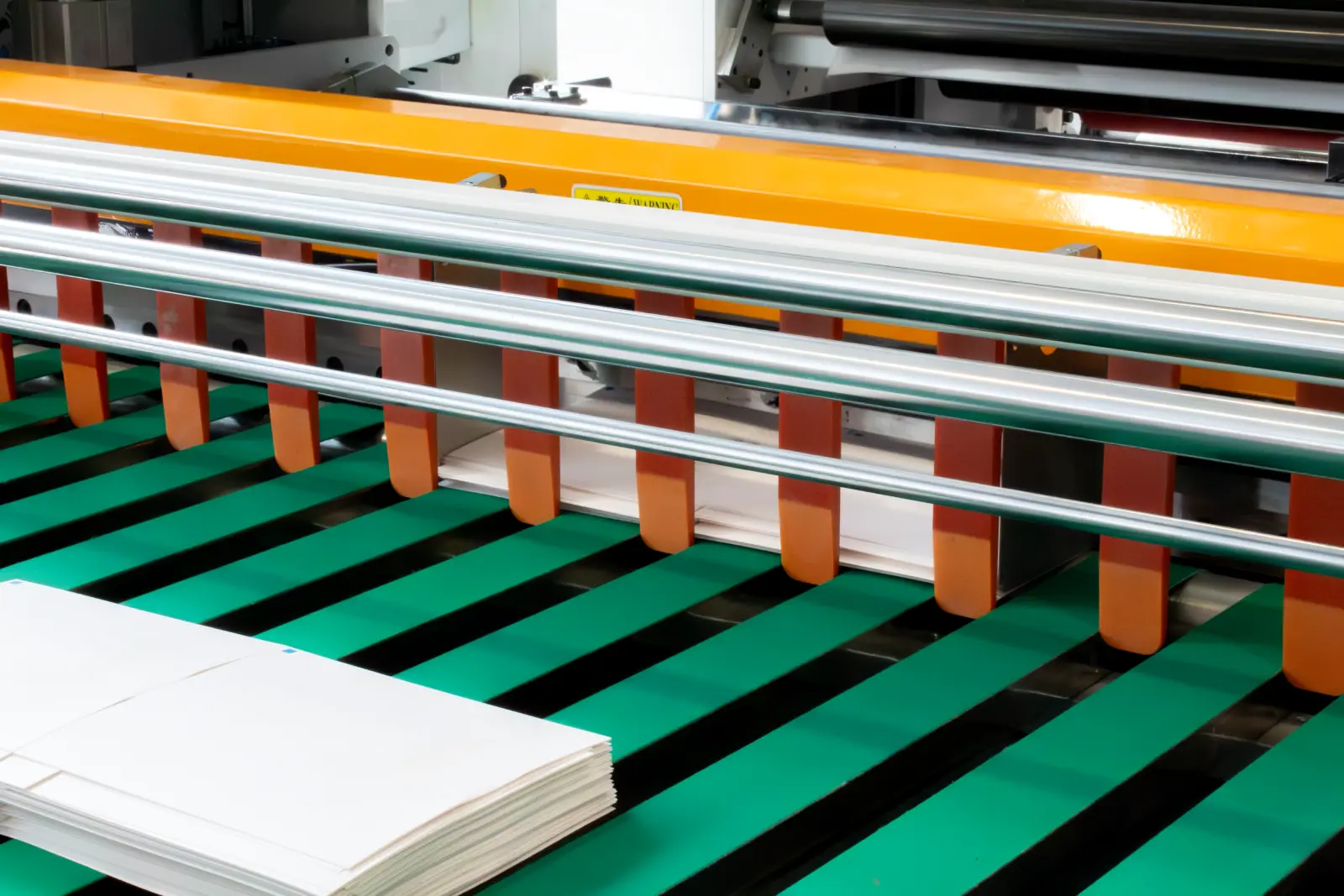
Most paper packaging and labels are printed flexo. How the press works, where it shines and where it needs care, and how to prepare artwork so your first run goes straight to plate-making.
Barrier paper is how tea envelopes, sugar sticks and flow-packs are moving off plastic laminates. The properties that matter, how they are measured, the coating options and how to specify the right paper.
.svg)
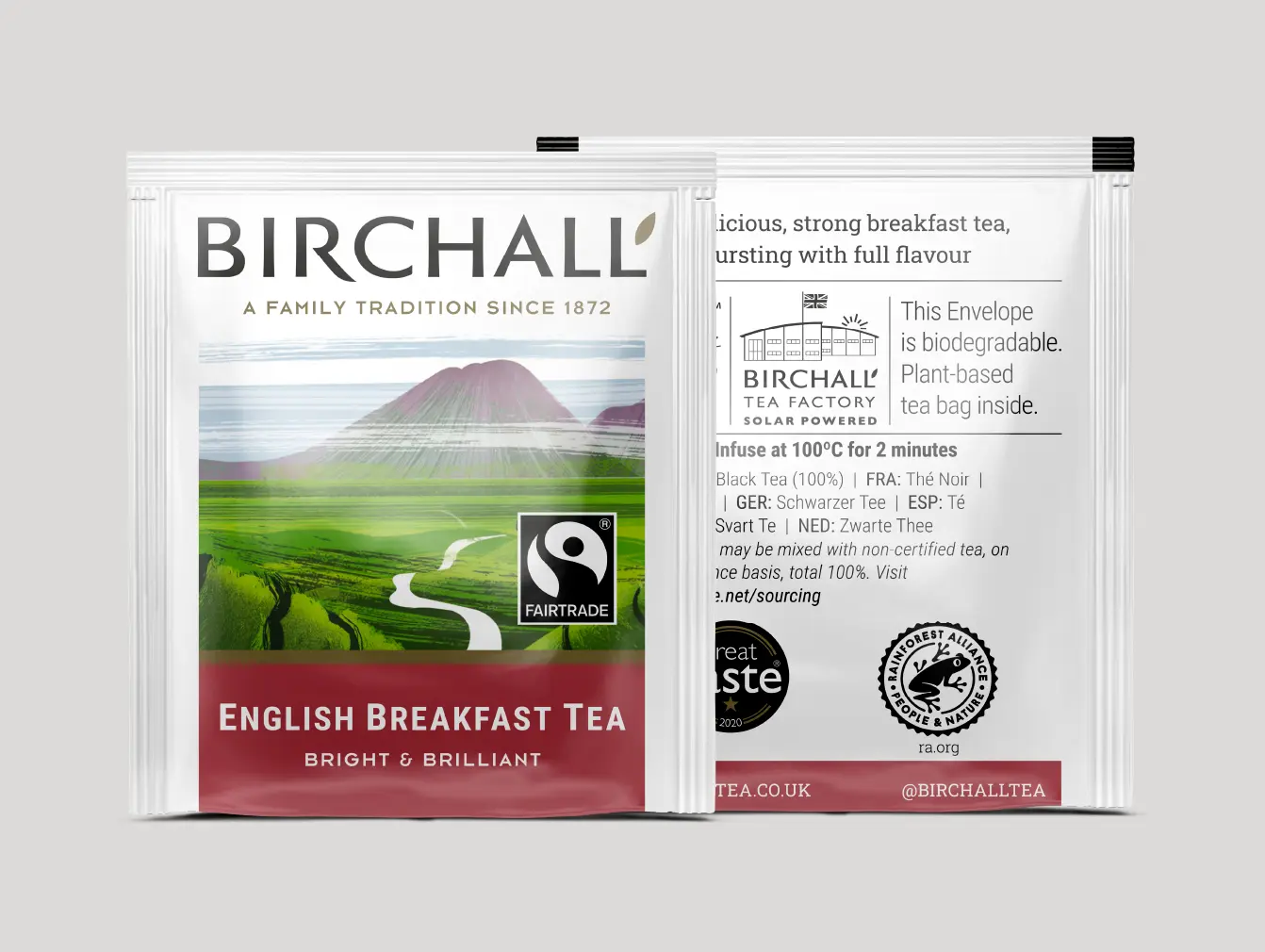
Replaced plastic with a recyclable barrier paper engineered to run flawlessly on fast packing machines without compromising the premium tactile feel.
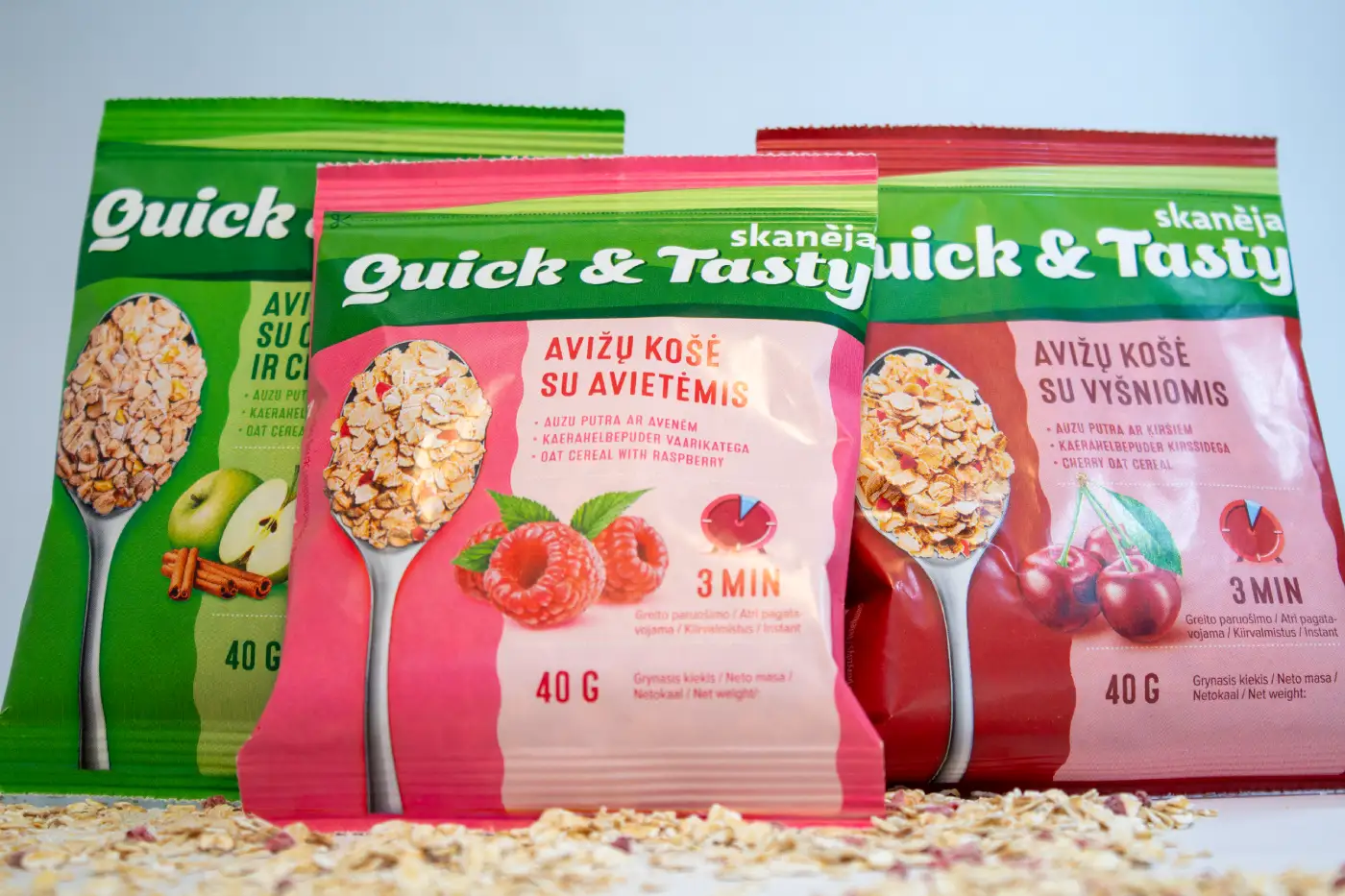
A recyclable paper alternative (PAP 22) that matched the mechanics of legacy plastic films, requiring zero speed loss or expensive machine modifications.
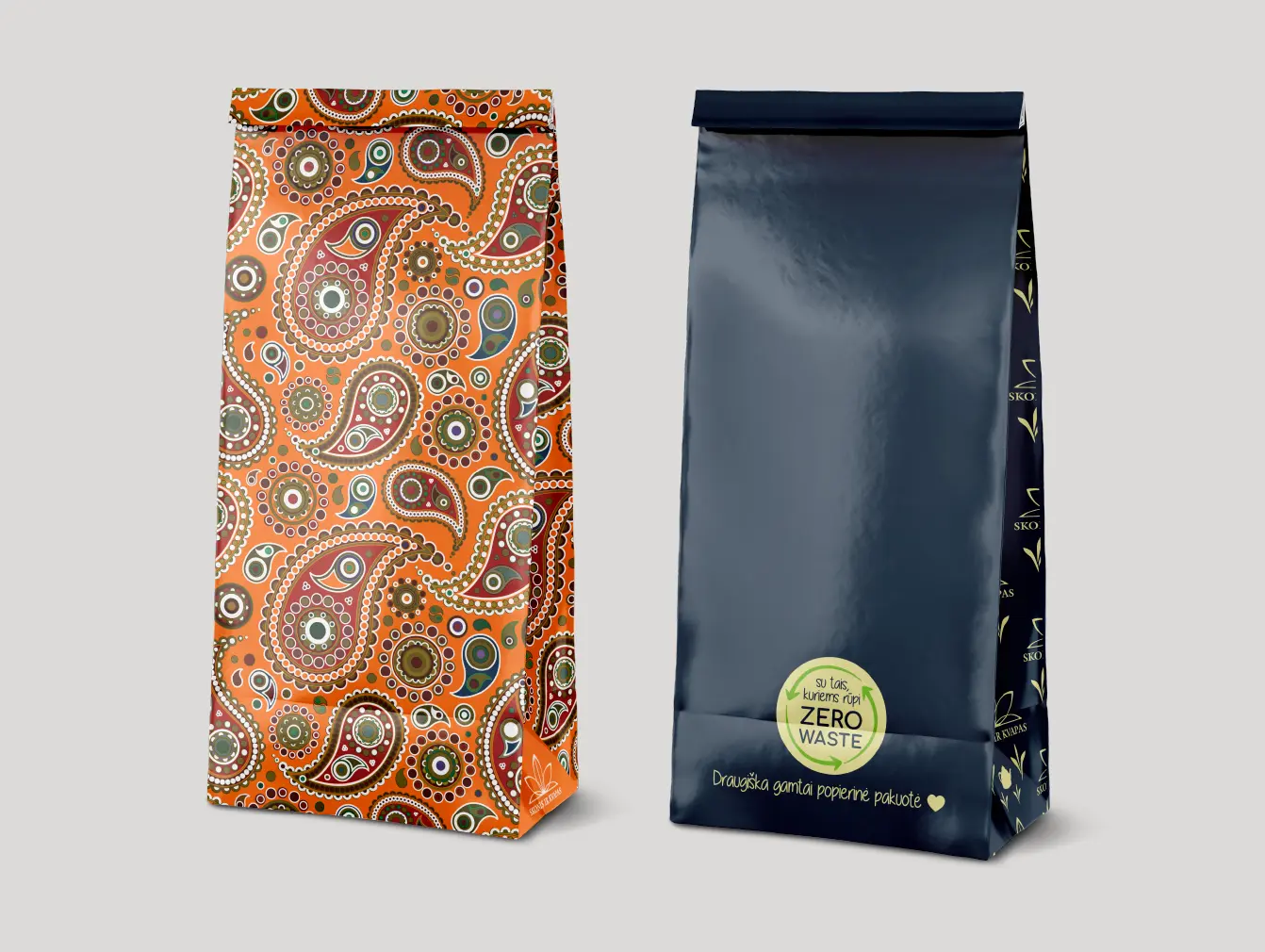
Proving that mono-materials can look premium. We engineered a protective barrier coating that maintains shelf-life while allowing for intricate, vibrant flexo printing.
Replaced plastic with a recyclable barrier paper engineered to run flawlessly on fast packing machines without compromising the premium tactile feel.
A recyclable paper alternative (PAP 22) that matched the mechanics of legacy plastic films, requiring zero speed loss or expensive machine modifications.
Proving that mono-materials can look premium. We engineered a protective barrier coating that maintains shelf-life while allowing for intricate, vibrant flexo printing.
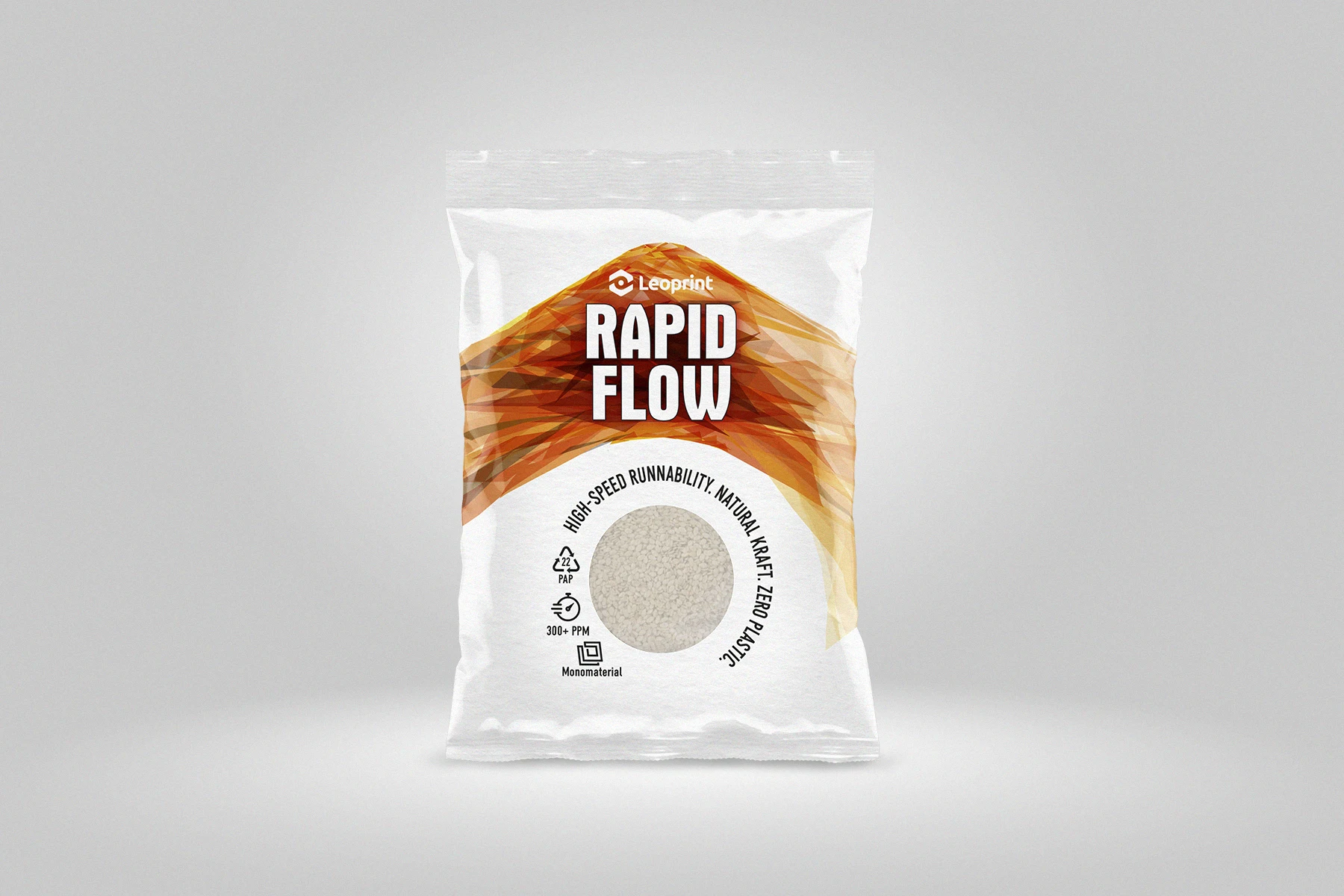
We engineered a PAP 22 kraft paper flow-pack with a crystal translucent window — a direct drop-in for BOPP/PE films, validated at 300+ PPM with zero machine modifications.
.svg)
Printing isn't magic; it's physics. We control the variables so you don't have to.

.svg)
.svg)