High-performance heat-sealable paper and bio-laminates engineered for seamless integration on IMA, Teepack and Fuso lines.
High-performance heat-sealable paper and bio-laminates engineered for seamless integration on IMA, Teepack and Fuso lines.
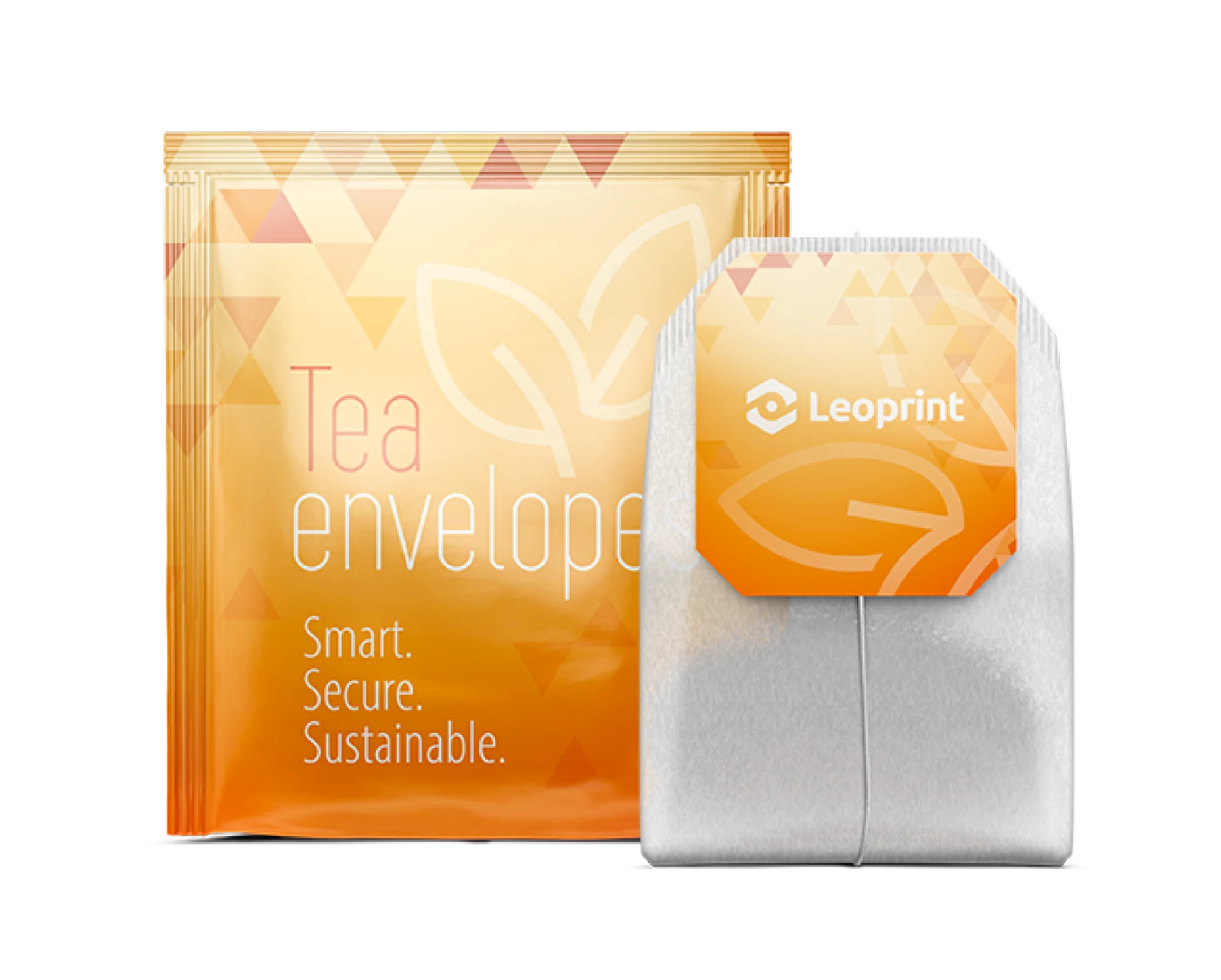
We engineer high-performance tea envelopes designed as a 'drop-in' solution for standard packing equipment. Our primary offering is Recyclable Heat-Sealable Paper, developed with specialized water-based coatings that provide superior seal integrity and essential barriers against moisture, aroma loss, and mineral oils.
Why our materials are the preferred choice for tea packers:
Industrial tea packers and brands seeking certified sustainable packaging alternatives validated for high-speed automated production.
.svg.webp)
FSC®-certified paper available on request (license number FSC-C132885)

Recyclability

Compostability
Validated performance on IMA, Teepack, and Fuso lines (300+ ppm) with consistent tension control.
Engineered barriers against moisture, oxygen and mineral oils to preserve aroma.
Recyclable heat-sealable paper and bio-based laminates (NatureFlex™, PLA), monoplastics (PP) for eco-compliance.
Low-temperature sealing capabilities ensuring package integrity and energy efficiency.

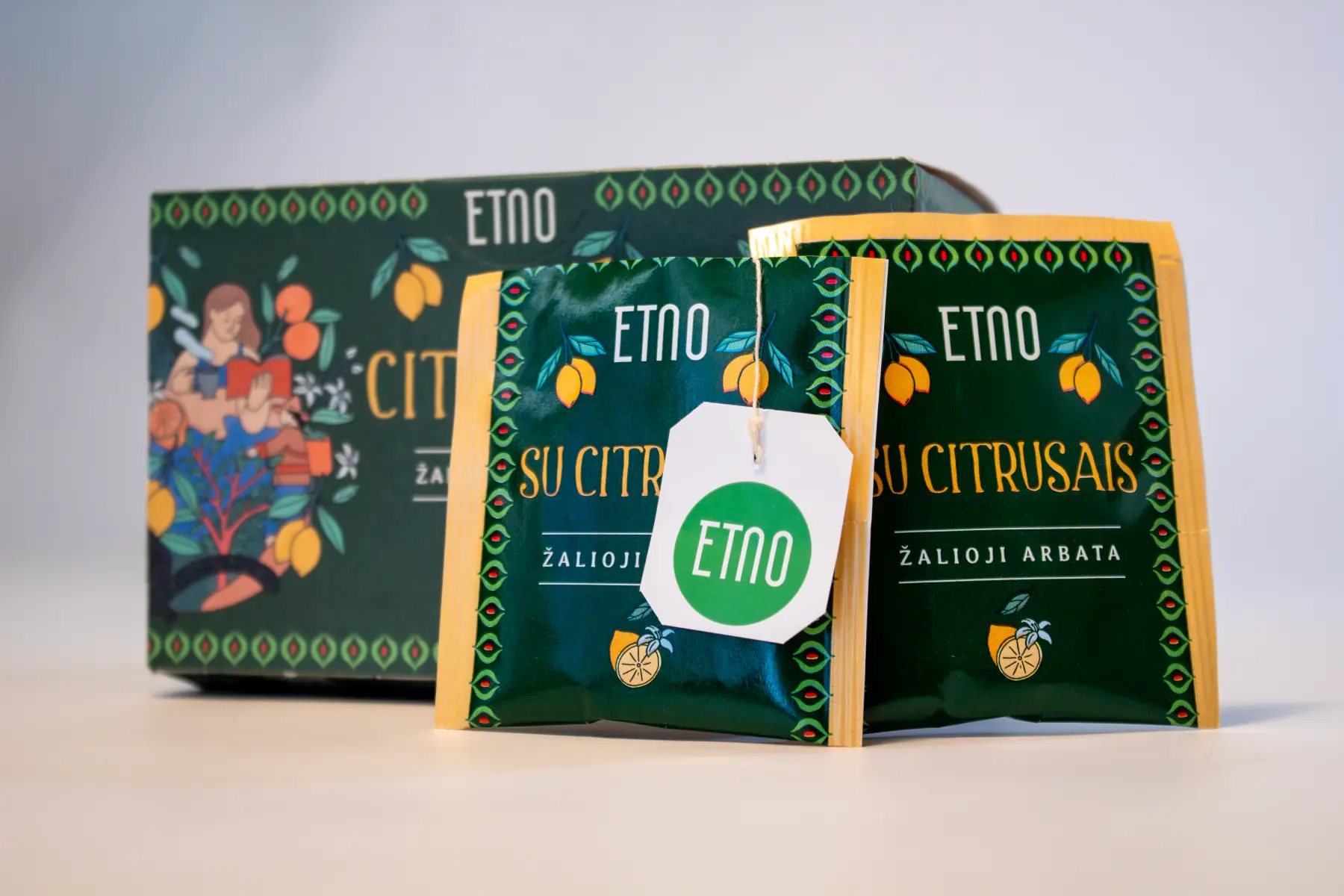


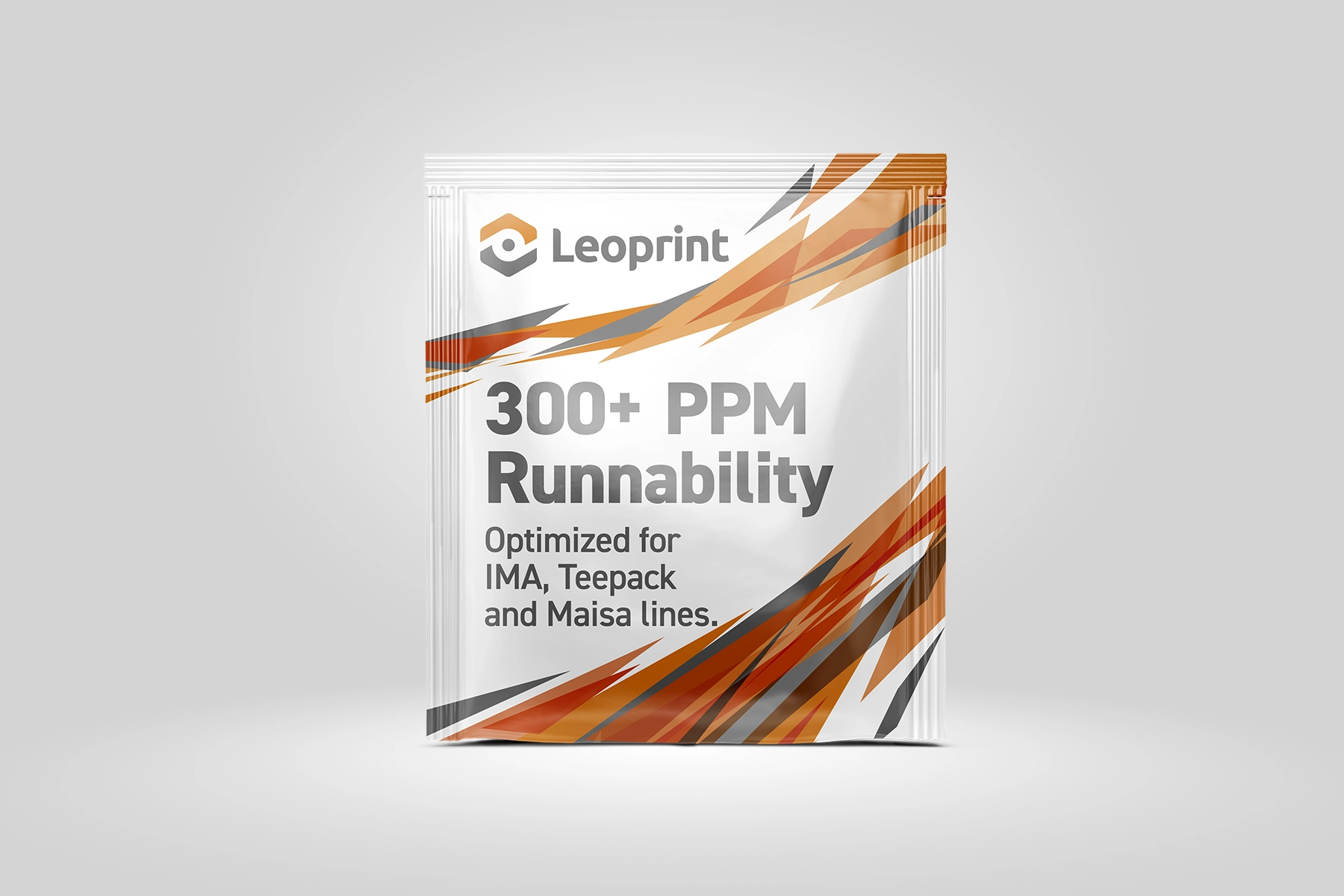
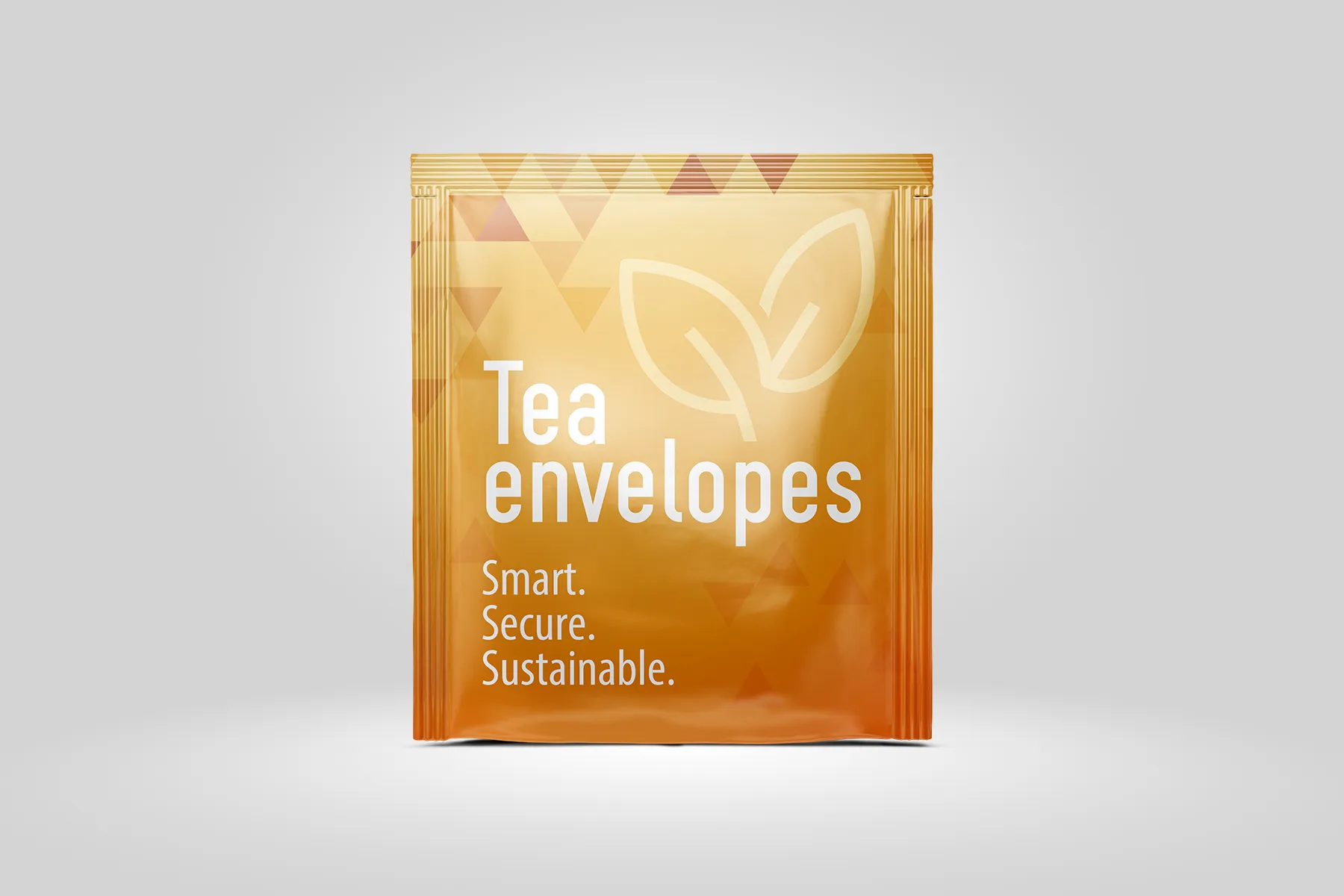

Our heat-sealable envelopes and tags are made for industrial tea packers and tea brands that run automated packing lines and want to move away from plastic or composite laminates. The envelope and the tag are produced in very large volumes, so even a small problem with sealing or web tension turns into lost hours. The goal of every project is the same: change the material, keep the line.
Typical situations where packers come to us:
A tea envelope has three jobs at once: seal reliably at speed, keep the aroma in and foreign odours out, and carry a sharp print. On the machine, the decisive factor is often friction. In the Imporient (Birchall Tea) project we formulated a heat-seal coating that matches the friction coefficient of plastic, so the paper glides through double-chamber and prism tea bag machines at their original design speed, without drag or jamming.
Converting precision matters as much as the coating. Envelope ribbons that wander in width cause stoppages on high-speed IMA machines, so we apply the slitting accuracy we developed for medical label projects. For Imporient, ribbons are cut to 65.9 ±0.1 mm. Print is produced with high-definition flexography, which keeps brand colours strong on recyclable paper.
We offer two material routes. The right one depends mainly on where the used envelope is expected to end up.
Useful questions before deciding: how will consumers in your main markets dispose of the envelope, what do your retailers prefer, and how sensitive is the blend to aroma loss? Our article Compostable vs recyclable packaging: the 2026 brand decision walks through the trade-offs in more detail.
The two routes are built for different end-of-life paths, and we keep them separate. Recyclable envelopes are designed for paper recycling. Compostable structures are designed for composting, and the certification status of a specific structure should be confirmed with our team before you put a claim on pack. FSC® certified paper is available on request under licence FSC-C132885. Our barrier coatings are water-based, and in the NatureFlex™ structure the inks and adhesives are water-based as well.
Lighter material also counts. Moving from 90 gsm to 70 gsm in the Švenčionių Vaistažolių Fabrikas (SVF) project reduced material weight by 22%, which lowers both transport volume and the tonnage on which packaging fees are paid.
The EU Packaging and Packaging Waste Regulation (PPWR) has applied since 12 August 2026, and it has put recyclability and documentation for food-contact packaging high on buyers' agendas. Moving from a composite laminate to a mono-material paper also changes how the envelope is classified for extended producer responsibility (EPR). In the SVF project, the shift from the combined-packaging tariff (about 990 €/t) to the paper tariff (about 260 €/t), together with the lighter paper, cut EPR liabilities by roughly 80%. Actual savings depend on your markets and volumes.
We start from your machine, not from a catalogue sheet. Tell us which IMA, Teepack or Fuso line you run, the bag and envelope format, the material you use today and which end-of-life route you are aiming for. We then adapt slipperiness and heat-seal parameters to your machine settings, so your operators do not have to re-learn the line. Envelopes and tags can be handled as one project, as we did for Imporient. Minimums, lead times and pricing are quoted per project. Talk to our team to discuss the right material for your line.
Our materials are engineered for IMA, Teepack and Fuso lines and validated for runnability at 300+ PPM. Before production we adapt the material's slipperiness and heat-seal parameters to your specific machine settings. In the Imporient project, the material runs on both double-chamber and prism tea bag machines at their original design speeds, so the switch did not require slowing the line down.
Both routes are available, as separate materials. Our recyclable heat-sealable paper is designed for the paper stream and can qualify as PAP 22 when non-fibre content stays below 5%. For organic ranges we offer compostable bio-laminates such as Paper / NatureFlex™ or PLA-based structures. FSC® certified paper is available on request (licence FSC-C132885). Please confirm certification for your exact structure with our team before making on-pack claims.
It should not. We use several thin coating layers instead of one heavy coat, so the paper stays flat and flexible and keeps a wide sealing window close to that of plastics. For Imporient we matched the friction coefficient of plastic. In the Švenčionių Vaistažolių Fabrikas (SVF) project the barrier paper matched the original line speeds with no jamming, and the thinner material gave 20% more metres per roll.
Yes. We produce die-cut tea tags from food-grade board, made for high-speed string knotting and staple-free attachment systems. Envelopes and tags can be developed together, so print, colours and material choices stay consistent across the pack. For Imporient (Birchall Tea) we supplied a combined solution covering both envelopes and tags, printed with high-definition flexography.
The most useful details are the machine make and model, the tea bag type (for example double-chamber or prism), the envelope format, the material you use today, approximate volumes and whether you are aiming for a recyclable or compostable result. With that we can propose a material and adapt its parameters to your line. Minimums, lead times and prices are quoted per project.
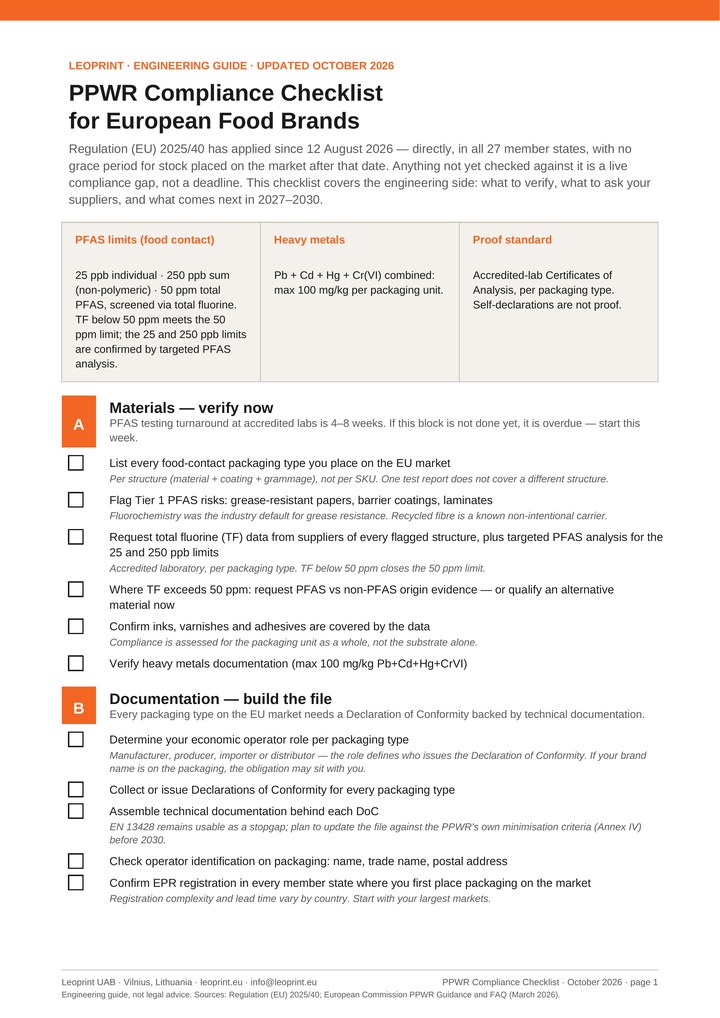
A two-page checklist for getting food packaging ready for the EU PPWR: PFAS limits, Declarations of Conformity, EPR, and what can wait until 2030.
.webp)
High-barrier heat-sealable paper engineered for high-speed HFFS and VFFS flow-pack lines (300+ PPM).
.svg)
.webp)
High-definition flexo labels validated for high-speed dispensing. Engineered on Avery Dennison & Arconvert substrates for zero-downtime.
.webp)
Versatile bakery bags featuring Translucent Paper windows for visibility. A 100% recyclable mono-material alternative to plastic-film inserts.

SENSE FLOW delivers the soft-touch premium feel of plastic films using only FSC® paper — fully recyclable PAP 22, with a crystal-clear window and stable runnability on HFFS/VFFS lines.
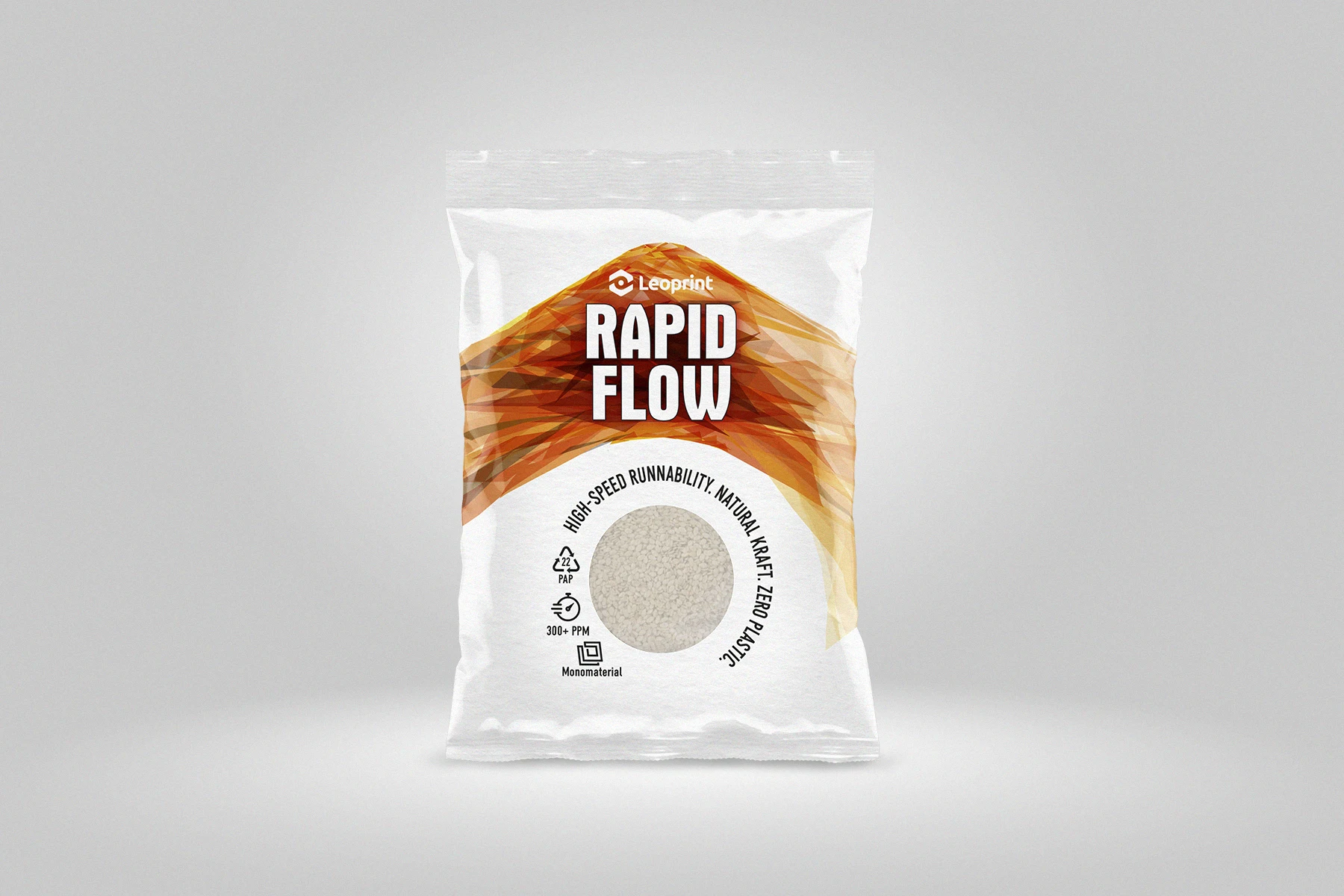
We engineered a PAP 22 kraft paper flow-pack with a crystal translucent window — a direct drop-in for BOPP/PE films, validated at 300+ PPM with zero machine modifications.
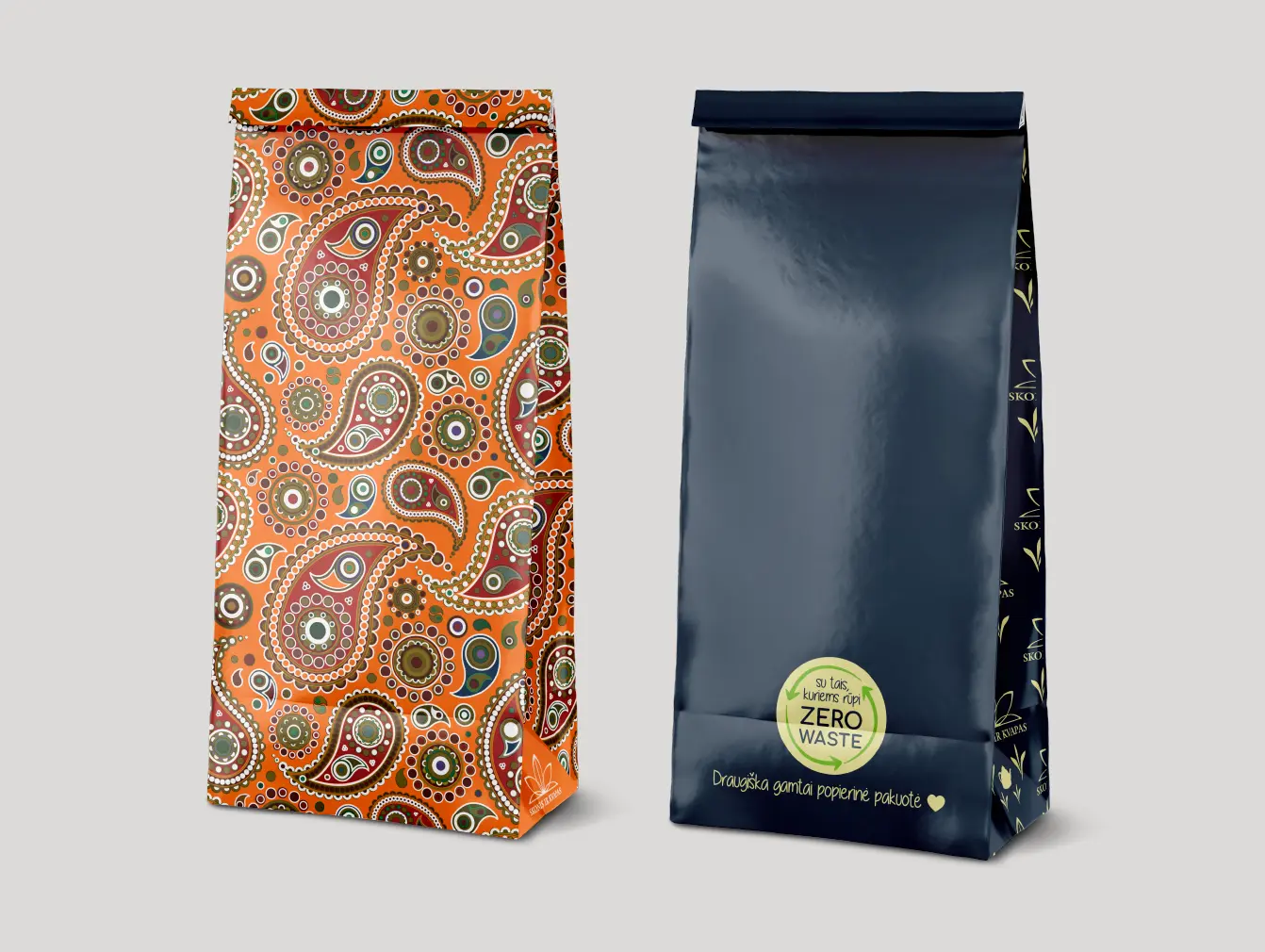
Proving that mono-materials can look premium. We engineered a protective barrier coating that maintains shelf-life while allowing for intricate, vibrant flexo printing.
Whether you’re launching a new product or improving existing packaging, our team is ready to help you find the perfect solution — from concept to delivery.

.svg)
.svg)

.svg)