Engineered on premium Tier-1 substrates with perfect "Kiss-cut" precision. Validated for zero-downtime dispensing on high-speed lines.
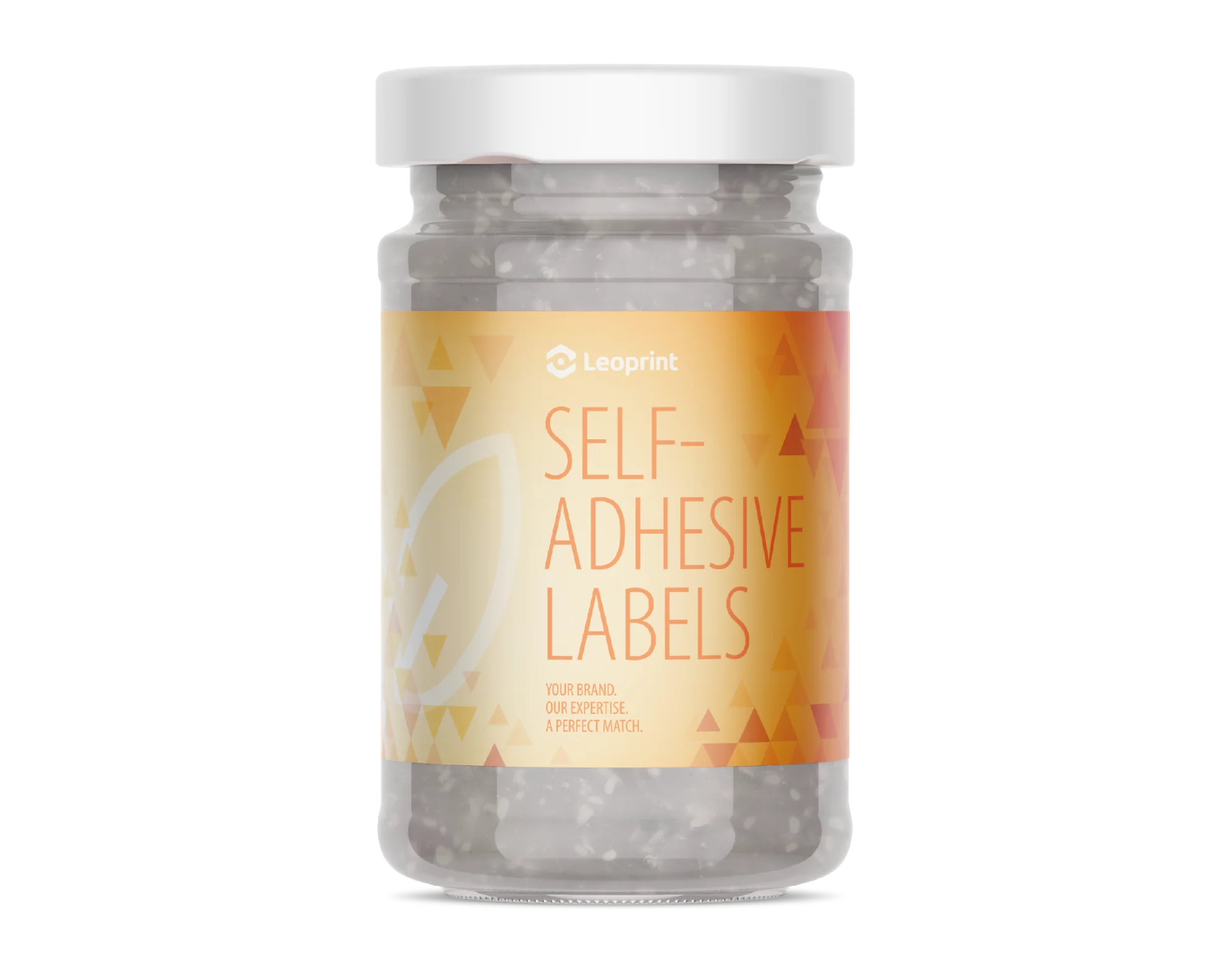
Engineered on premium Tier-1 substrates with perfect "Kiss-cut" precision. Validated for zero-downtime dispensing on high-speed lines.
We engineer our labels exclusively using substrates from tier-one innovators like Avery Dennison and Arconvert. We do not gamble with raw materials because consistent tension control and adhesive stability are non-negotiable for high-speed dispensing lines.
Why our labels eliminate downtime:
Premium Food & Beverage, Cosmetics, Chemicals, and Industrial manufacturers requiring complex, high-reliability labeling.
.svg.webp)
FSC®-certified paper available on request (license number FSC-C132885)

Recyclable film materials available

Precision die-cutting ensures intact liners, preventing web breaks on high-speed automatic applicators.
High-end capabilities including Cold Foil, Embossing, and Tactile Varnish for shelf differentiation.
Customized adhesive selection for difficult surfaces: from rough textures to removable "no-residue" options.
Manufactured on certified Avery Dennison and Arconvert substrates ensuring the highest print definition and consistency.
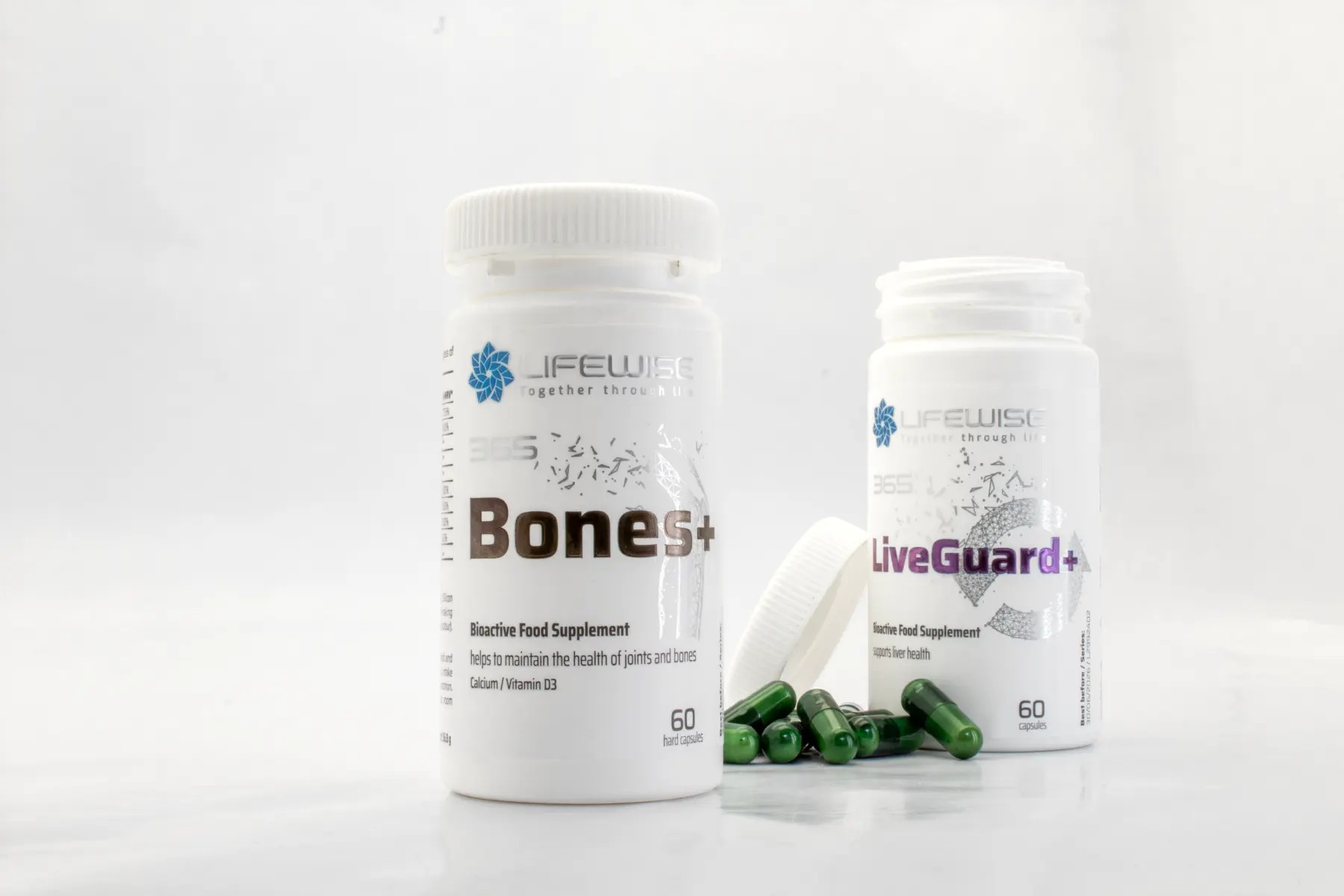
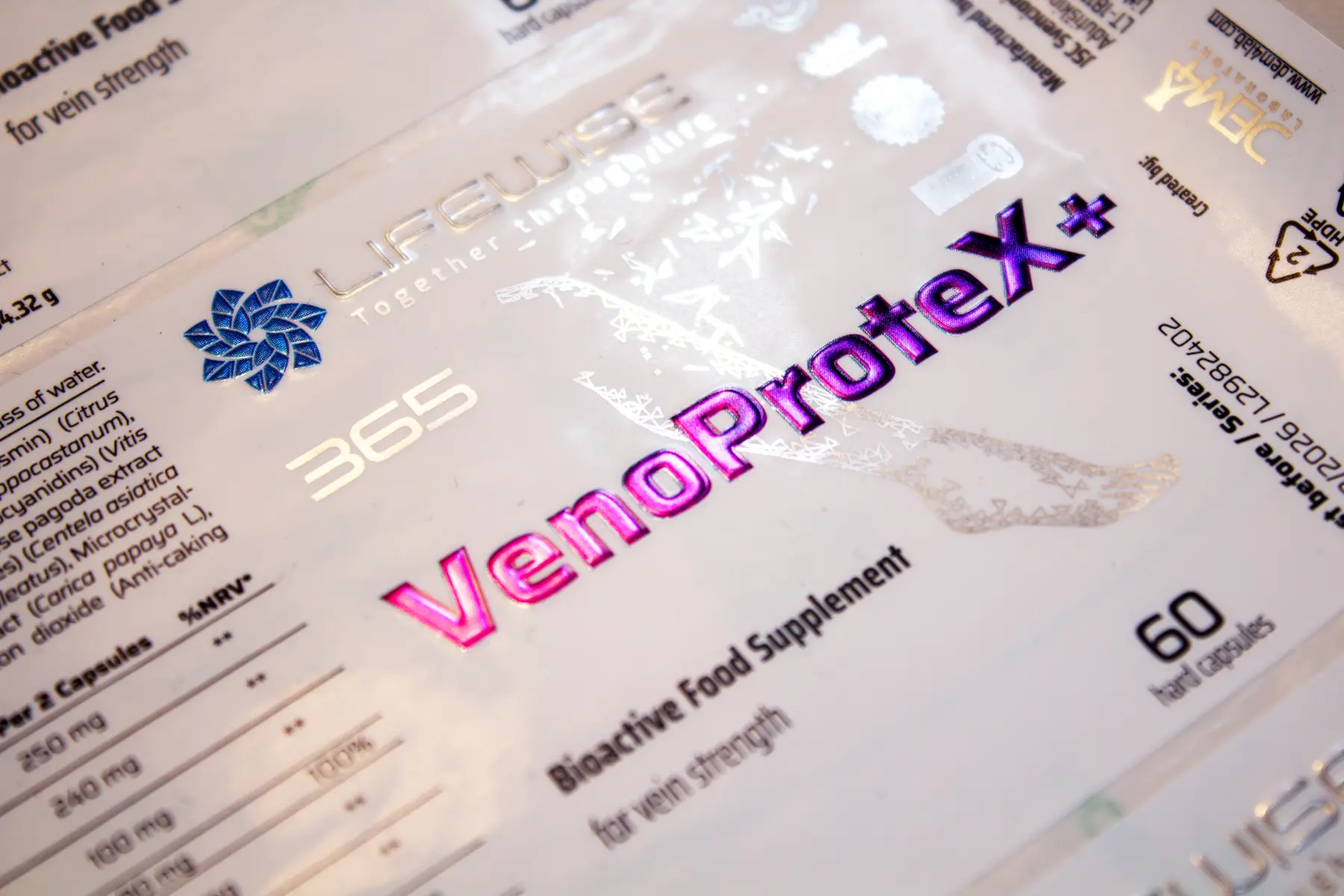
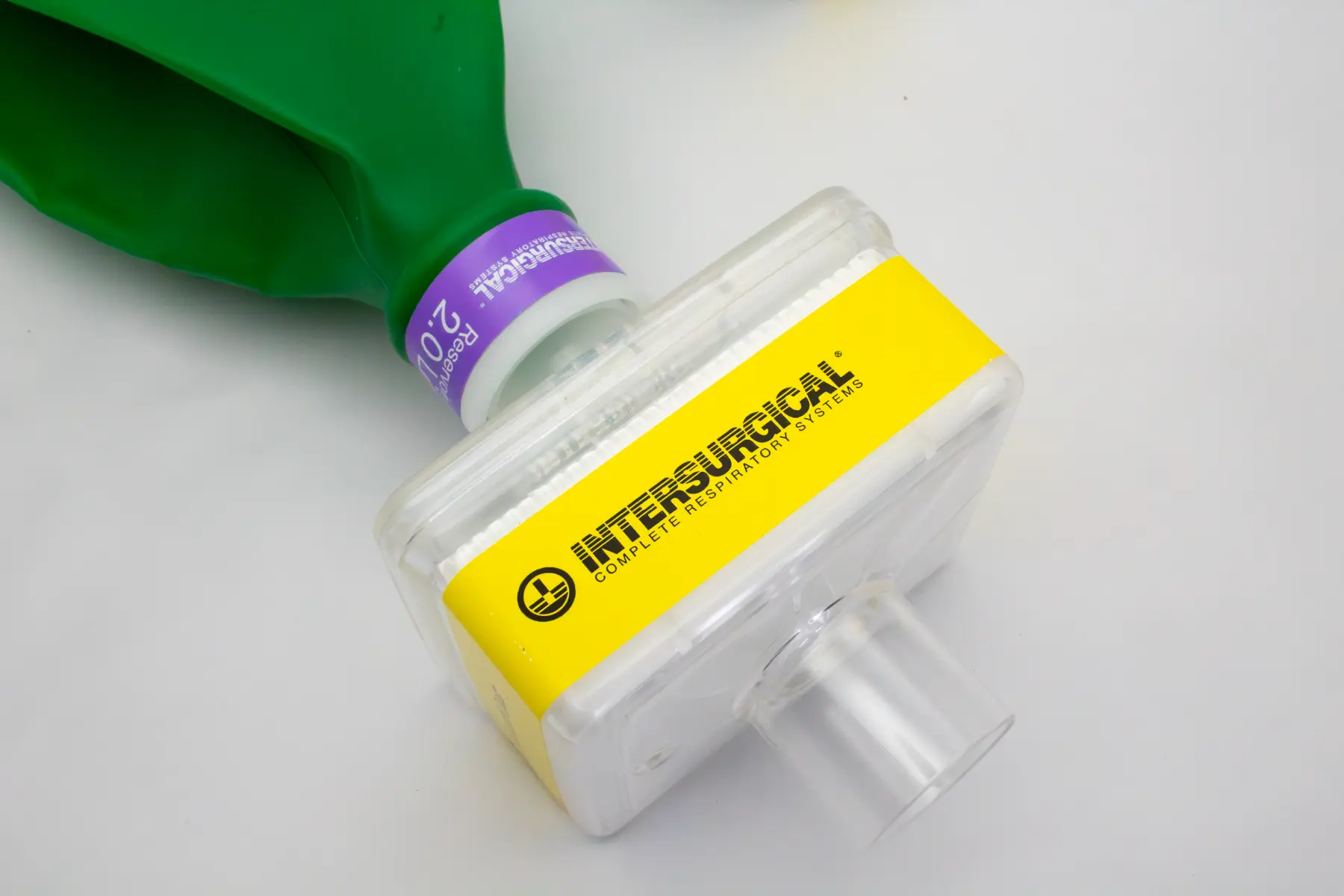
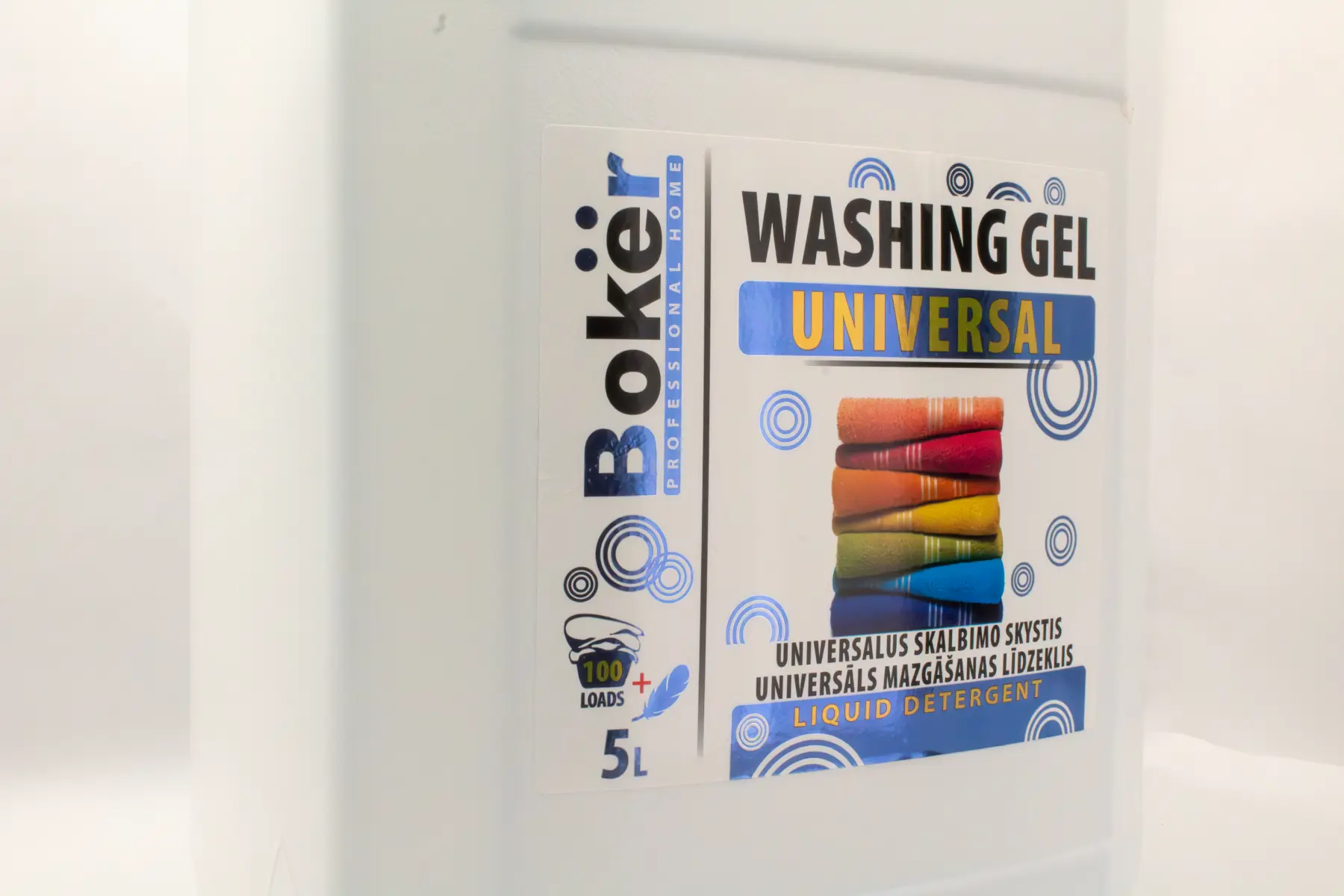
A printed label has two jobs. On the shelf it carries the brand, the product information and often the first impression of quality. On the packing line it has to dispense, apply and stay in place at full speed, shift after shift. Our custom printed self-adhesive labels are built for brands and manufacturers who cannot afford to compromise on either of those jobs.
We work with manufacturers whose labelling needs to be both distinctive and dependable:
A self-adhesive label is a stack of layers: the printed face stock, the adhesive and the silicone-coated liner that carries it through the applicator. Each layer affects how the label prints, converts and dispenses, which is why we treat the whole construction as one engineering decision.
We print with high-definition flexography, a process suited to consistent colour across longer runs. If you are weighing printing technologies for your volumes, our guide to flexography for high volumes explains when it pays off.
The adhesive is chosen for the surface and the conditions the label will meet. Beyond deep-freeze, hot-melt and wash-off options, our project work includes ultra-aggressive adhesives for low surface energy (LSE) coatings and high-tack, low-peel systems that release cleanly from delicate films. For a global home furnishing brand we converted an ultra-aggressive adhesive at industrial volumes for permanent safety labels on LSE furniture surfaces, calibrating die-cutting and waste stripping so the material ran without defects on automatic lines.
For ultra-thin 7-micron refuse bags we engineered a high-tack, low-peel adhesive system that bonds instantly on the production line but peels away by hand without tearing the bag. On the most sensitive lines the adhesive is applied only in strips, leaving the lift tab dry.
After printing, the label is die-cut, stripped and slit into rolls that suit your applicator. Precise slitting matters as much as the cut itself. For automated medical assembly we developed a proprietary Zero-Drift slitting process that holds a ±0.1mm tolerance, compared with the roughly ±1.0mm drift typical of standard equipment. Read how this supports high-precision labels for medical robotics.
A short brief helps us recommend the right materials from the start. Useful information includes:
FSC®-certified paper is available on request under our licence FSC-C132885, and recyclable film materials are available where a film face suits the pack better. Wash-off adhesives are designed to separate from the container during recycling. In practice, matching the label material to the packaging it sits on is one of the simplest ways to keep the whole pack easier to sort and recycle.
The EU Packaging and Packaging Waste Regulation (PPWR) has applied since 12 August 2026. It brings closer attention to every component of a pack, including labels and their adhesives. Reviewing label construction alongside the main packaging is a sensible step for brands preparing for the new rules.
Our projects often start with a specific problem: labels that will not stay on a surface, liners that break on the applicator, or tolerances standard converting cannot hold. We test solutions in real production conditions, not only in the lab, and then scale them for repeat supply. Share your container, line and design with us, and talk to our team about the right label construction for your product.
We build our labels on substrates from Avery Dennison and Arconvert. Depending on the application, the face stock can be paper, with FSC®-certified paper available on request, recyclable film, or a moisture-resistant synthetic material for containers such as household chemical bottles. We select the face stock, adhesive and liner together, because each one affects how the label prints, converts and dispenses on your line.
Kiss-cutting means the die cuts through the face stock and adhesive but leaves the silicone liner intact. On automatic labelling lines the liner carries the labels through the applicator, so a liner damaged by uneven cutting pressure can break the web and stop production. We use high-precision rotary tooling to keep the cut clean and consistent, which supports uninterrupted dispensing at high speed.
Yes. We match the adhesive to the surface and conditions, with deep-freeze, hot-melt and wash-off options. Our project work also includes ultra-aggressive adhesives for low surface energy furniture coatings and high-tack, low-peel adhesives for ultra-thin bags, where the label must hold during production but peel away without tearing the film. Tell us about your container and we will recommend a construction.
We can integrate cold foil, embossing and silk screen inline with printing, while keeping tight registration between print and finish. Tactile varnish is also used to add a distinctive feel, for example on premium nutraceutical labels. Combining these finishes in one process means you get a premium look without slowing down your labelling line. Share your artwork and we will advise on the options.
For automated medical assembly we developed a proprietary Zero-Drift slitting process that holds a ±0.1mm tolerance in web width and label position, compared with roughly ±1.0mm typical of standard converting equipment. Not every application needs that level of precision, so let us know the tolerances your applicator or robotics require and we will confirm the right approach for your project.
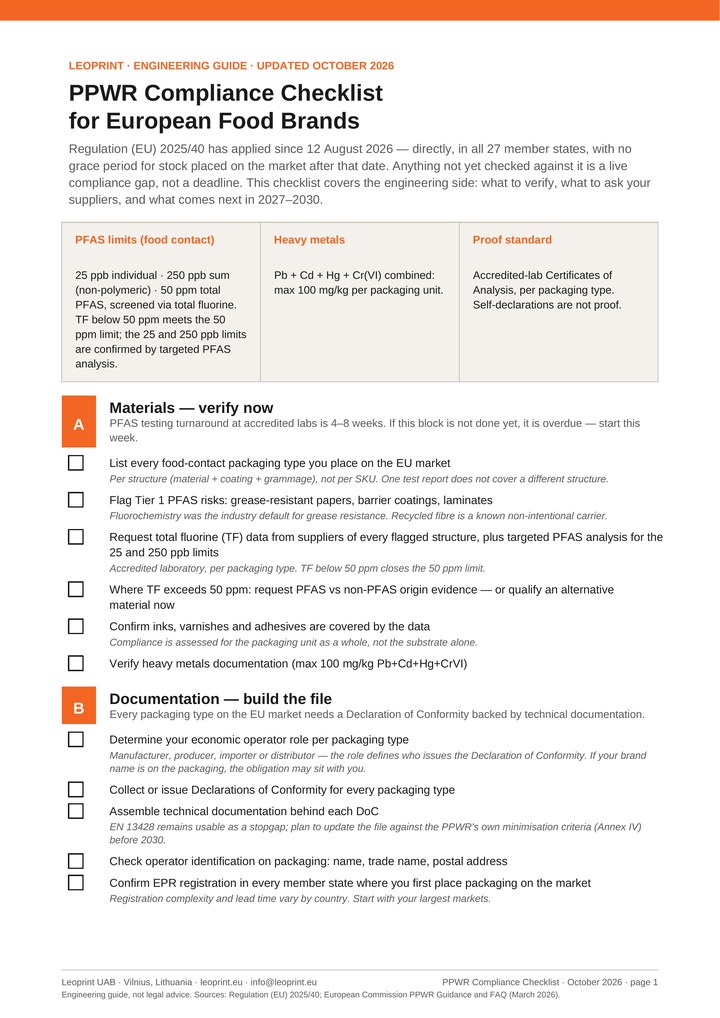
A two-page checklist for getting food packaging ready for the EU PPWR: PFAS limits, Declarations of Conformity, EPR, and what can wait until 2030.
.webp)
Reinforced SOS paper bags with a rectangular base. Engineered for structural integrity and premium brand positioning via Cold Foil and Soft Touch finishes.
.svg)
.webp)
High-barrier heat-sealable paper engineered for high-speed HFFS and VFFS flow-pack lines (300+ PPM).
.webp)
Grease-resistant barrier paper with Registered Cut technology. Engineered for design precision and optimized for recyclability.

SENSE FLOW delivers the soft-touch premium feel of plastic films using only FSC® paper — fully recyclable PAP 22, with a crystal-clear window and stable runnability on HFFS/VFFS lines.
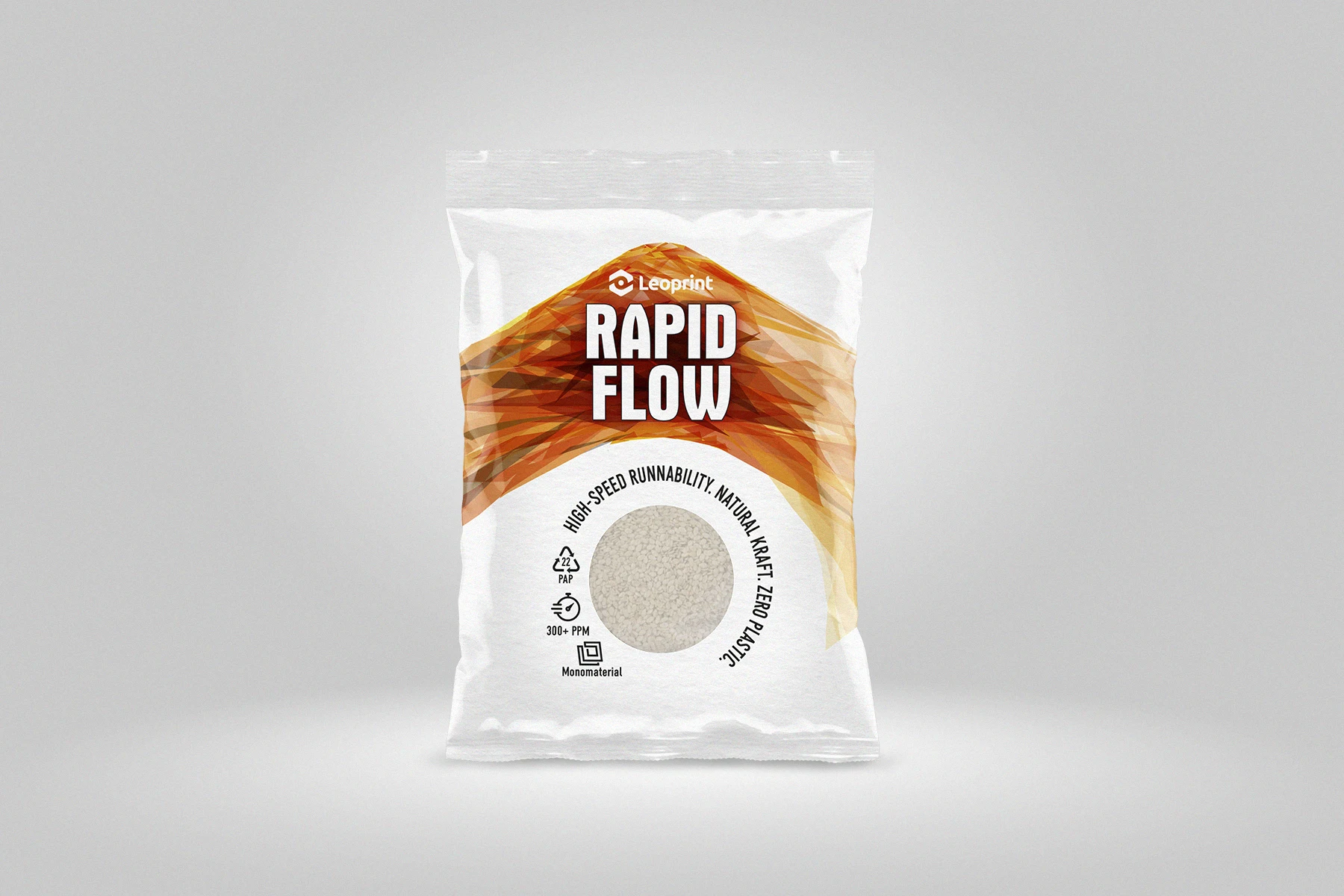
We engineered a PAP 22 kraft paper flow-pack with a crystal translucent window — a direct drop-in for BOPP/PE films, validated at 300+ PPM with zero machine modifications.
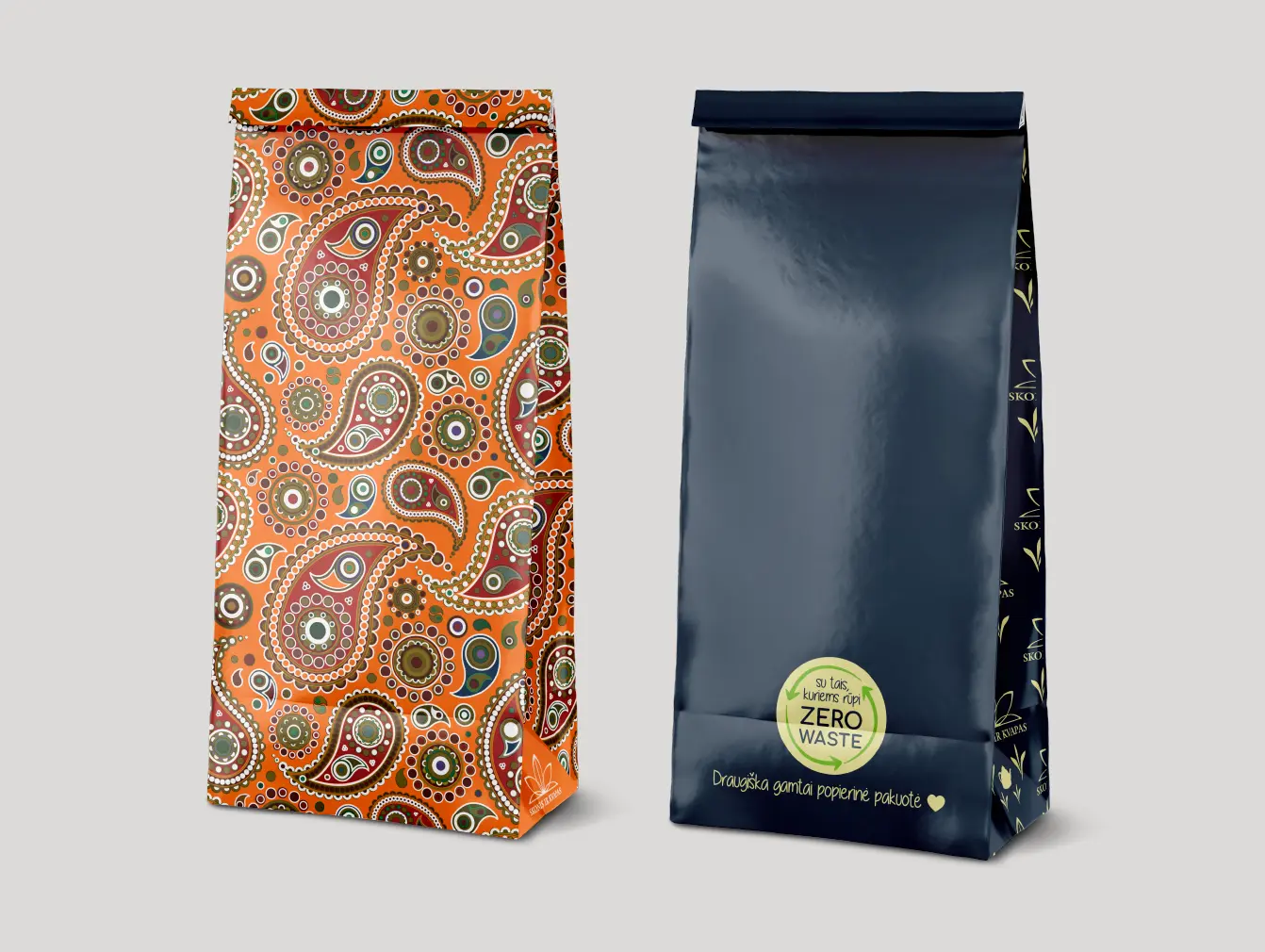
Proving that mono-materials can look premium. We engineered a protective barrier coating that maintains shelf-life while allowing for intricate, vibrant flexo printing.
Whether you’re launching a new product or improving existing packaging, our team is ready to help you find the perfect solution — from concept to delivery.

.svg)
.svg)

.svg)