Updated 1 October 2026 · Free PDF at the end — no form, no email.
Since 12 August 2026, Regulation (EU) 2025/40 — the Packaging and Packaging Waste Regulation — has applied across all 27 EU member states. No national transposition. No grace period for stock placed on the market after that date.
If your packaging is not yet checked against the rules below, it is now a live compliance gap rather than a deadline. The checklist still works the same way; the order of urgency has simply moved up.
We are not lawyers, and this is not legal advice. We are a packaging converter, and for the past two years the PPWR has shaped almost every material conversation we have with food brands. This checklist is the engineering side of compliance: what to verify, what to ask your suppliers, and what can safely wait.
The regulation applies in stages. The dots below mark what already applies today and what comes next.
Two things are still open. The implementing acts on labelling and on the producer register are late, and the Commission's December 2025 simplification proposal, which would ease some obligations such as the authorised representative requirement, has not been adopted. Neither changes what applies today.
Most of the PPWR headlines are about 2030: recyclability performance grades A, B and C, recycled content targets for plastic packaging, harmonised sorting labels. Those matter — but they are not what changed on 12 August 2026.
What has applied since 12 August 2026:
What does not apply yet: recyclability grades (2030), recycled content quotas for plastic (2030), harmonised labelling pictograms (the implementing act is still pending). Plan for them — but they are not today's problem.
Here is the uncomfortable part for anyone buying grease-resistant or moisture-resistant paper packaging.
Fluorochemistry was the industry's default answer to grease resistance for decades. Compliance consultants now classify barrier-coated and grease-resistant papers as the highest-risk category for PFAS content. And the PPWR restriction has three properties that make it unusually strict:
No grandfathering. Packaging placed on the EU market since 12 August 2026 must comply — even if it was manufactured in 2025. Warehouse stock of non-compliant material can no longer enter the market.
The whole packaging unit counts. Compliance is assessed for the unit as a whole, including inks, varnishes, glues and adhesives. A PFAS-free paper with the wrong varnish fails.
Intent is irrelevant. The limits cover both intentionally added and non-intentionally present PFAS. Recycled fibre is a known carrier. "We never added it" is not a defence.
One more thing that surprises procurement teams: a supplier's self-declaration does not constitute proof. Market surveillance expects Certificates of Analysis from accredited laboratories, per packaging type. A test report for one structure is not valid proof for a different grammage, coating or laminate.
The practical screening path is simpler than it sounds: start with total fluorine (TF) analysis. Below 50 ppm — the 50 ppm limit is met; a targeted PFAS analysis then confirms the 25 ppb and 250 ppb limits. Above 50 ppm — further analysis is needed to show the fluorine is not from restricted PFAS.
Many technical files lean on EN 13428:2004 (prevention by source reduction). The PPWR lets you keep using it until a new or updated harmonised standard is available (recital 60), but only as a stopgap: the PPWR’s own minimisation requirement (Article 10) applies from 1 January 2030, and its criteria (Annex IV) are stricter. Keep your EN 13428 file, and document your minimisation assessment against Annex IV so the new standard does not catch you out. Worth telling whoever maintains your packaging technical files — this one is easy to miss.
Work through these three blocks. Block A is now overdue for anyone who has not done it — PFAS testing turnaround at accredited labs runs 4–8 weeks, so start it this week.
A. Materials — verify now
B. Documentation — build the file
C. Horizon — decide, don't rush
Our position in this is straightforward. We engineer heat-sealable barrier papers with water-based coatings — grease and moisture resistance built without fluorochemistry. Our PAP 22 mono-material structures are PTS-tested for recyclability (our reference structure scores 99/100 unprinted and 94/100 printed), which addresses the 2030 grade question in the same move as the PFAS one. What PAP 22 means, and when a coated paper can carry it.
Honest limits, because that is how we work: paper is not the answer for every product. High oxygen-barrier applications and wet or fatty products with long shelf life may still need structures we would not recommend paper for. When a customer's product doesn't fit, we say so — it saves everyone a failed line trial.
But for dry foods, tea, cutlery, confectionery and similar flow-wrap and envelope applications, a PAP 22 structure typically resolves the PFAS question, the recyclability grade question and the EPR fee question with one material decision.
Download the PDF checklist — free, no form, no email. Print it, hand it to procurement, mark it up.
And if you want the fast answer instead of the homework: email us your current packaging structure (material, grammage, what it packs, your line type — HFFS/VFFS/other) and we will tell you within 48 hours whether a PFAS-free recyclable paper structure is realistic for your application. If it isn't, we will tell you that too.
info@leoprint.eu — subject line "PPWR check".
Email us your current packaging structure, and we will tell you within 48 hours whether a PFAS-free, recyclable paper structure is realistic for your application.
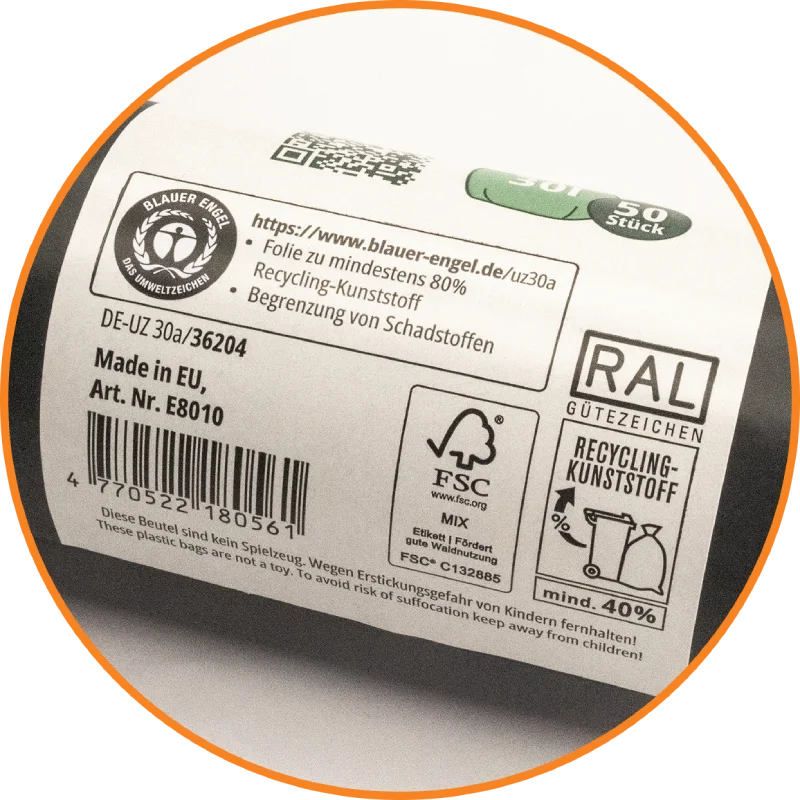
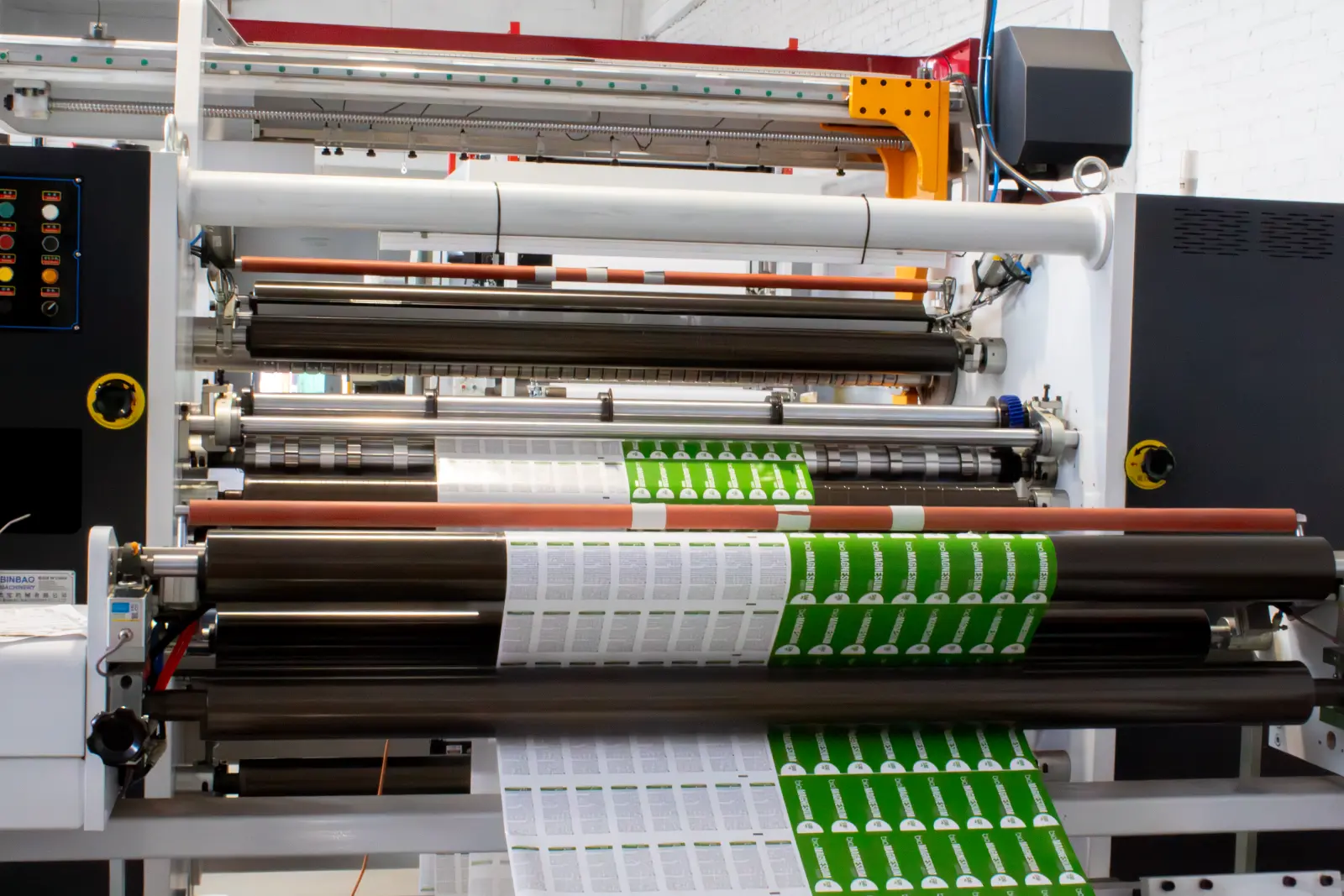
On a labelling line, a self-adhesive label is a small piece of engineering. How labels are made, how to choose materials and adhesives, and which roll details prevent first-delivery problems.
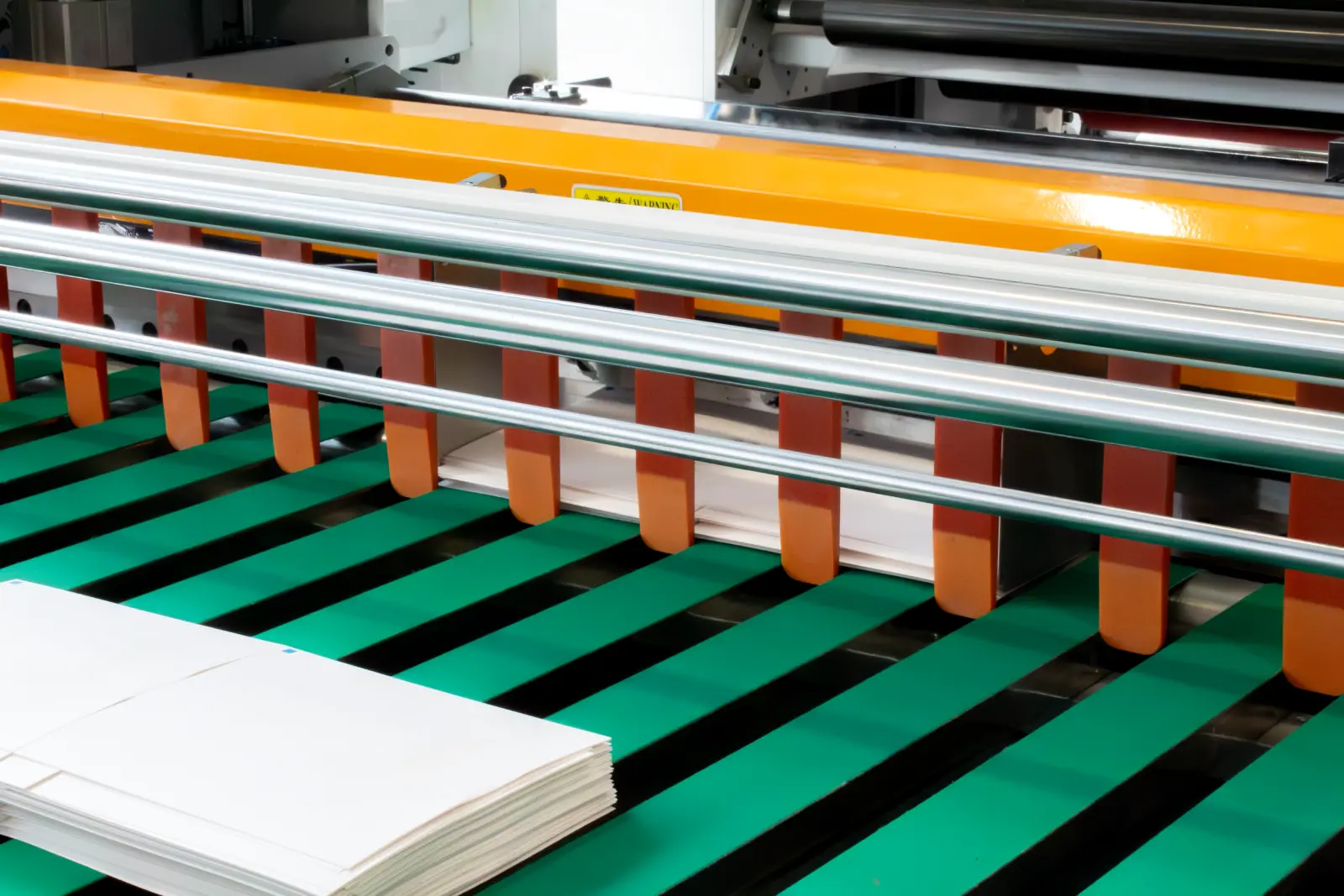
Most paper packaging and labels are printed flexo. How the press works, where it shines and where it needs care, and how to prepare artwork so your first run goes straight to plate-making.
Barrier paper is how tea envelopes, sugar sticks and flow-packs are moving off plastic laminates. The properties that matter, how they are measured, the coating options and how to specify the right paper.
.svg)
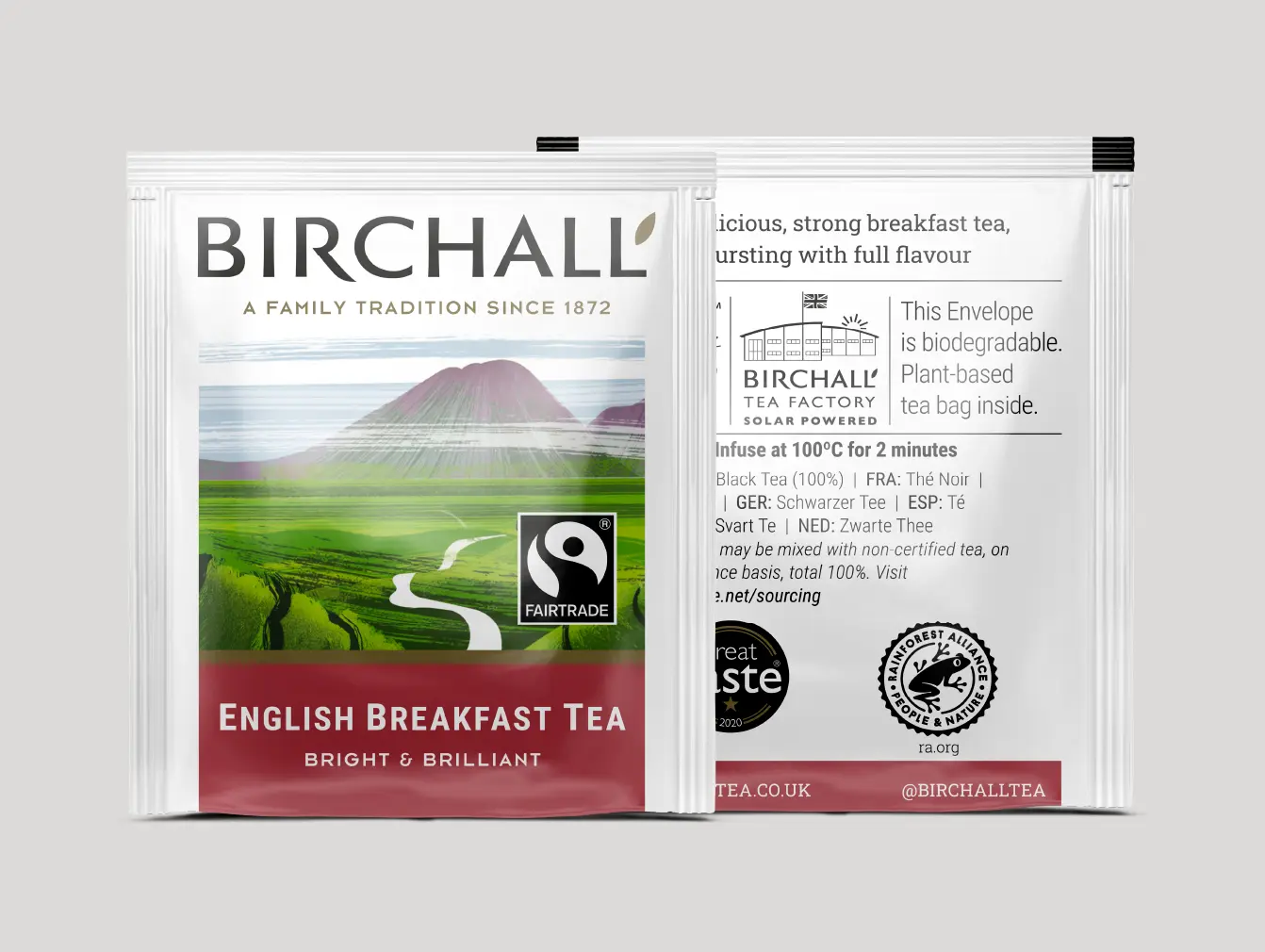
Replaced plastic with a recyclable barrier paper engineered to run flawlessly on fast packing machines without compromising the premium tactile feel.
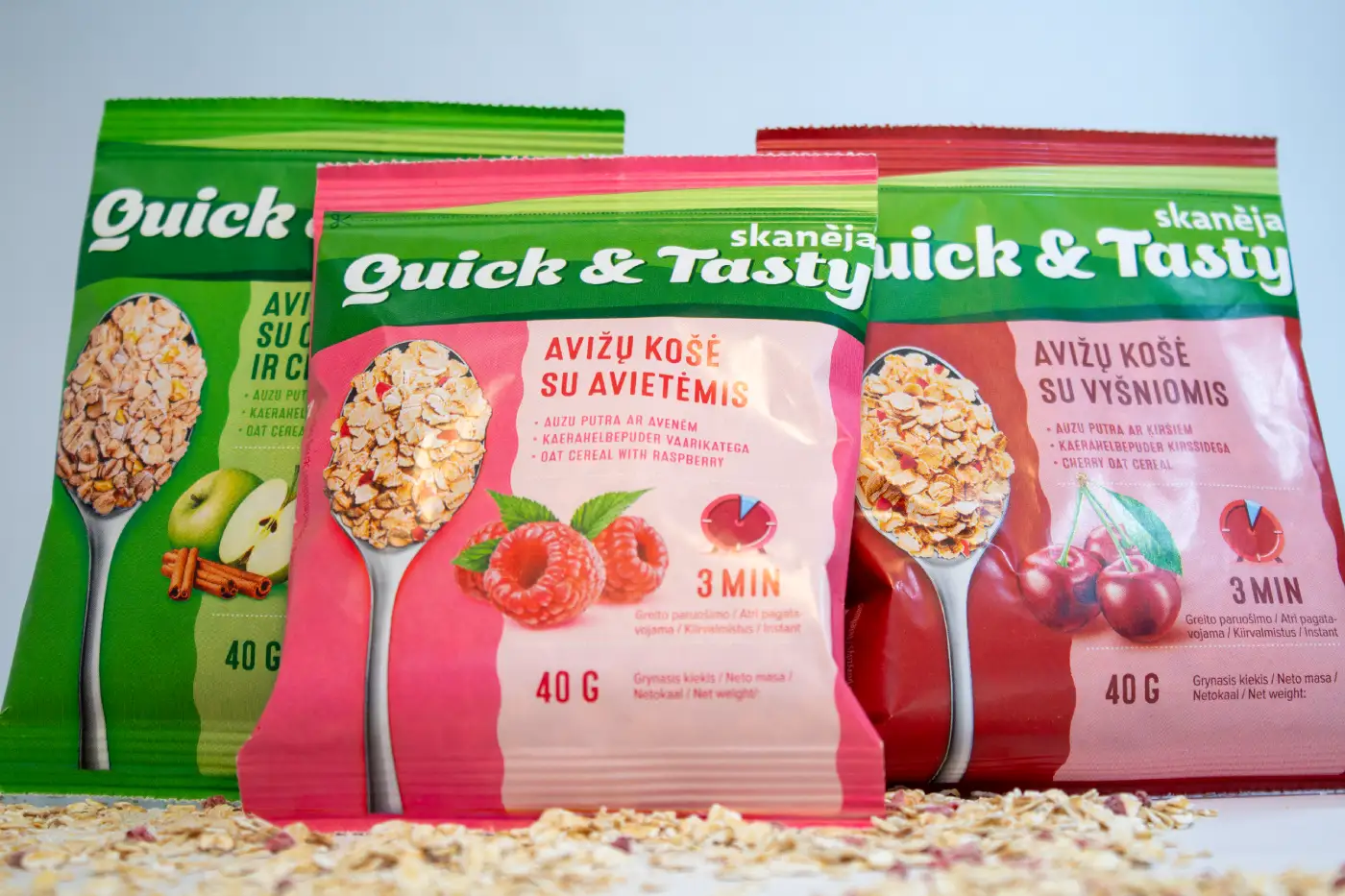
A recyclable paper alternative (PAP 22) that matched the mechanics of legacy plastic films, requiring zero speed loss or expensive machine modifications.
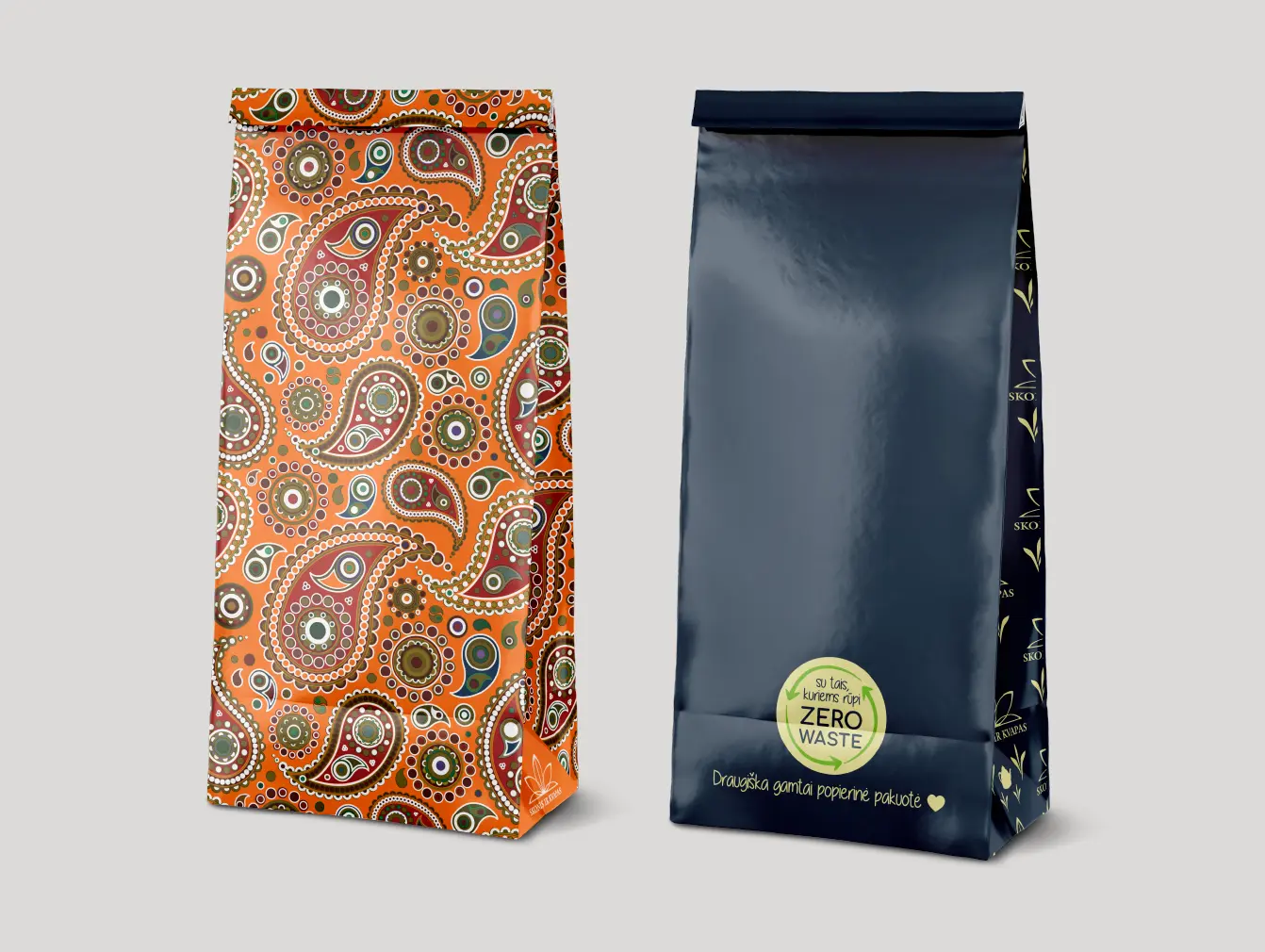
Proving that mono-materials can look premium. We engineered a protective barrier coating that maintains shelf-life while allowing for intricate, vibrant flexo printing.
Replaced plastic with a recyclable barrier paper engineered to run flawlessly on fast packing machines without compromising the premium tactile feel.
A recyclable paper alternative (PAP 22) that matched the mechanics of legacy plastic films, requiring zero speed loss or expensive machine modifications.
Proving that mono-materials can look premium. We engineered a protective barrier coating that maintains shelf-life while allowing for intricate, vibrant flexo printing.
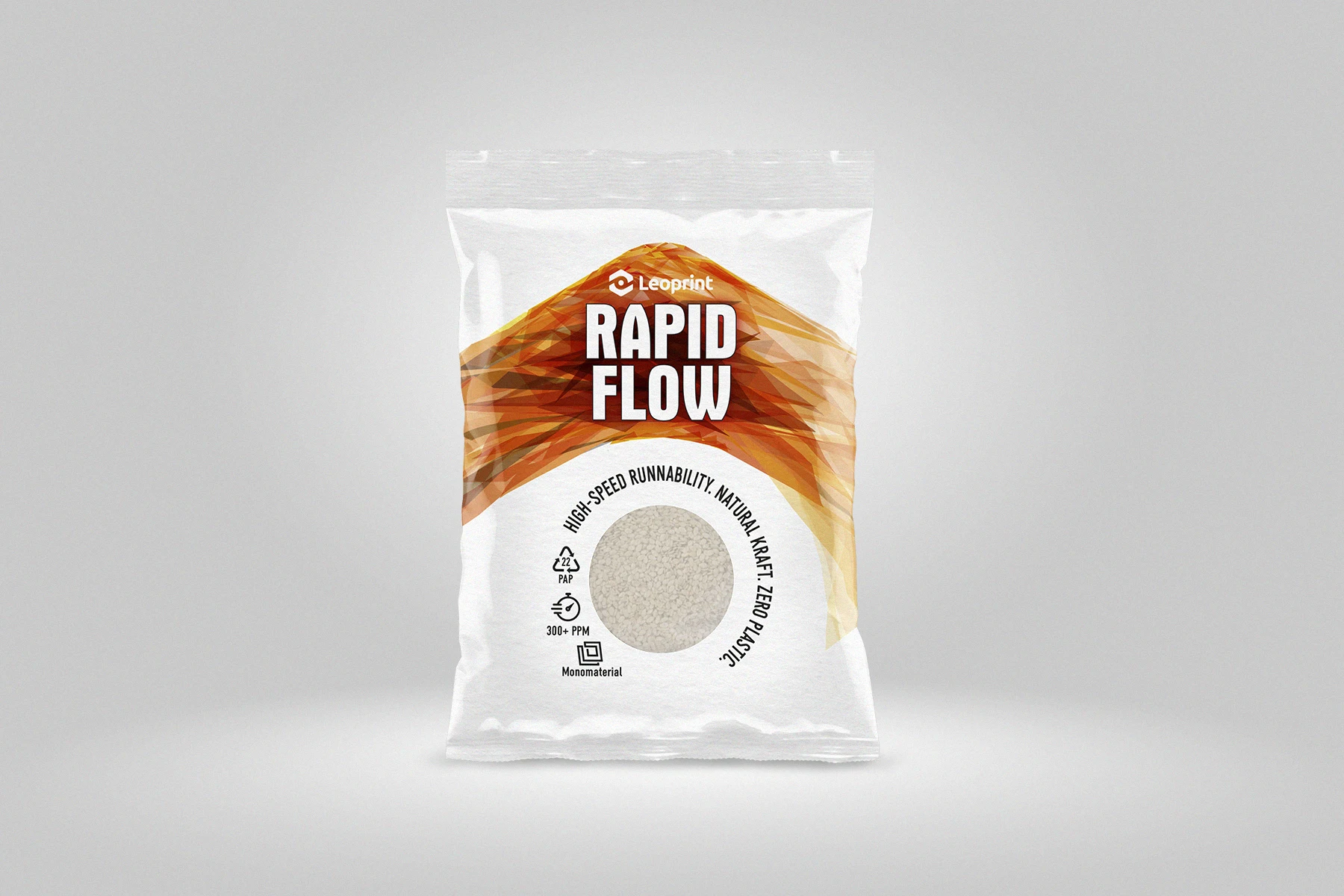
We engineered a PAP 22 kraft paper flow-pack with a crystal translucent window — a direct drop-in for BOPP/PE films, validated at 300+ PPM with zero machine modifications.
.svg)
Printing isn't magic; it's physics. We control the variables so you don't have to.

.svg)
.svg)