You will find "PAP 22" printed under a small recycling arrow on paper bags, flow-packs and tea envelopes, and you will see it in supplier spec sheets as a selling point. It is one of the most searched packaging terms we see, and one of the least explained. This guide covers what the code means, when a coated or heat-sealable paper can still carry it, and what it does and does not prove.
The short answer
PAP 22 is the European identification code for paper. It belongs to a family of codes for fibre-based packaging: PAP 20 for corrugated board, PAP 21 for other cardboard and PAP 22 for paper. A pack marked PAP 22 is designed to go into the paper recycling stream.
The numbers come from Commission Decision 97/129/EC, which set up a voluntary identification system for packaging materials across the EU. Each material family has its own abbreviation and number range: plastics 1–19, paper and board 20–39, metals 40–49, wood 50–59, textiles 60–69, glass 70–79 and composites 80 and above.
| Code | Material | Typical packaging |
|---|---|---|
| PAP 20 | Corrugated fibreboard | Shipping boxes, trays, e-commerce cartons |
| PAP 21 | Non-corrugated fibreboard | Folding cartons, cereal boxes, sleeves |
| PAP 22 | Paper | Paper bags, flow-packs, wrapping sheets, tea envelopes, banderoles |
| C/PAP 81 | Paper and board / plastic | Paper laminated with a PE film |
| C/PAP 82 | Paper and board / aluminium | Paper laminated with aluminium foil |
| C/PAP 84 | Paper and board / plastic / aluminium | Beverage cartons |
The difference that matters is the one between PAP 22 and the C/PAP codes. A paper/PE laminate looks like paper on the shelf, but it is a composite: the layers cannot be separated by hand, and in many recycling systems it is treated, and charged, differently from paper.
Almost no functional paper pack is pure fibre. It carries a barrier coating to stop grease or moisture, a heat-seal layer so it can close on a packing line, printing inks and sometimes a window. So the real question is how much of that is allowed before paper stops being paper.
The EU Packaging and Packaging Waste Regulation (PPWR) answers this in its definition of composite packaging. A pack made of two or more materials that cannot be separated by hand is a composite, unless the other material is an insignificant part of the pack and in any case no more than 5% of its total mass. Labels, varnishes, paints, inks, adhesives and lacquers are left out of that calculation.
In practice, this is why heat-sealable barrier papers are engineered with very thin coatings. Our current PURESEAL HS 70 platform runs at about 2.5 g/m² of barrier coating on a 70 g/m² base paper, which keeps it well inside the line.
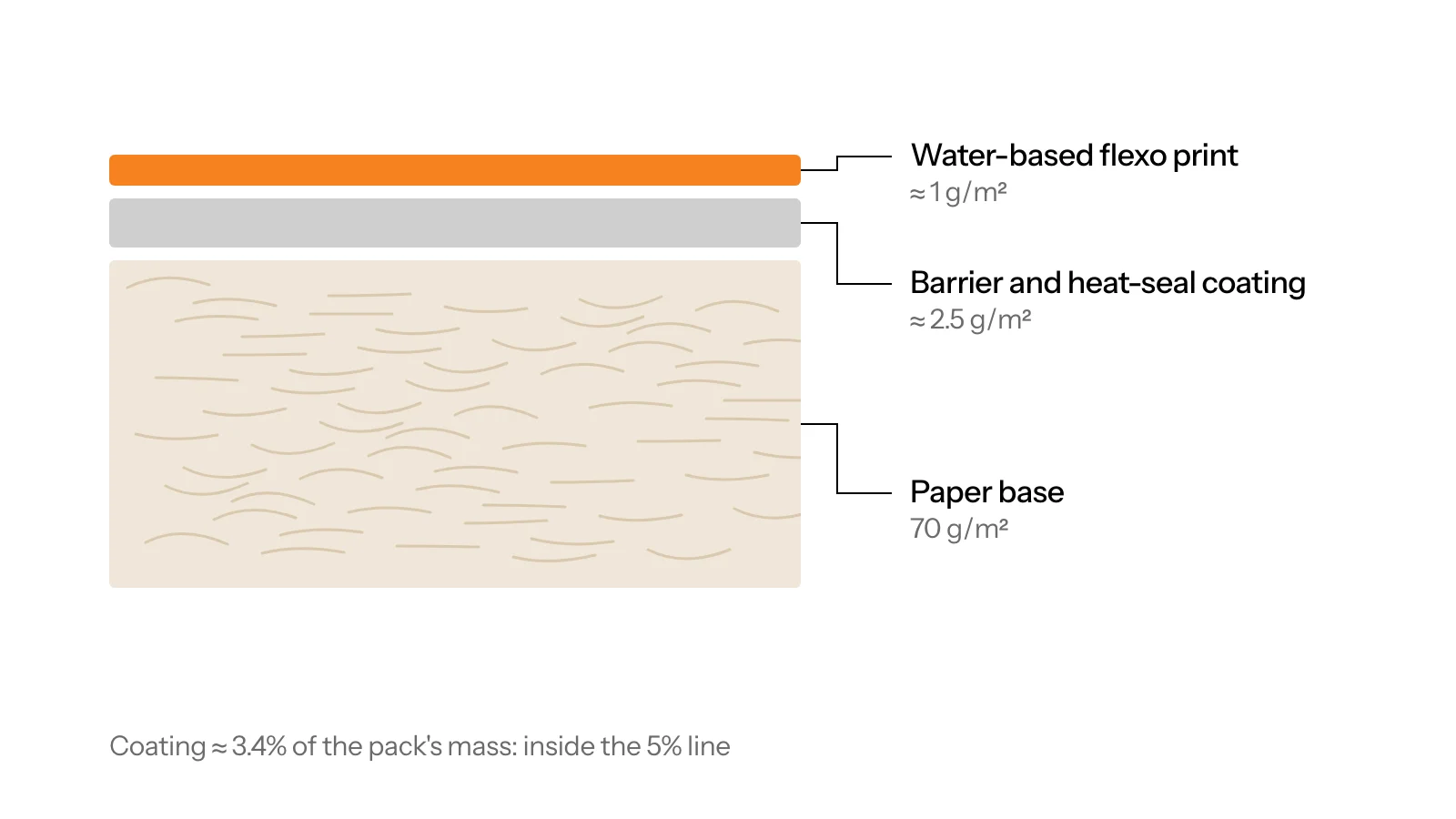
Enter the grammages from your spec sheet. The calculator counts everything that is not fibre, including inks and coatings, so it is stricter than the legal definition. If you pass here, you are comfortably inside the 5% line.
Non-fibre share of the pack
–Inside the 5% line. A structure like this is designed as paper and can be specified as PAP 22, provided a recyclability test confirms it repulps well.
Above 5%. Check whether the extra material is ink, varnish or adhesive, which the legal definition leaves out. If it is a film, foil or heavy coating, the pack is likely to be treated as a composite.
A plastic window is the most common reason a paper pack falls out of PAP 22. A window film is a separate material, so it counts. A window made from transparent cellulose, as in our kraft flow-pack with a crystal window, keeps the pack fibre-based.
Printing PAP 22 on a pack tells the consumer which bin to use. It does not prove that the pack actually recycles well. That is measured separately, in a laboratory, by pulping the material the way a paper mill would and checking how much fibre comes back and how clean it is.
In Europe the reference method is the 4evergreen fibre-based packaging recyclability protocol, tested by institutes such as PTS in Heidenau. The result is a score out of 100. Our own heat-sealable barrier paper went from 68 in 2023 to 99 unprinted and 94 printed in 2026; we wrote up the full journey here.

When a supplier tells you a material is PAP 22, ask for the test certificate behind it. The code and the score answer different questions, and you need both.
Paper is not the right answer for every product, and a good supplier will tell you when it is not. Today's water-based barrier papers are excellent at grease, aroma and heat-sealing, and less strong on oxygen and moisture.
| Product | PAP 22 paper? | Why |
|---|---|---|
| Tea, herbs, spices | Yes | Needs grease and aroma barrier and fast sealing; proven on high-speed envelope lines |
| Rice, grains, pulses, pasta, flour | Yes | Dry contents, short to medium shelf life; kraft with a cellulose window works well |
| Confectionery, bakery, dry snacks | Usually | Grease barrier is the key property; check fat content and target shelf life |
| Sugar sticks and sachets | Yes | Needs a coating that seals on narrow jaws at lower temperatures |
| Vacuum or roasted coffee | Not yet | High oxygen barrier needed; a compostable or high-barrier laminate is the honest option today |
| Wet, fatty or long-shelf-life foods | Not yet | Needs moisture and oxygen barriers that paper coatings do not reliably reach yet |
Not necessarily. Barrier and heat-seal coatings are thin polymer dispersions, so a PAP 22 pack can contain a few percent of non-fibre material. What PAP 22 tells you is that the pack is paper by design, behaves as paper in the recycling stream and contains no separate plastic layer. If you need to make a "plastic-free" claim on pack, check it against the exact structure and the rules in each market before printing.
We make PAP 22 flow-pack paper, tea envelopes and paper bags in Vilnius, and coat paper for other converters. Send us your current structure and we will tell you whether a PAP 22 version is realistic for your product, and if it is not, we will tell you that too.
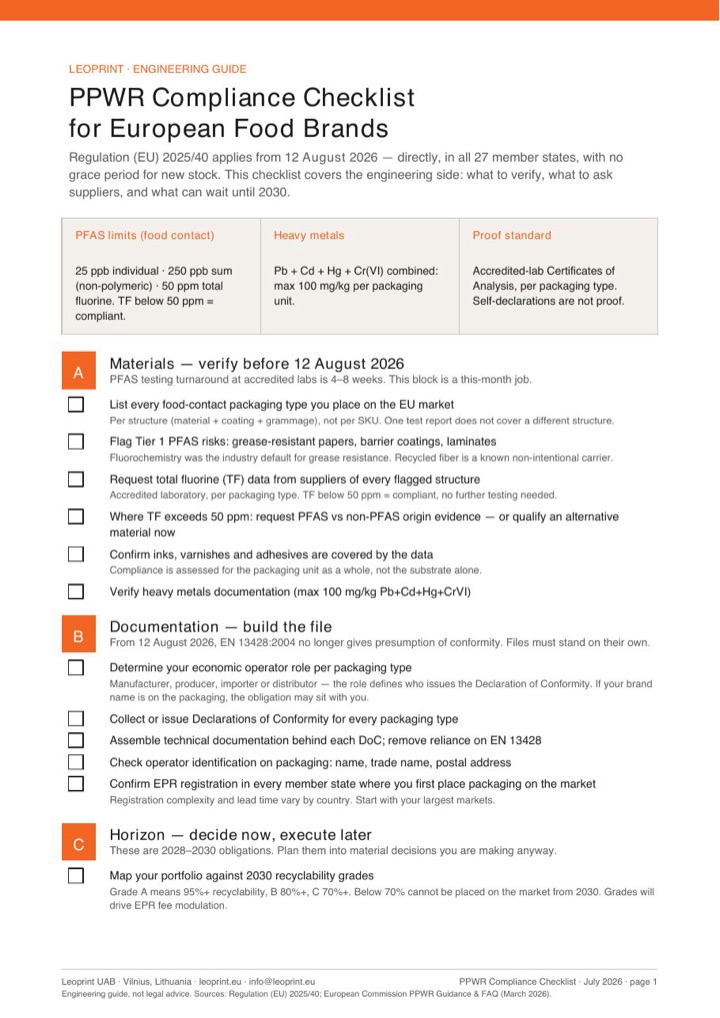
A two-page checklist for getting food packaging ready for the EU PPWR: PFAS limits, Declarations of Conformity, EPR, and what can wait until 2030.
Send us your current structure and product. We will tell you whether a recyclable paper version works, and if it does not, we will tell you that too.
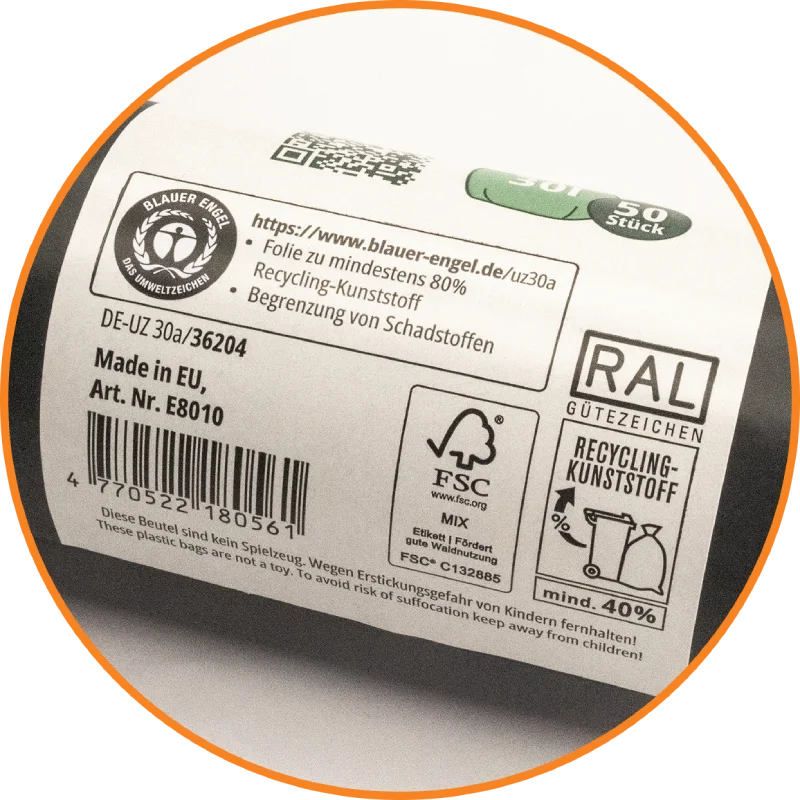
On a labelling line, a self-adhesive label is a small piece of engineering. How labels are made, how to choose materials and adhesives, and which roll details prevent first-delivery problems.
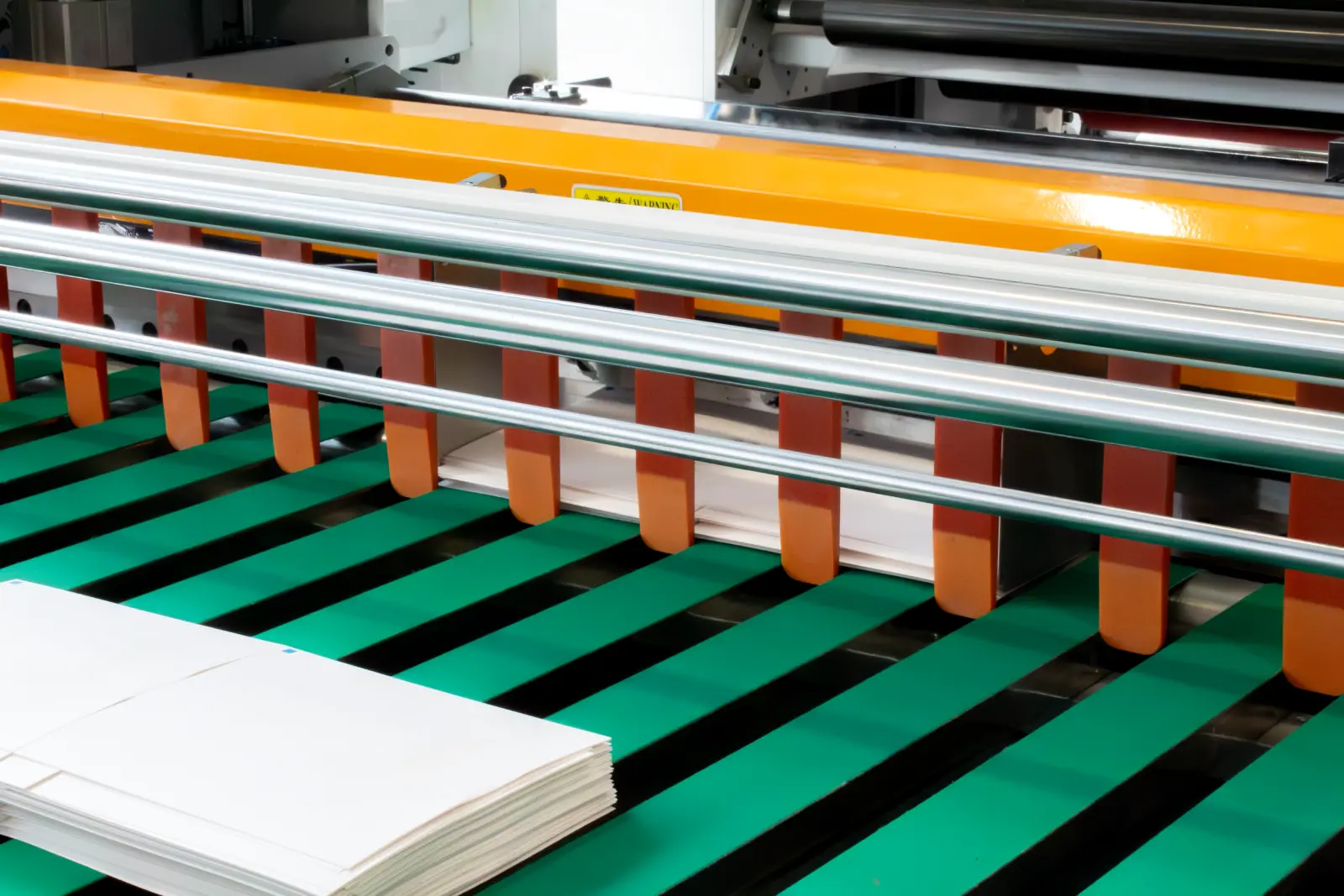
Most paper packaging and labels are printed flexo. How the press works, where it shines and where it needs care, and how to prepare artwork so your first run goes straight to plate-making.
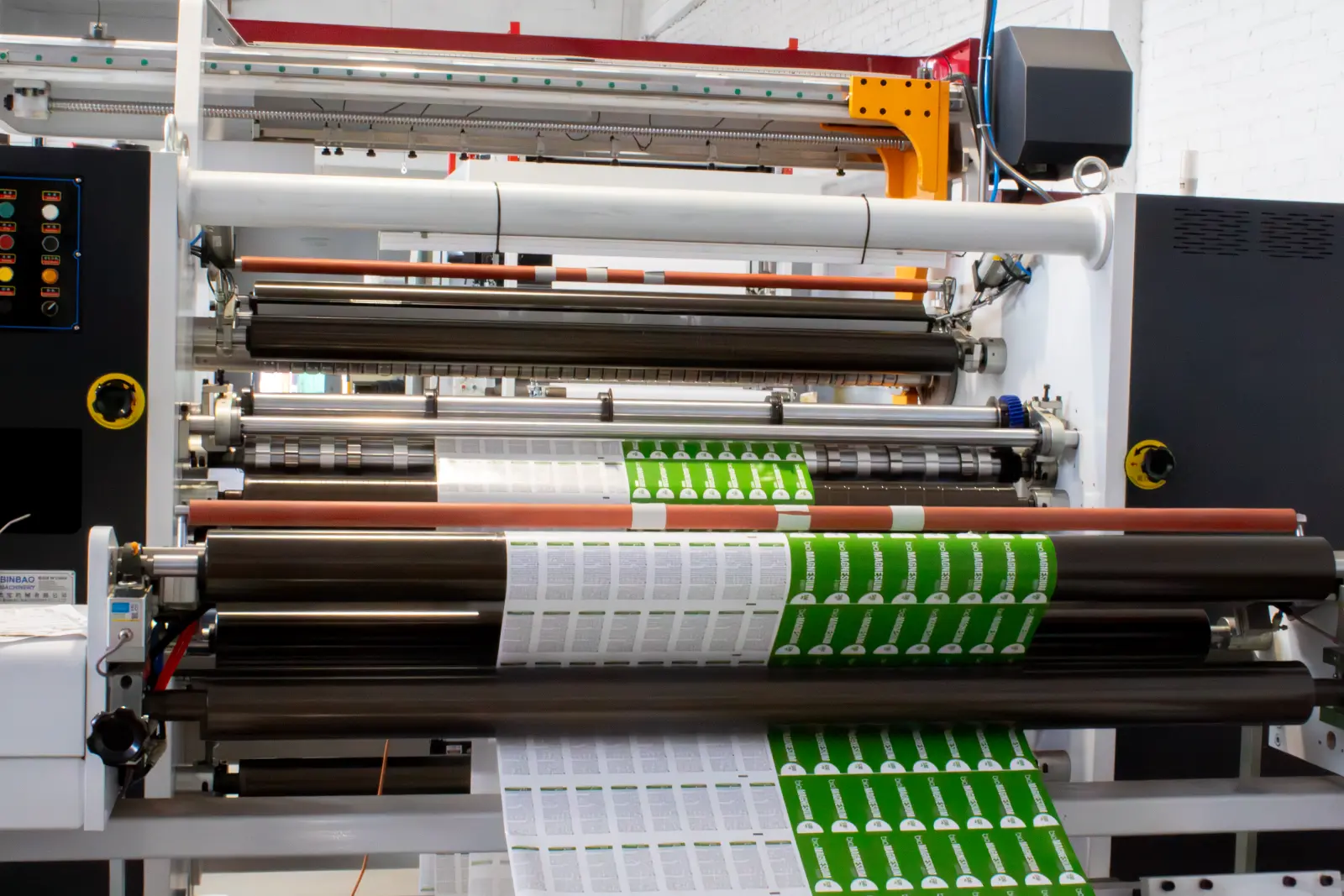
Barrier paper is how tea envelopes, sugar sticks and flow-packs are moving off plastic laminates. The properties that matter, how they are measured, the coating options and how to specify the right paper.
.svg)
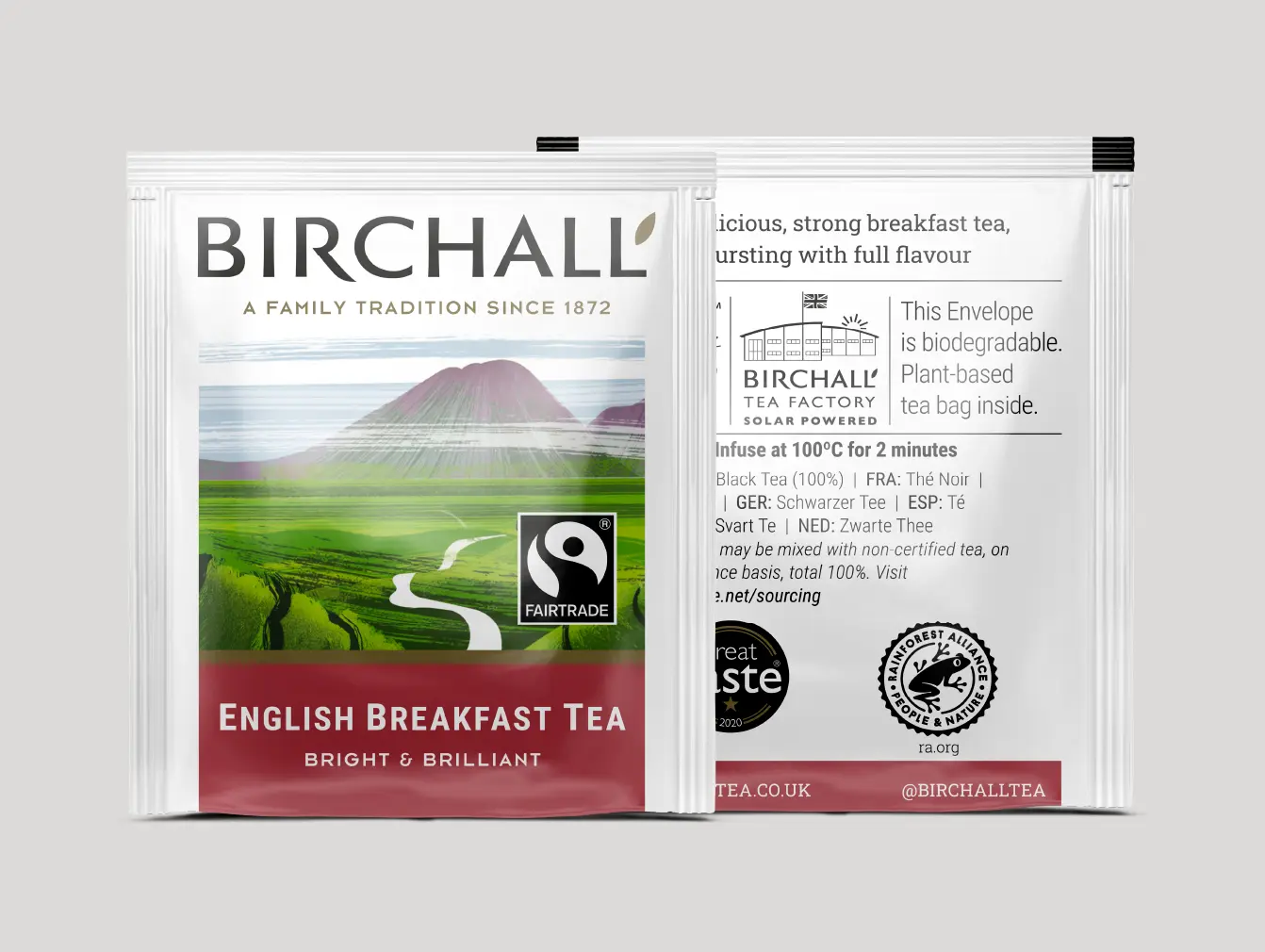
Replaced plastic with a recyclable barrier paper engineered to run flawlessly on fast packing machines without compromising the premium tactile feel.
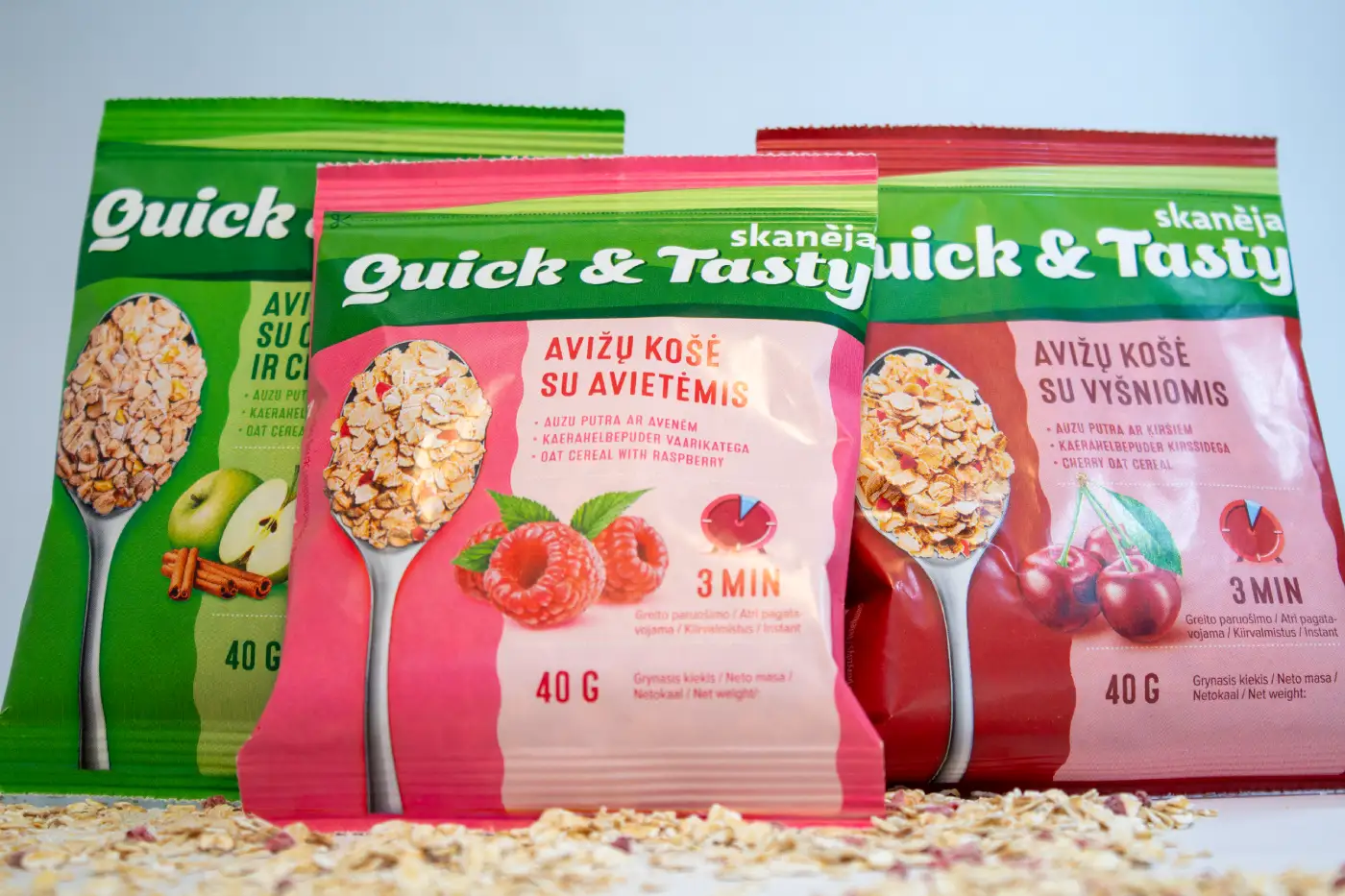
A recyclable paper alternative (PAP 22) that matched the mechanics of legacy plastic films, requiring zero speed loss or expensive machine modifications.
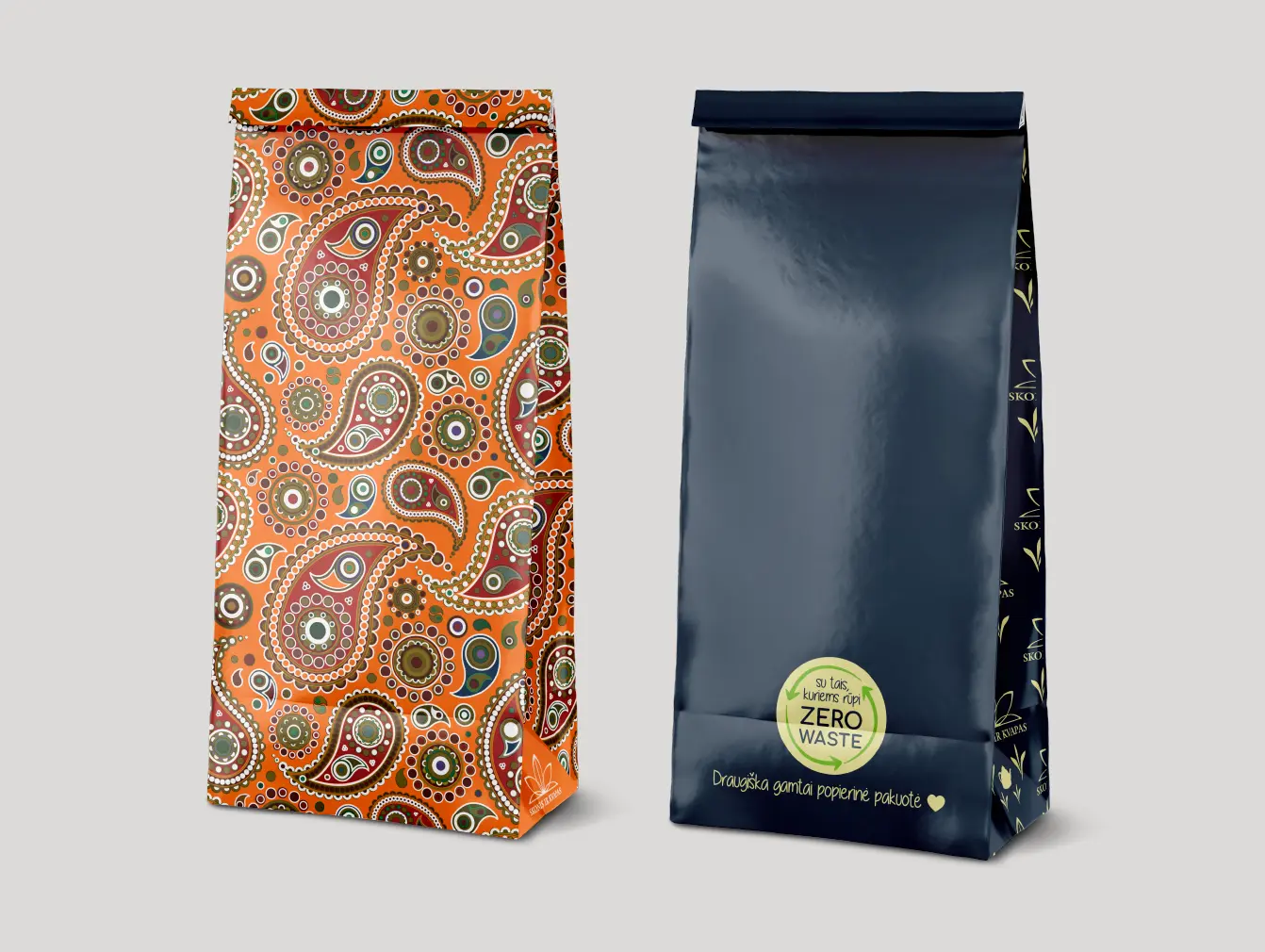
Proving that mono-materials can look premium. We engineered a protective barrier coating that maintains shelf-life while allowing for intricate, vibrant flexo printing.
Replaced plastic with a recyclable barrier paper engineered to run flawlessly on fast packing machines without compromising the premium tactile feel.
A recyclable paper alternative (PAP 22) that matched the mechanics of legacy plastic films, requiring zero speed loss or expensive machine modifications.
Proving that mono-materials can look premium. We engineered a protective barrier coating that maintains shelf-life while allowing for intricate, vibrant flexo printing.
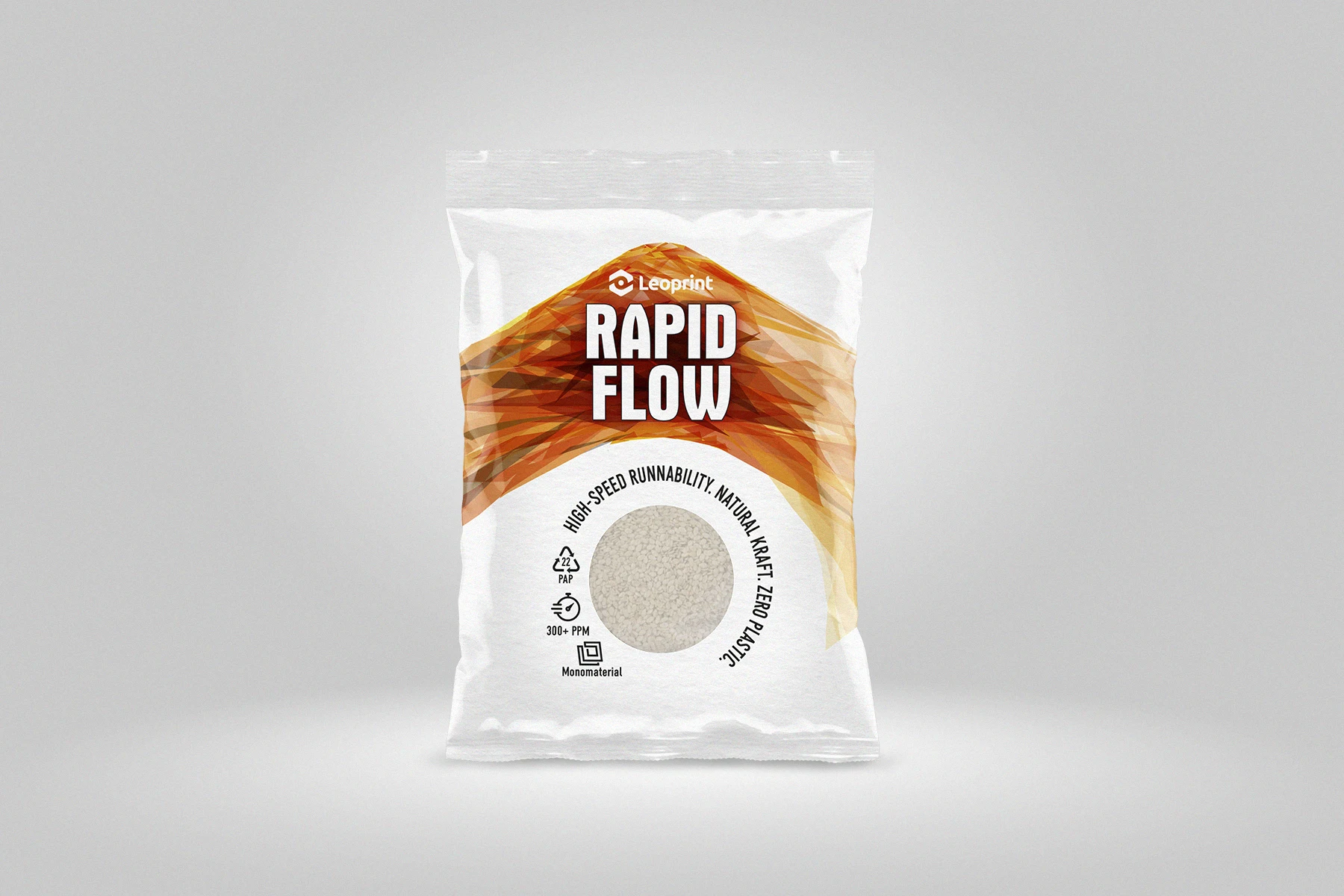
We engineered a PAP 22 kraft paper flow-pack with a crystal translucent window — a direct drop-in for BOPP/PE films, validated at 300+ PPM with zero machine modifications.
.svg)
Printing isn't magic; it's physics. We control the variables so you don't have to.

.svg)
.svg)