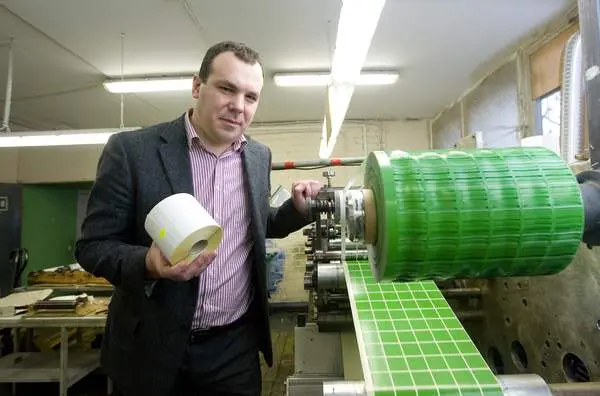
A self-adhesive label looks simple: a printed sticker on a roll. On a labelling machine running a few hundred products a minute, it is a small piece of engineering. The face material, the adhesive, the liner, the die-cut and the way the roll is wound all have to match the product and the machine, or the line stops.
This guide walks through how self-adhesive labels are made, how to choose materials and adhesives, and which roll details to send your printer, with a calculator that tells you how many labels fit on a roll.
Every pressure-sensitive label is a sandwich of four layers, supplied as one laminate by material makers such as Avery Dennison and Arconvert:
The printer does not make the laminate; it prints, finishes, die-cuts and winds it. That is why choosing a printer who works with tier-one materials matters: consistent tension and adhesive behaviour on the roll come from the laminate.
| Material | Best for | Keep in mind |
|---|---|---|
| Uncoated or textured paper | Wine, craft food, premium natural look | Absorbs moisture; not for wet or chilled products without a wet-strength grade |
| Coated (semi-gloss) paper | Most food, logistics and general labels | Good print quality at the lowest cost; FSC® paper on request |
| PP film (white, clear or metallised) | Cosmetics, drinks, household chemicals, squeezable bottles | Water and oil resistant; clear film gives the "no-label" look |
| PE film | Soft squeezable tubes and bottles | Follows the container as it is squeezed, so it does not wrinkle |
| Synthetic moisture-resistant face | Ice-cream tubs, chilled and frozen products, outdoor use | Stays intact when wet; often paired with a deep-freeze adhesive |
| Thermal labels: direct thermal paper, or thermal-transfer face stock | Logistics, weighing, variable data printed on site | Usually supplied blank or pre-printed, then printed by your own printer |
"Permanent" is not a specification. The adhesive has to match the surface, the temperature when the label is applied and the conditions it lives in afterwards.
| Adhesive | When to use it |
|---|---|
| General permanent (acrylic) | Clean, smooth glass, paper and rigid plastics at room temperature |
| Hot-melt (rubber-based) | Rough or difficult surfaces: corrugated board, shrink wrap, pallets; high initial tack |
| Deep-freeze | Applied cold or stored frozen; standard adhesives lose tack at low temperatures |
| Ultra-aggressive for LSE | Low-surface-energy plastics such as PE and PP containers, where ordinary adhesives lift |
| Removable | Labels that must come off cleanly, for example on thin film packs or reusable items |
| Wash-off | Returnable glass and some PET recycling streams, where labels must separate in the wash |
Two practical tips. Tell us the application temperature as well as the storage temperature, because a label applied to a cold, condensing bottle needs a different adhesive from one applied warm and then frozen. And if you can, send a few empty containers: testing on the real surface is faster than any datasheet.
Most problems on the labelling line are not about print. They come from a roll that does not fit the machine. These are the details to agree before production:
| Detail | What it means | Common values |
|---|---|---|
| Core diameter | The inner diameter of the cardboard core | 76 mm for automatic dispensers; 40 or 25 mm for desktop printers |
| Maximum outer diameter | The largest roll your machine can hold | Often 300–400 mm on industrial applicators |
| Labels per roll | Alternative to diameter; fewer roll changes mean less downtime | Set by the diameter and label length |
| Gap between labels | The space on the liner between two labels, read by the machine's sensor | Usually 2–4 mm |
| Winding direction | Which edge of the label comes off the roll first, and whether labels face out or in | See below |
| Splices | Joins in the liner where the roll was repaired; some lines cannot accept any | Agree the maximum per roll |
A label applicator expects labels to arrive in one orientation. If the roll is wound the wrong way, labels go on upside down or sideways, and the whole delivery has to be rewound. The industry describes this with eight standard positions: four with the labels facing outward and four facing inward, each with the top, bottom, right or left edge of the label leaving the roll first.
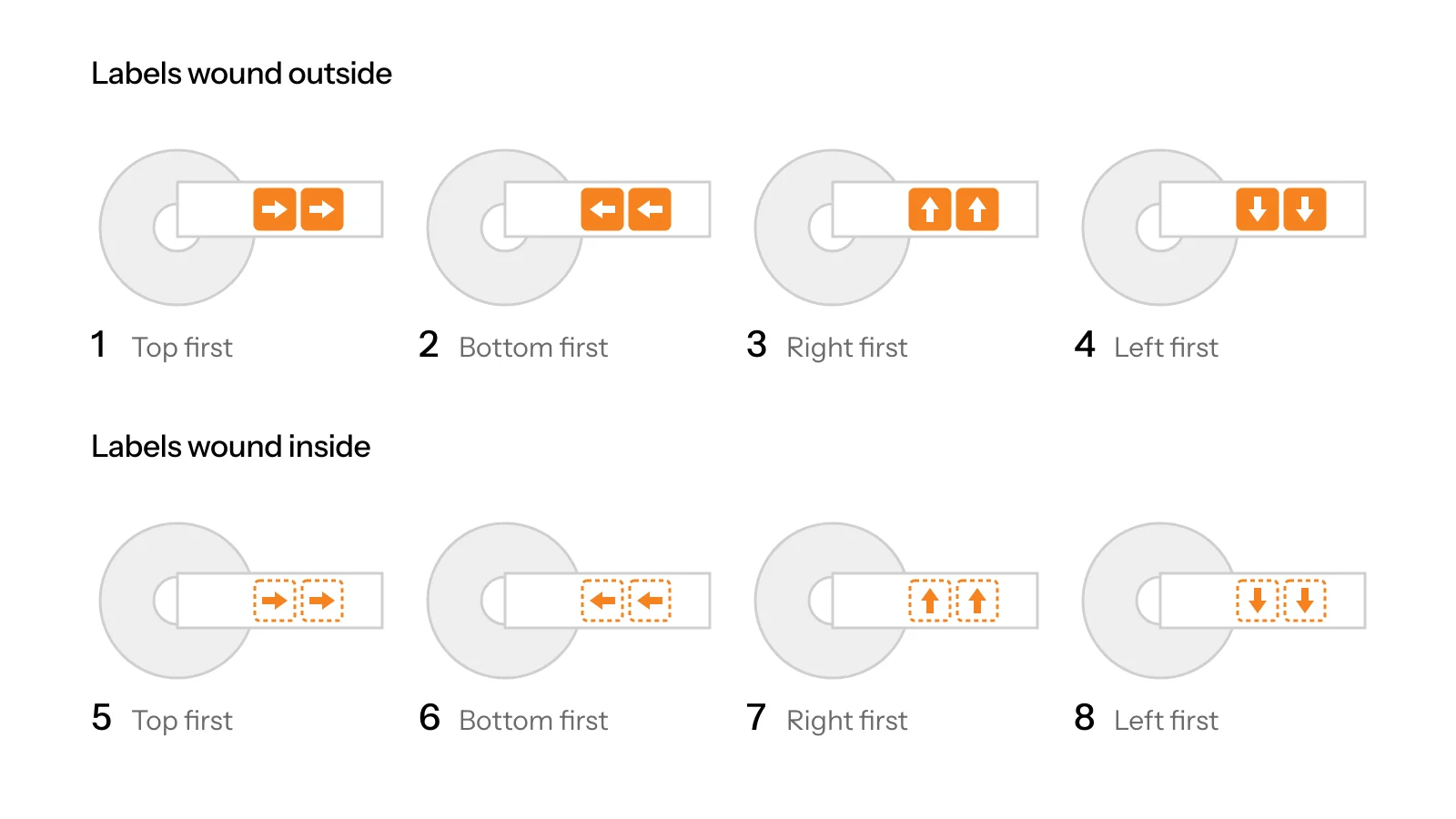
The safest way to order is to look at a roll that already runs well on your machine, or take a photo of it on the applicator, and send it with your order.
Enter your core, maximum roll diameter, label length in the running direction and the gap. The calculator works out the length of material that fits and the number of labels on each roll. Material thickness includes the liner; around 140 µm is typical for paper labels on a glassine liner.
Labels per roll
–– m of material on each roll, so you need – rolls for your order.
An estimate: real rolls vary slightly with winding tension and material. We confirm the exact count per roll with your order.
Rule of thumb
If the labels will run on an automatic line, send us your machine details and a photo of a roll that already works. It takes two minutes and prevents most first-delivery problems.
We print custom self-adhesive labels in Vilnius with high-definition flexo on Avery Dennison and Arconvert materials, kiss-cut with precision rotary tooling and slit down to ±0.1 mm, with cold foil, embossing and silk screen inline. For warehouses and shipping we also supply blank thermal and laser labels. If you are choosing between flexo and digital for your run length, this comparison helps you decide.
Send us your current label or the checklist above, and we will come back with a material and adhesive recommendation, roll specification and price.
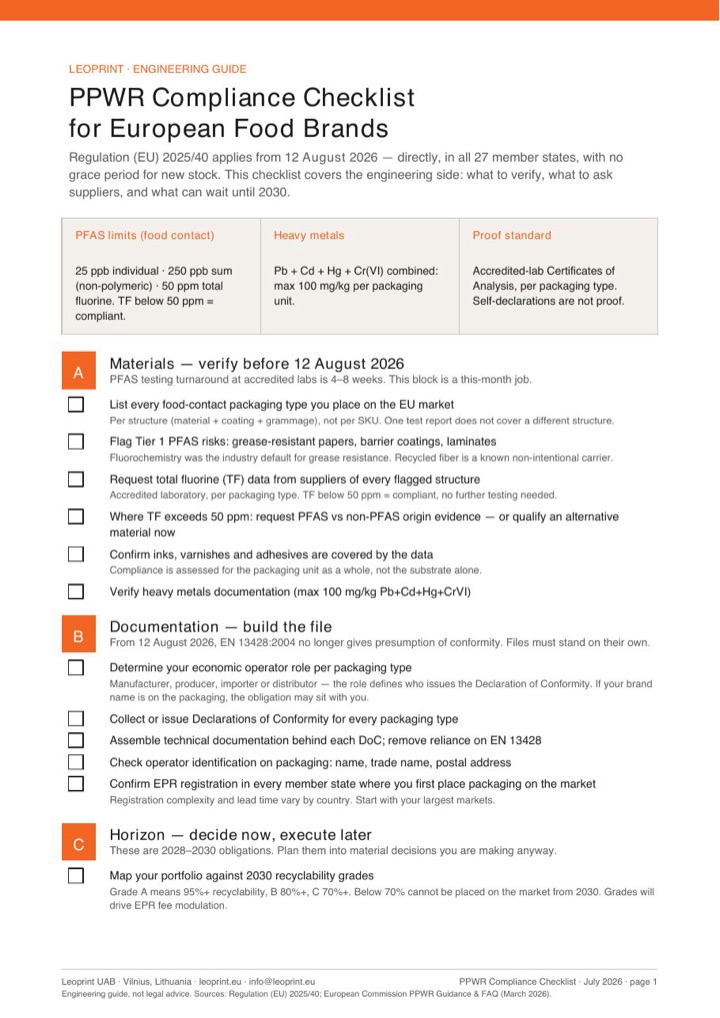
A two-page checklist for getting food packaging ready for the EU PPWR: PFAS limits, Declarations of Conformity, EPR, and what can wait until 2030.
Send us your current label or machine details. We will come back with material, adhesive, roll specification and price.
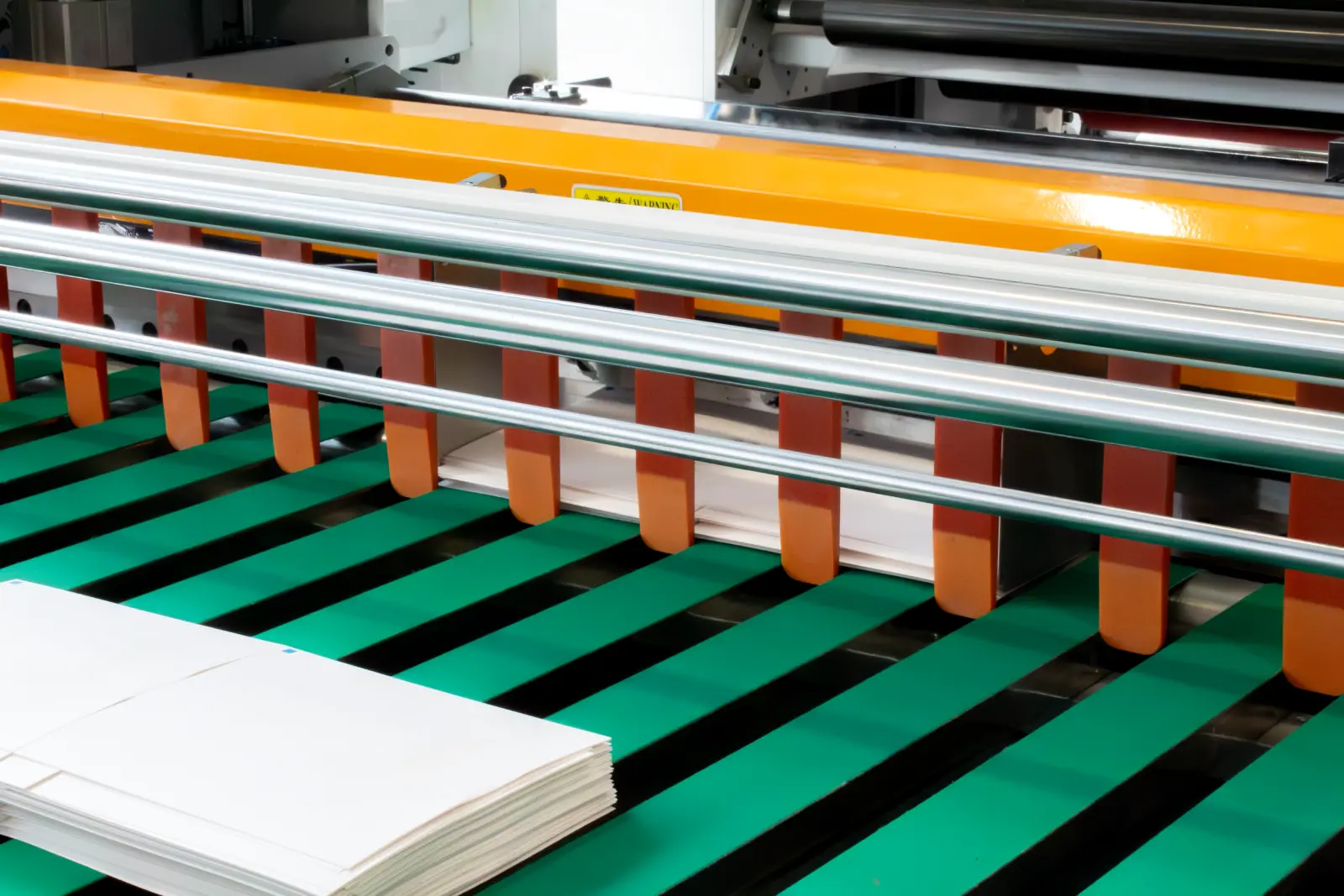
Most paper packaging and labels are printed flexo. How the press works, where it shines and where it needs care, and how to prepare artwork so your first run goes straight to plate-making.
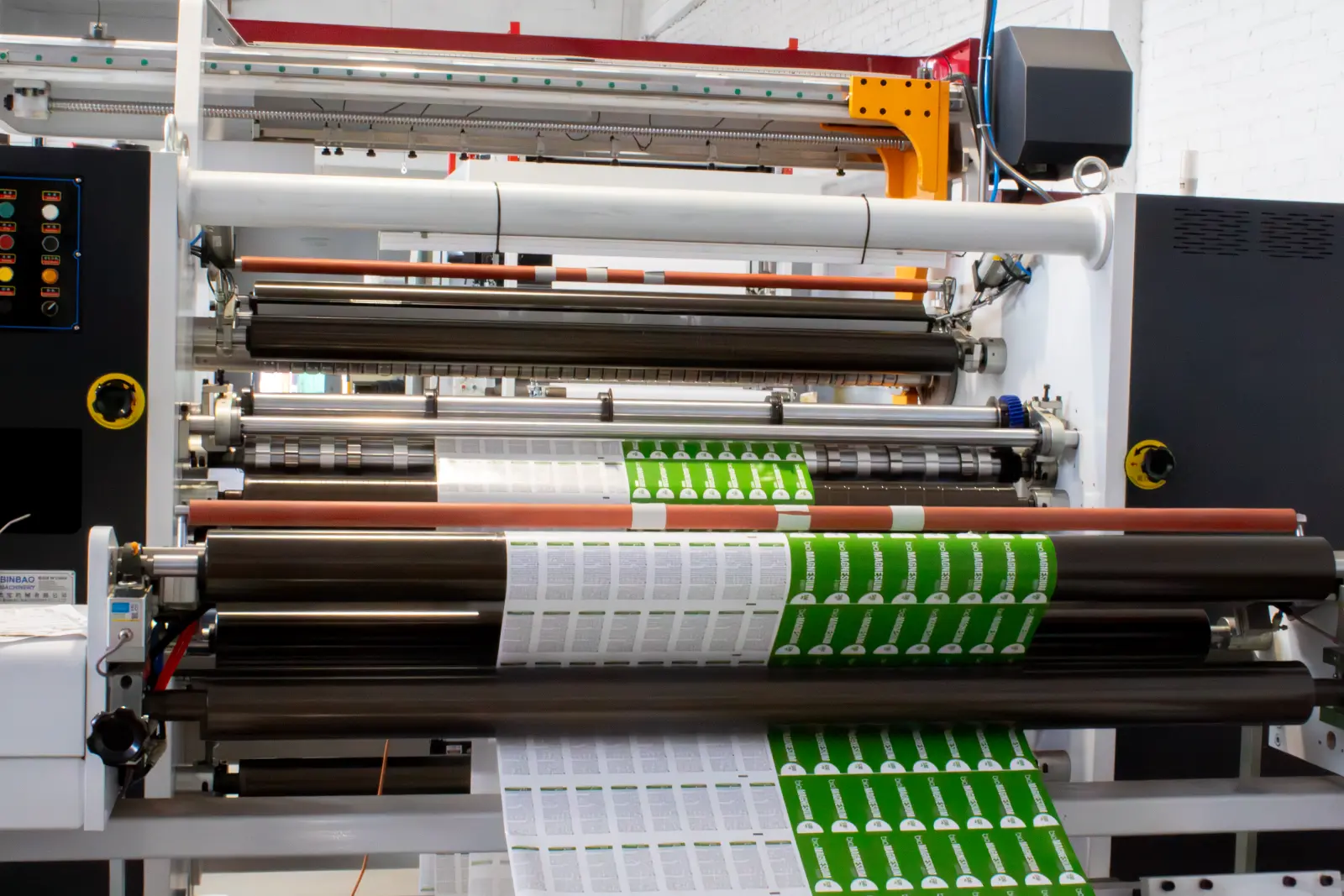
Barrier paper is how tea envelopes, sugar sticks and flow-packs are moving off plastic laminates. The properties that matter, how they are measured, the coating options and how to specify the right paper.
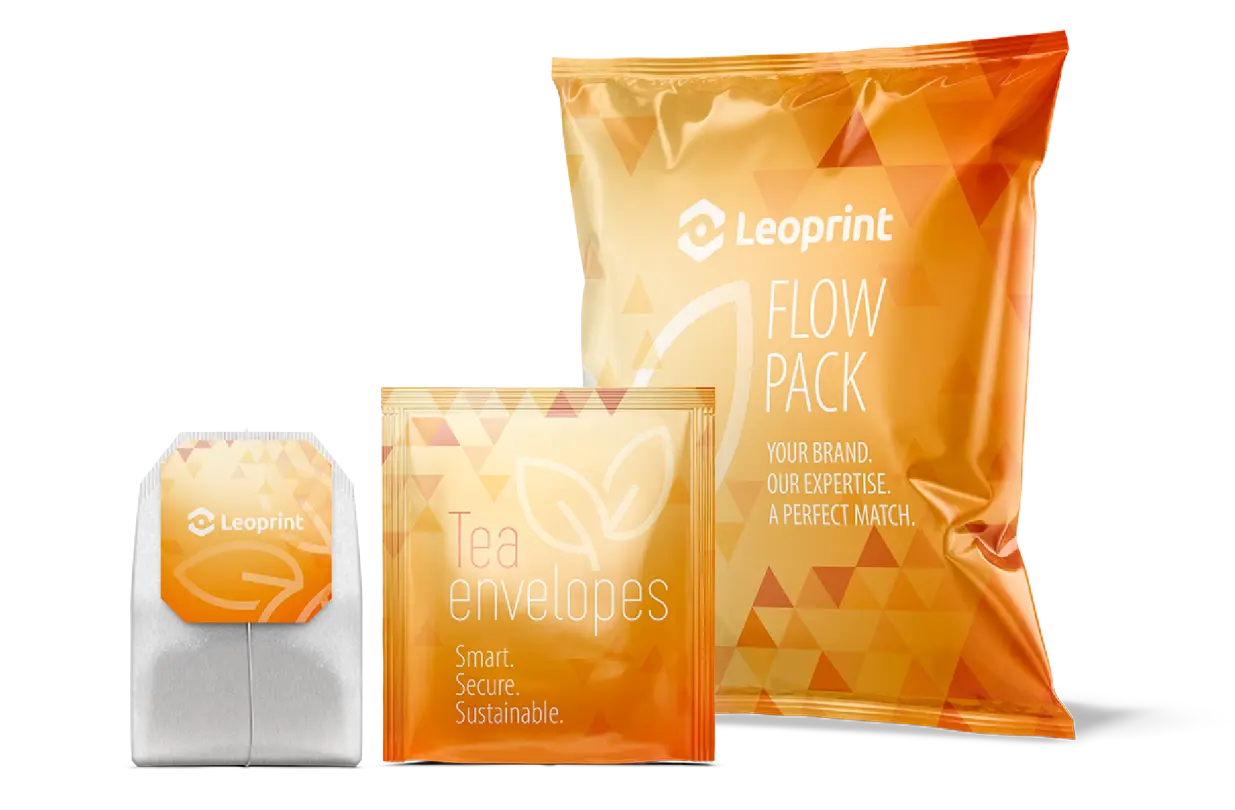
PAP 22 is printed on paper bags, flow-packs and tea envelopes everywhere, but rarely explained. What the code means, when a coated paper still counts as paper, and what the code does not prove.
.svg)
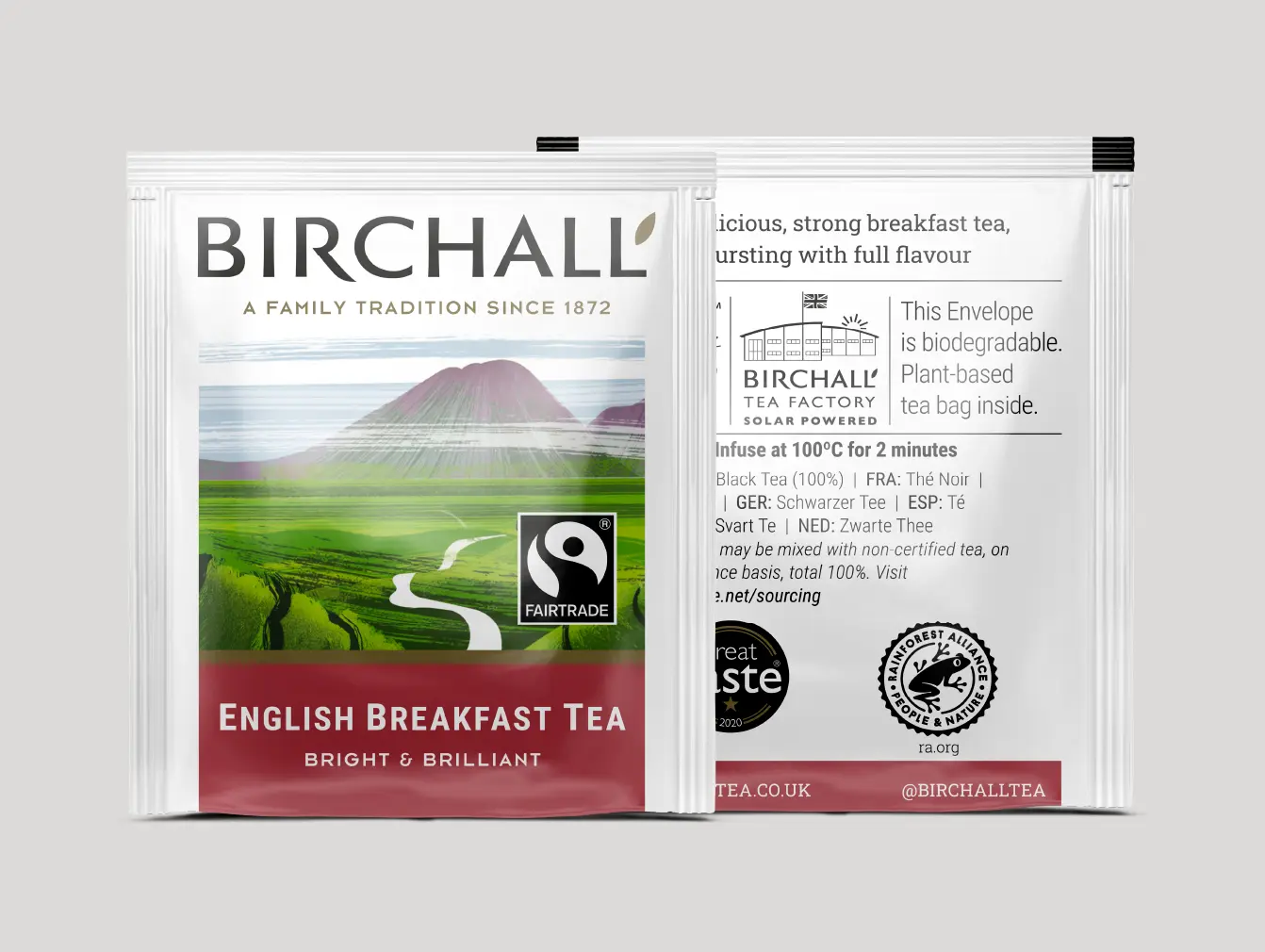
Replaced plastic with a recyclable barrier paper engineered to run flawlessly on fast packing machines without compromising the premium tactile feel.
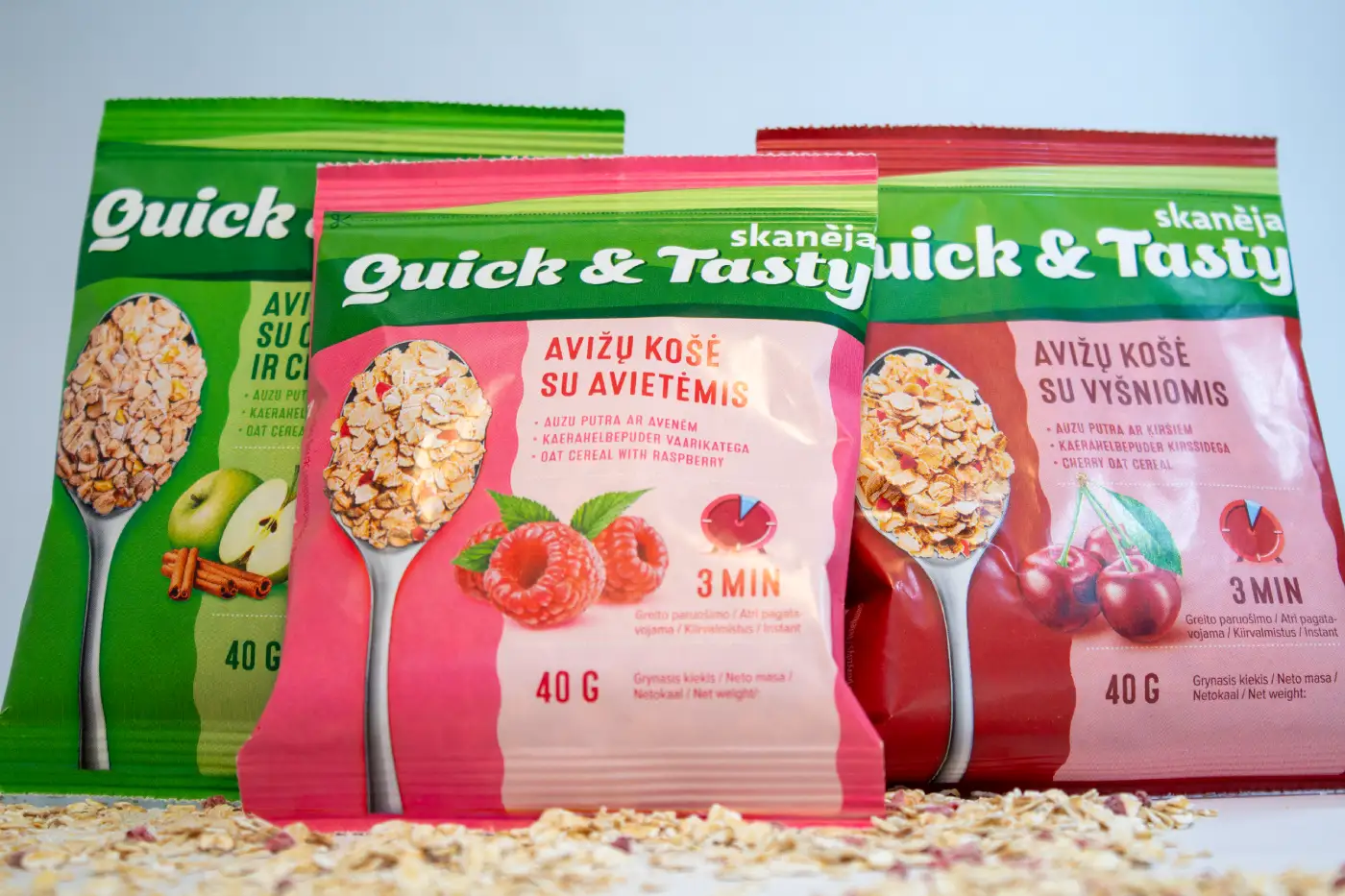
A recyclable paper alternative (PAP 22) that matched the mechanics of legacy plastic films, requiring zero speed loss or expensive machine modifications.
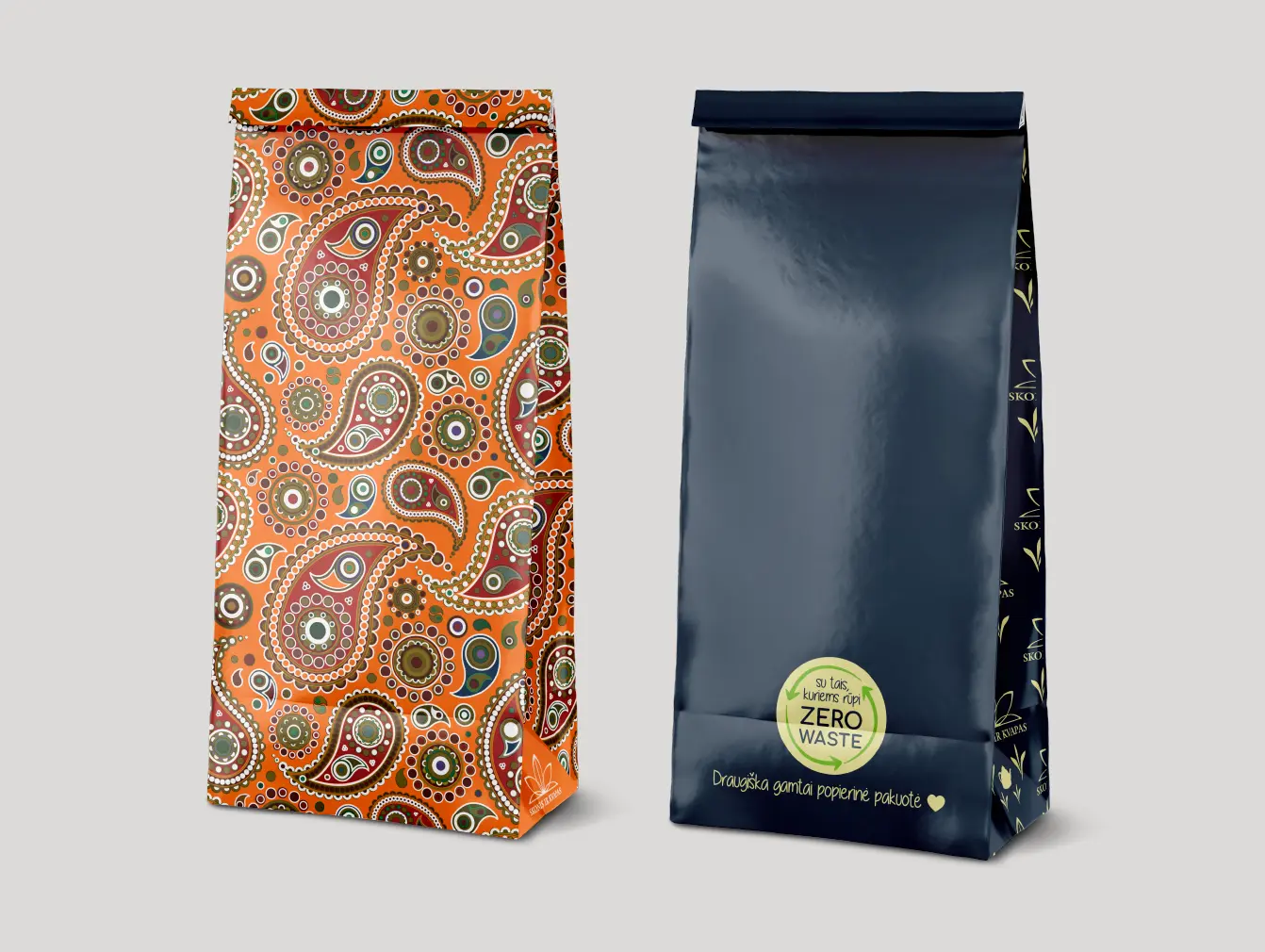
Proving that mono-materials can look premium. We engineered a protective barrier coating that maintains shelf-life while allowing for intricate, vibrant flexo printing.
Replaced plastic with a recyclable barrier paper engineered to run flawlessly on fast packing machines without compromising the premium tactile feel.
A recyclable paper alternative (PAP 22) that matched the mechanics of legacy plastic films, requiring zero speed loss or expensive machine modifications.
Proving that mono-materials can look premium. We engineered a protective barrier coating that maintains shelf-life while allowing for intricate, vibrant flexo printing.
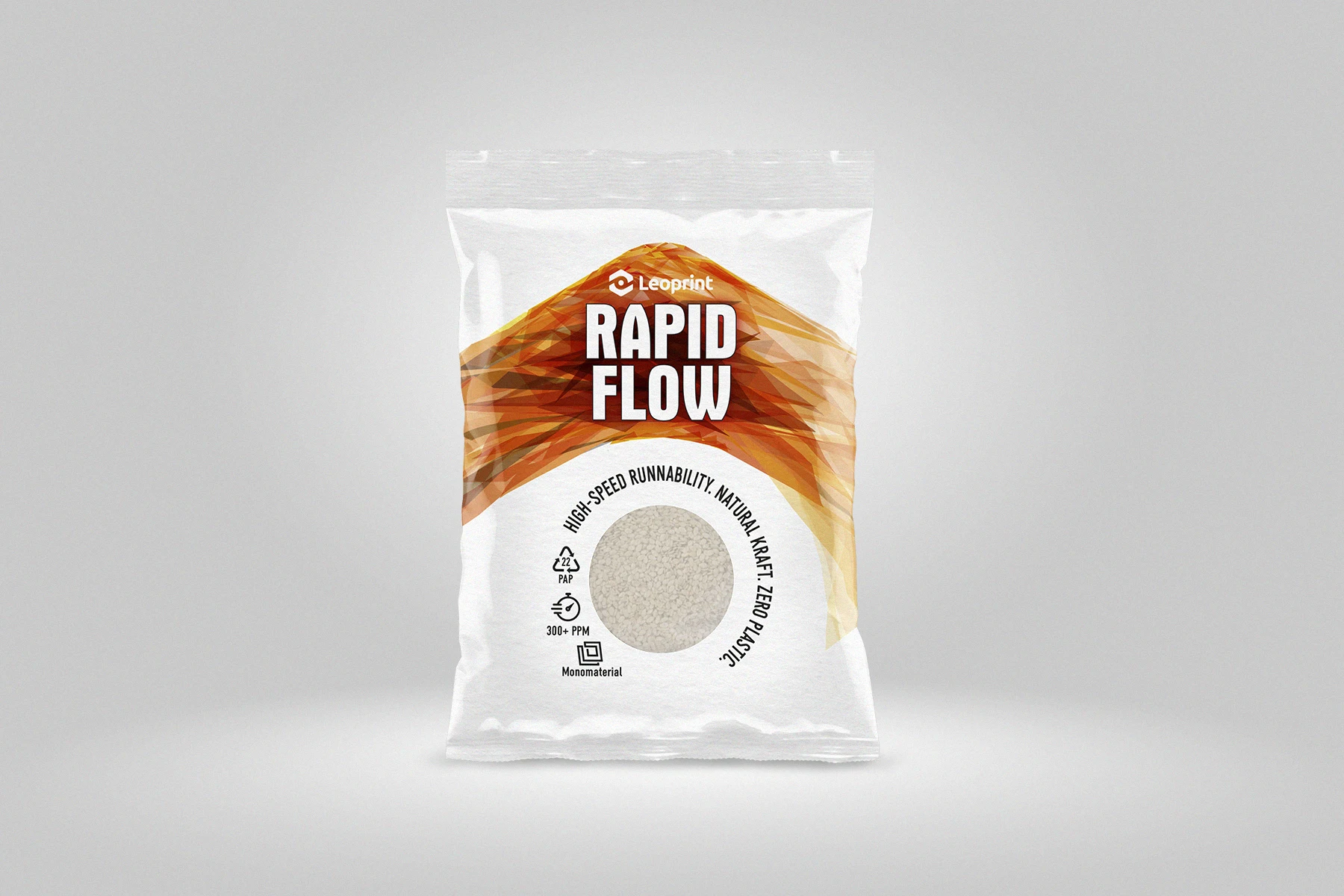
We engineered a PAP 22 kraft paper flow-pack with a crystal translucent window — a direct drop-in for BOPP/PE films, validated at 300+ PPM with zero machine modifications.
.svg)
Printing isn't magic; it's physics. We control the variables so you don't have to.

.svg)
.svg)